About Tympanella galanthina (Cooke & Massee) E.Horak
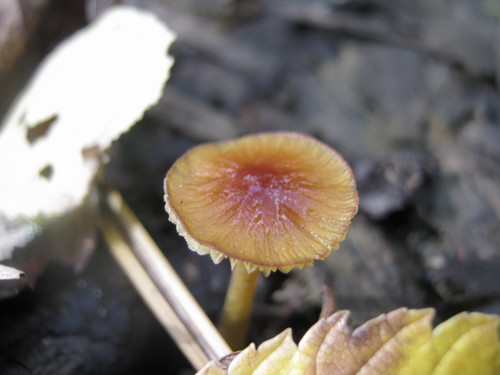
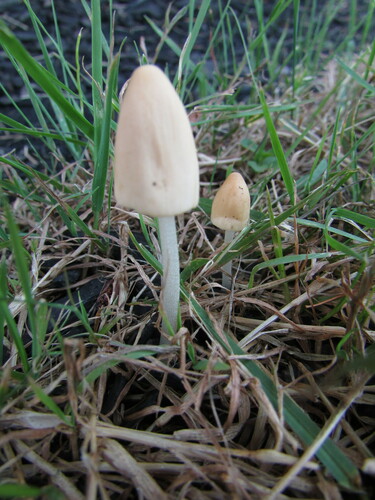
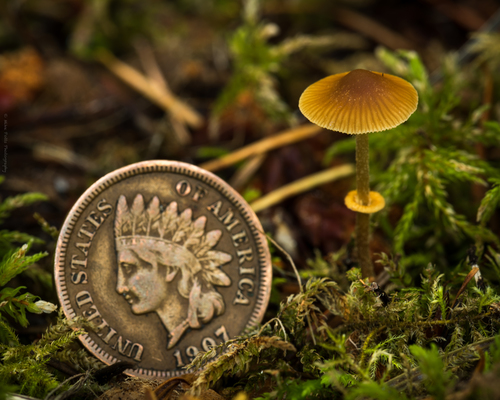
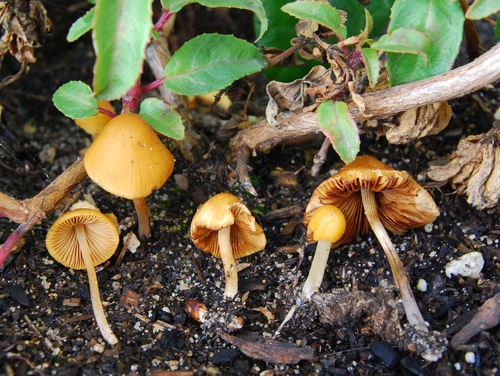
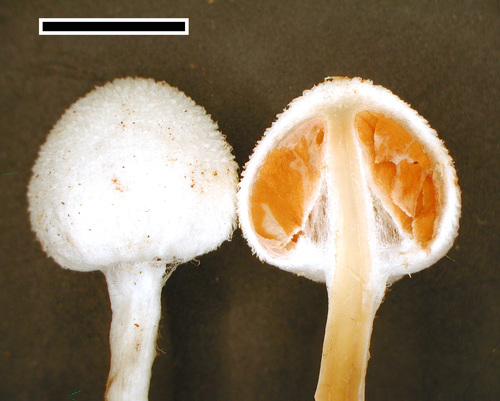
Tympanella galanthina has a dry pileus 7–30 mm in diameter. When young, it is secotioid and globose; as it matures, the pileus may become convex or campanulate, but its margin stays strongly incurved. Pileus color varies, and can be white, cream, clay, or buff. The pileus is densely squamulose, covered with small hairs or scales. Fibrillose remnants of the veil are present near the margin; these are white and conspicuous, especially on young fruit bodies.
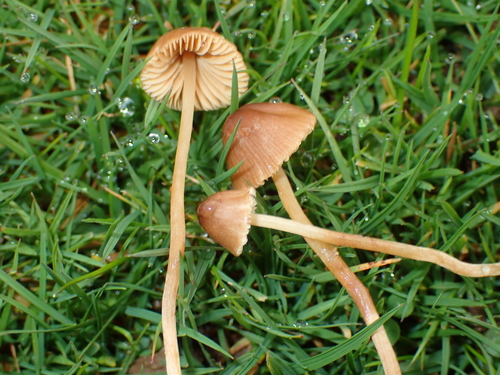
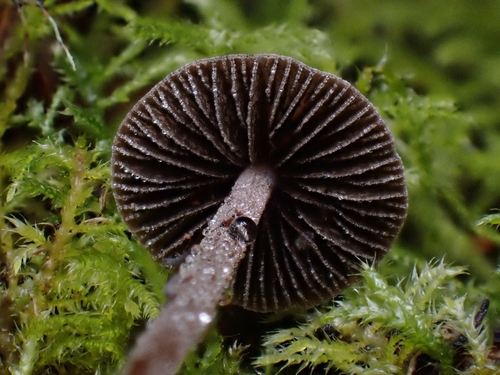
The lamellae are a distinct rust to cinnamon brown, and are not lacunose or anastomosing. They are adnate or adnexed, sometimes subdecurrent, and floccose with a colored edge. The cylindrical stipe is also dry, typically 10–40 mm tall and 1.5–5 mm wide. It is light brown, matching the color of the pileus, and has white fibrils extending down from the veil. This species does not have a permanent cortina or ring, and a columella is absent; the stipe is not attenuated near its apex. The stipe is individually fistulose, with a watery brown context that has no distinctive smell or taste.
Spores of Tympanella galanthina are smooth, elliptical, thick-walled, and measure 10.4–13.5 × 6.3–8 μm. They have a germ pore, are reddish-brown, and are neither amyloid nor dextrinoid. Basidia measure 27–36 × 8–11 μm and bear 4 spores each. Cheilocystidia measure 15–45 × 12–25 μm; they are thin-walled, hyaline, and clavate or lageniform, with a sterile zone at the lamella edge. The pileus cuticle is a trichoderm formed from cylindrical or fusoid hyphae 5–20 μm in diameter. These hyphae are thin-walled, gelatinised, unpigmented, have suberect tips, and bear clamp connections.
In terms of habitat and distribution, Tympanella galanthina occurs in New Zealand forests, growing among leaf litter or fallen tree fern fronds, and occasionally on rotting wood. It prefers wet forest conditions, and is distributed across both the North and South Islands of New Zealand. It has been found growing in association with Beilschmiedia tawa, Sphaeropteris medullaris, Leptospermum scoparium, Nothofagus fusca, N. menziesii, N. solandri, and Podocarpus.