About Turnix sylvaticus (Desfontaines, 1789)
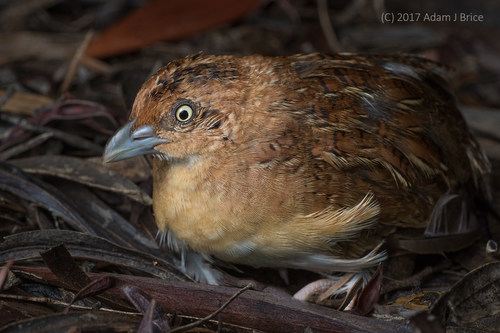
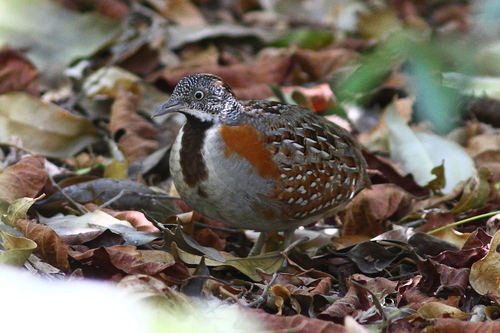
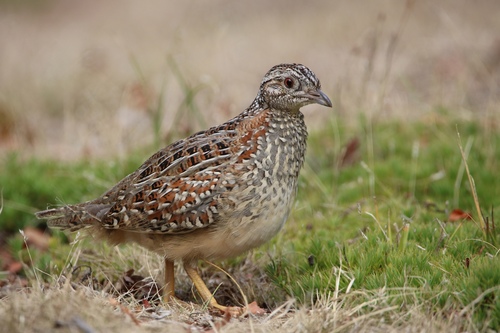
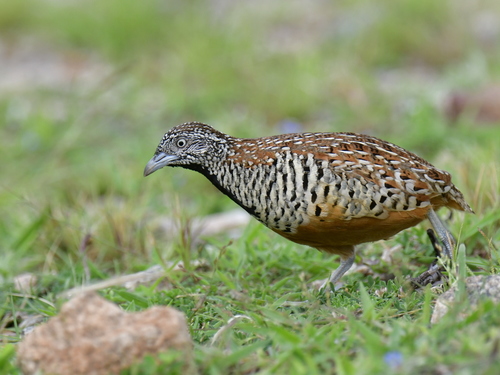
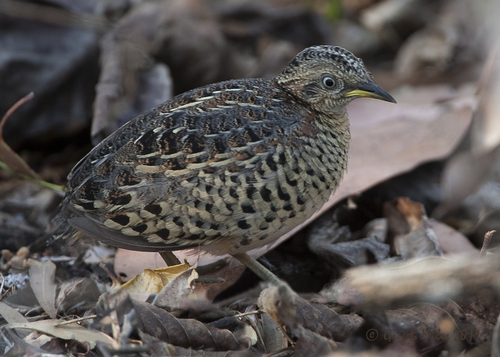
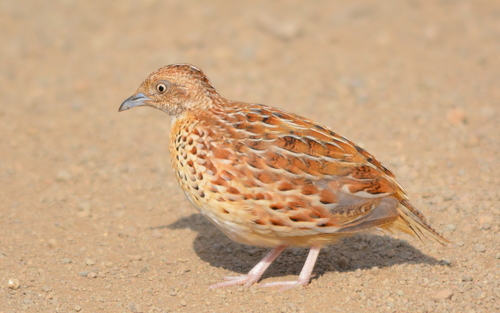
The common buttonquail, scientifically named Turnix sylvaticus (Desfontaines, 1789), resembles the common quail. Its upperparts are streaked sandy brown, its underparts are buff with black markings on the flanks, and its face is plain. When in flight, a whitish wingbar stands out against its grey wings. Adult males and females look similar, while immature birds have more spotting on their underparts. This is a tiny, notoriously difficult-to-spot buttonquail: it is a small, 15 cm (5.9 in) long drab bird that prefers running over flying and actively avoids flying. This species is a resident breeding bird found across a range from southern Spain and Africa, through India and tropical Asia, to Indonesia. It lives in warm grasslands or scrub jungle, where it feeds on insects and seeds. It avoids thick forest and hilly terrain, and prefers to live in cornfields and open grassy plains. It may also be found in any type of low herbage and open scrub jungle.