About Turnera diffusa Willd. ex Schult.
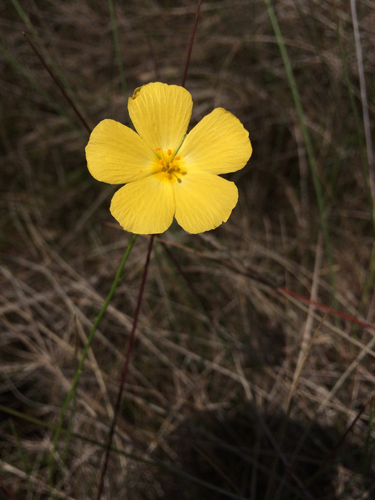
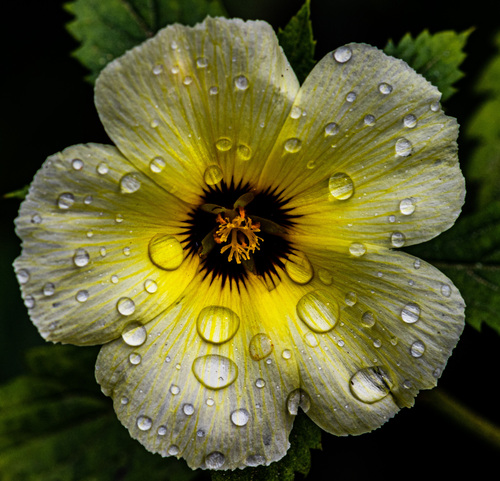
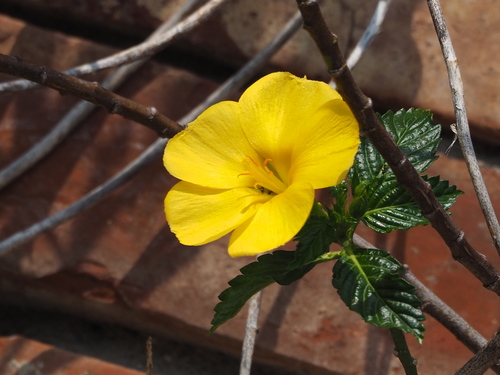
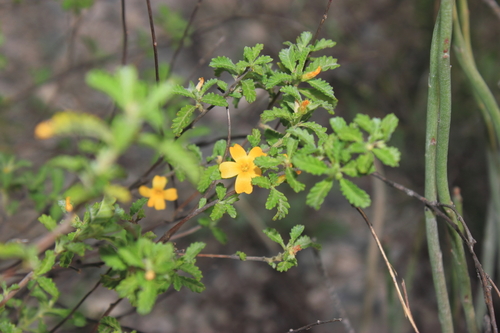
Turnera diffusa Willd. ex Schult., commonly known as damiana, is a woody shrub in the family Passifloraceae. It is native to southern Texas (United States), Mexico, Central America, South America, and the Caribbean. Damiana is a relatively small shrub that produces small, aromatic flowers. It blooms from early to late summer, and after flowering it produces fruits with a flavor similar to figs. The entire plant has a strong, spice-like scent that is somewhat similar to chamomile, which comes from the aromatic compounds it contains. Damiana is traditionally used as an ingredient in Mexican liqueurs and margaritas; the damiana margarita is especially popular in Mexico's Los Cabos region, and Mexican folklore claims damiana was included in the "original" margarita, where it is sometimes used as a substitute for triple sec. Historically, damiana was included in 19th-century patent medicines as a purported aphrodisiac, including products like Pemberton's French Wine Coca. Its leaves were left out of that product's non-alcoholic successor, Coca-Cola. This historical association with being an aphrodisiac is why it sometimes carries the binomial synonym Turnera aphrodisiaca. Today, damiana is valued in herbal teas and smoking blends for its calming and mild psychoactive effects, and is used to help induce relaxation and improve emotional well-being. This species contains a complex mixture of phytochemicals, including the flavonoids apigenin and acacetin, along with terpenoids, phenolics, cyanogenic glycosides, and other compounds. It acts as a host plant for the butterfly species Euptoieta hegesia, the Mexican fritillary. A common issue is that many plants and seeds sold commercially as T. diffusa are actually a different species, Turnera ulmifolia, often called "false damiana". False damiana has different chemical properties and different uses than true damiana, and this misidentification occurs most often in horticultural sales, not in markets for herbal products.