About Turdus leucomelas Vieillot, 1818
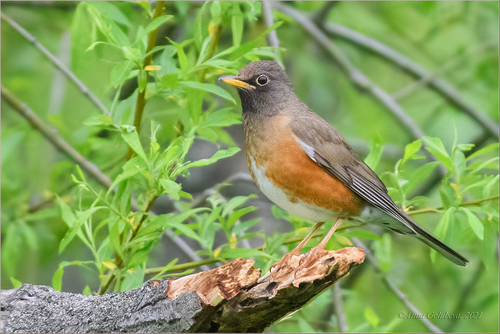
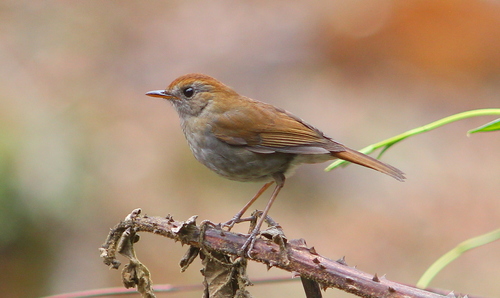
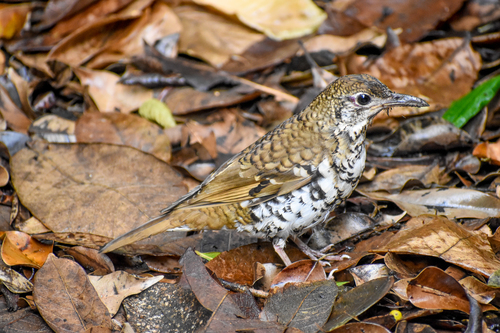
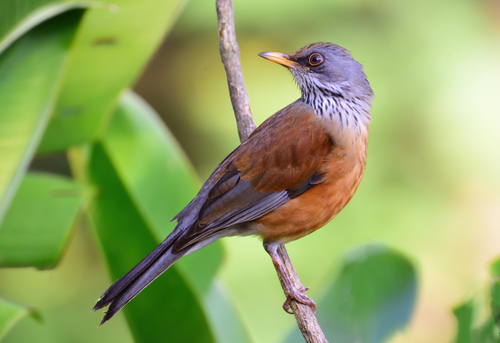
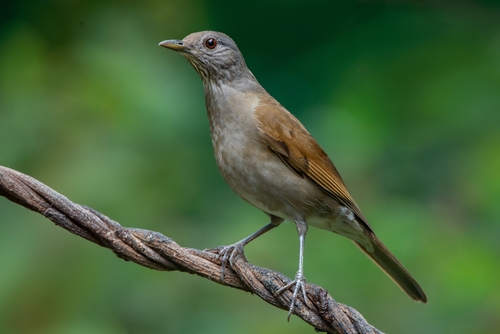
The pale-breasted thrush, scientifically named Turdus leucomelas, is a bird species that belongs to the Turdidae family. It inhabits a wide variety of wooded habitats across eastern and northern South America, ranging from Brazil and Colombia to Uruguay, with only localized populations in the western part of the continent. This bird species has successfully adapted to human presence, and it is very common in human-settled areas within its range. It frequently nests in garden shrubs and small trees. In Suriname, this species has the local common name "Boontjedief", which translates to "bean thief" in Suriname Dutch. This name likely comes from its habit of taking legumes that have been laid out to dry in the sun. Its name in standard Dutch is "Vaalborstlijster", and it is called "Bonka" in Sranan Tongo. In terms of size and shape, the pale-breasted thrush is similar to the American robin, but it does not have the American robin's distinctive red chest, and its plumage is more uniformly brown. Its song and feeding habits are also very similar to this distant relative. Across most of its distribution range, it is most often confused with the creamy-bellied thrush. Unlike the creamy-bellied thrush, the pale-breasted thrush has a clear contrast between its head and mantle, and it does not have blackish lores. The diet of the pale-breasted thrush consists mostly of fruits, but it also eats worms, insects, and lizards.