About Turbo bruneus (Röding, 1798)
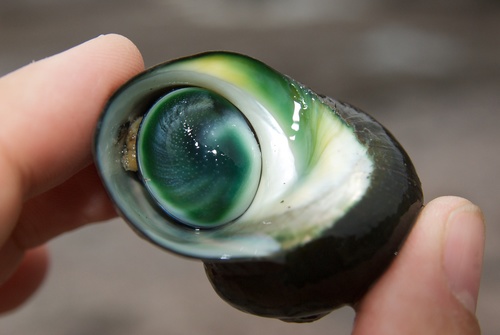
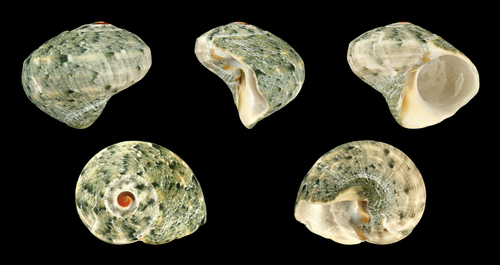
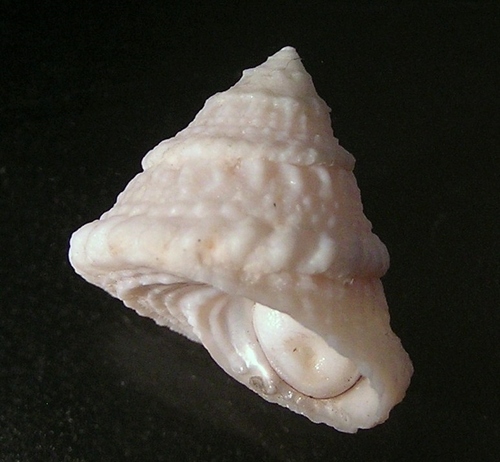
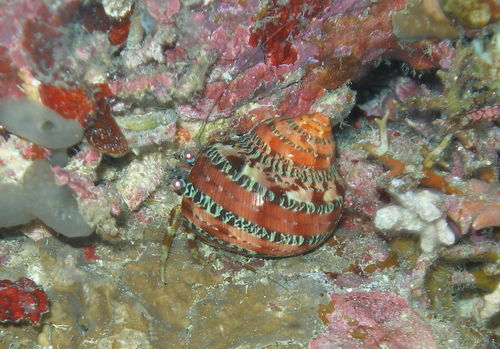
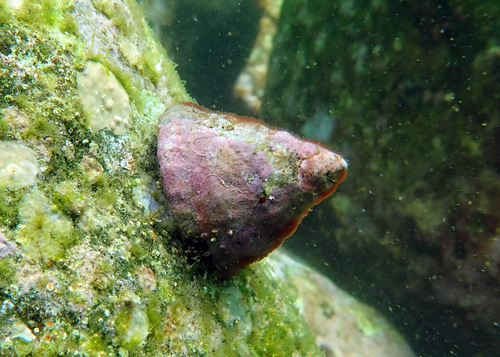
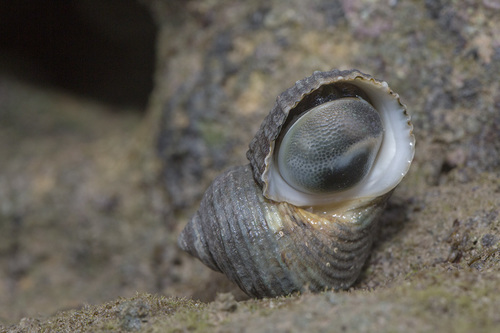
Turbo bruneus (Röding, 1798) is a species of marine snail. The length of its shell ranges between 20 mm and 50 mm, and mature shells typically measure 5 to 6 centimeters in diameter. The shell has a rounded, conical shape with a pointed vertex, and is brown with a glossy, polished appearance. This species occupies a wide range of marine habitats, including coral reefs, rocky shorelines, and seagrass beds. It can be found at depths of up to 30 meters, but is most common in shallow waters 5 to 10 meters deep. Turbo bruneus is primarily herbivorous. It uses a specialized feeding structure called a radula to scrape a variety of seaweed and other small organisms off surfaces for food. When food is scarce, it will also consume small crustaceans and other invertebrates. Turbo bruneus has a distinct reproductive process. It is dioecious, meaning each individual is either male or female. During mating season, males release sperm into the water, and currents carry this sperm to nearby females. After fertilization, the female lays hundreds of small eggs enclosed in a jelly-like substance, which she attaches to rocks or other hard surfaces. The eggs hatch into free-swimming larvae that eventually settle on the ocean floor and develop into adult snails. A notable feature of Turbo bruneus is its operculum, a small, round, calcareous plate that covers the shell opening when the snail retracts its body inside. The operculum protects the snail from predators and helps retain moisture inside the shell. Another key adaptation of this species is the ability to survive out of water for short periods. When the tide recedes, Turbo bruneus can close its operculum and seal itself inside its shell to avoid drying out, letting it survive in intertidal zones where it may be exposed to air for extended periods. Beyond its ecological role, Turbo bruneus has economic importance for some coastal communities: its shells are commonly used in traditional crafts and jewelry making. This marine species is distributed in the Red Sea, the Central Indo-Pacific, the Western Pacific Ocean, and occurs off the coasts of East India, the Philippines, and Western Australia.