About Tupaia minor Günther, 1876
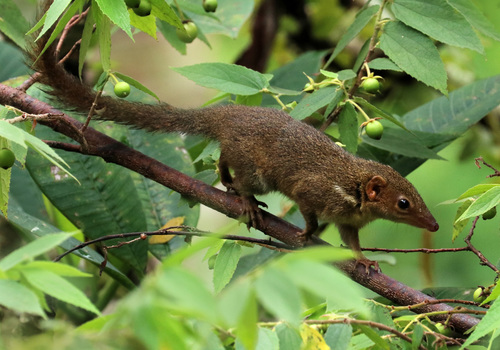
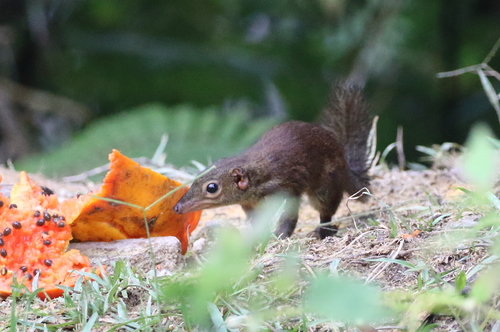
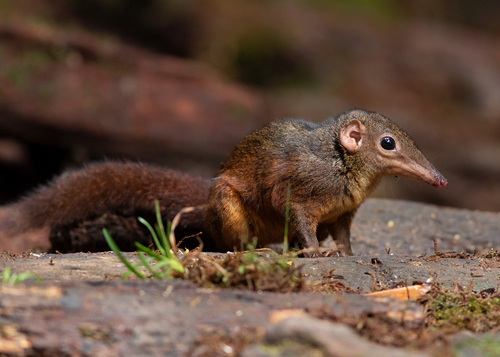
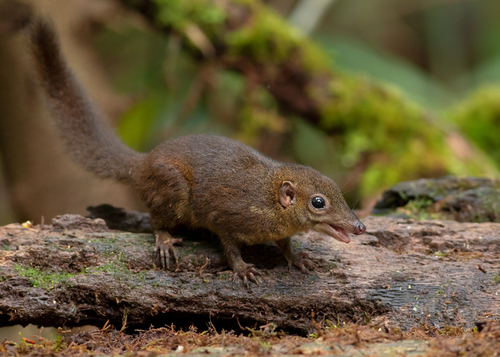
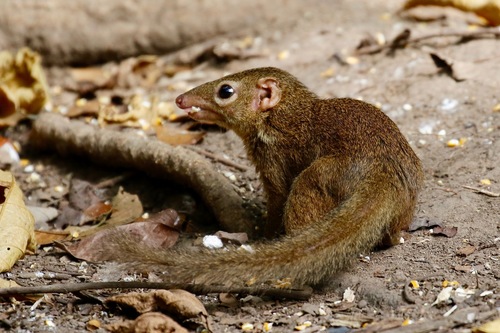
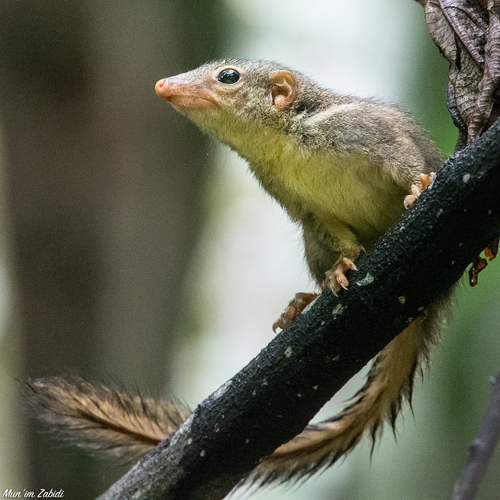
Characteristics: The pygmy treeshrew (Tupaia minor Günther, 1876) has banded light and dark hair across its upper body, which creates a speckled olive-brown appearance. Its upper parts are buffy, and often have a reddish tinge towards the rear. The tail is long and thin, with a darker upper side than the body. The pygmy treeshrew's front and back limbs are equal in length, and it has long claws. The species reaches a maximum total length of about 450 mm, half of which is made up by the tail. Distribution: Tupaia minor is distributed in peninsular Thailand, peninsular Malaysia, Sumatra, the Lingga Archipelago (Indonesia), Borneo, the Indonesian offshore island of Laut, and the Malaysian islands of Banggi and Balambangan. Records from the Catalogue of Mammal Skins in Sarawak Museum, Kuching, Sarawak show that more than 30 individuals of T. minor were collected between 1891 and 1991. Most of these specimens were caught in Mt Penrisen, Mt Dulit, Mt Poi, Gunung Gading, Bau, Ulu Baram, Saribas, Kuching, and Forest Research. This species has no known fossil record. Behavior, diet and reproduction: Tupaia minor is diurnal, meaning it is active during the daytime. It is often seen 3 to 8 meters above the ground, sometimes reaching heights of up to 20 meters, as it travels along lianas or the branches of small trees. It spends most of its time on the ground and in low bushes, and builds nests in tree roots and fallen timber. T. minor moves using a semiplantigrade posture, which lets it keep its center of gravity close to tree surfaces. The sharp, moderately curved claws on its hands and feet are well-suited for climbing. Tupaia minor is omnivorous, with a diet that includes insects and fruit. Members of the order Scandentia, which includes treeshrews, have little economic significance because they do little damage to crops or plantations. However, T. minor may act as a seed disperser for several Ficus species. Females give birth to litters of one to three young after a gestation period of 45 to 55 days. The maximum lifespan of this species is around 9 to 10 years.