About Tucetona laticostata (Quoy & Gaimard, 1835)
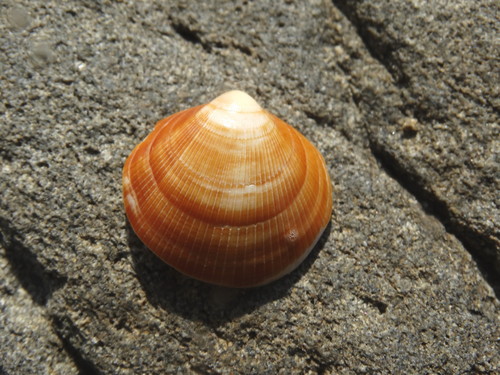
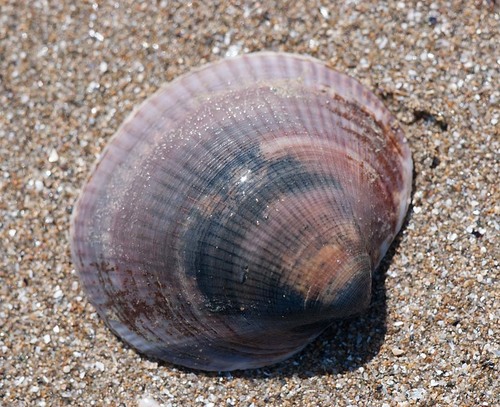
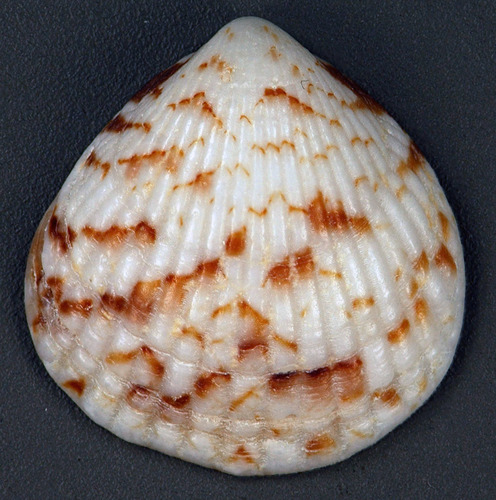
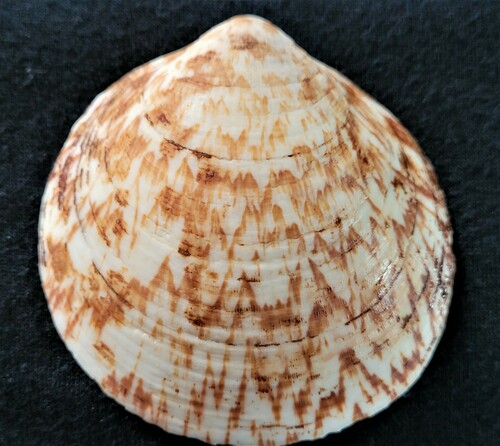
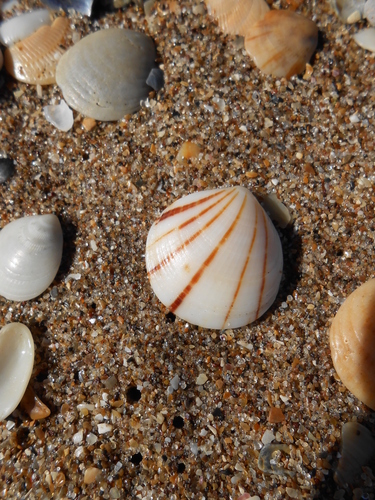
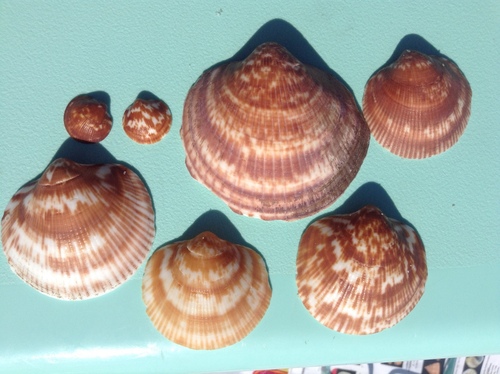
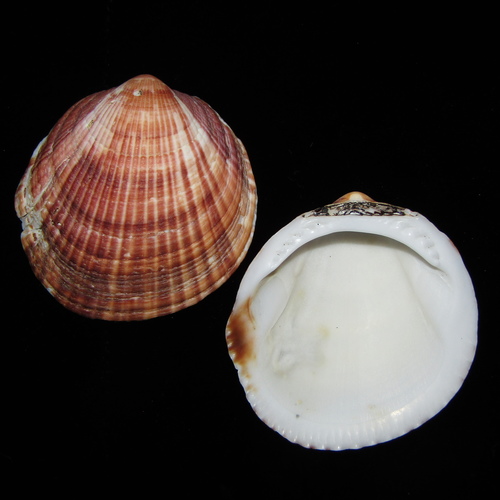
This species, commonly called the large dog cockle, has an almost circular shell that is thick and heavy, with a toothed ventral margin. The outer surface of each valve has strong, flat radial ribs that are crossed by fine lines; these lines fade as they approach the beak. Rarely, individual specimens grow larger than 120 millimetres in diameter; most individuals measure between 60 and 80 millimetres across. The shell's external color ranges from off-white to yellow or dull pink, and its brown outer protein layer (periostracum) is usually worn away from the top half of the shell. The internal surface of the valves is glossy white, and often has brown or purple markings. This species is endemic to New Zealand, and its range includes Stewart Island and the Chatham Islands. It is locally common, and inhabits coarse sand or fine gravel substrates at and just below the surface, down to depths of around 100 metres. Tucetona laticostata is tolerant of silt, and can form large, densely populated beds, most often alongside Purpurocardia purpurata, though some individuals live solitary lives.