About Tuberolachnus salignus (Gmelin, 1790)
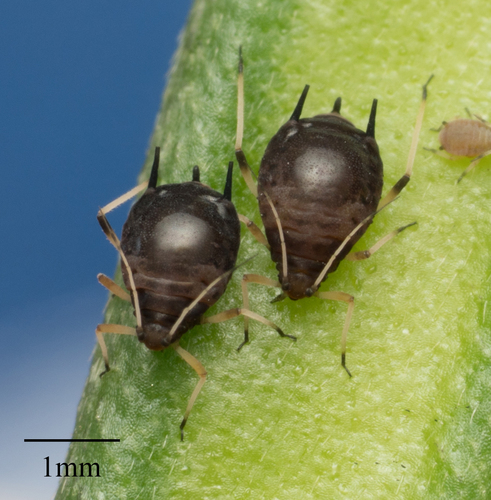
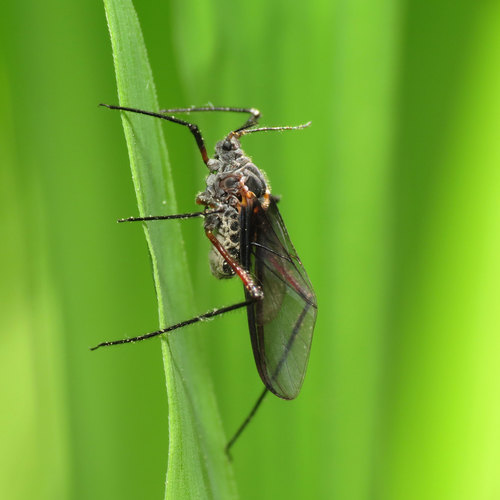
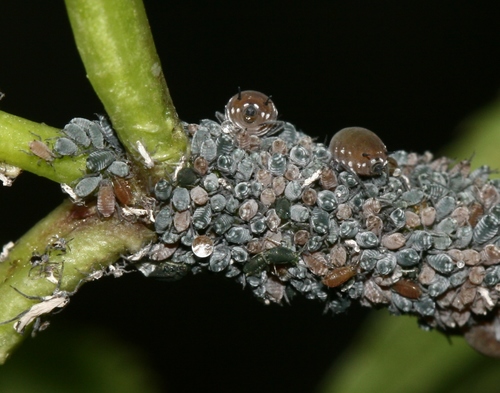
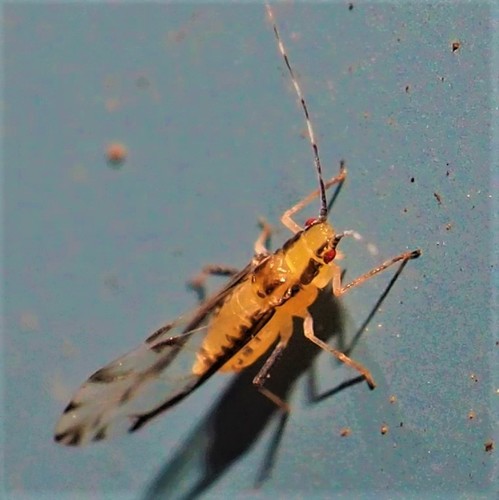
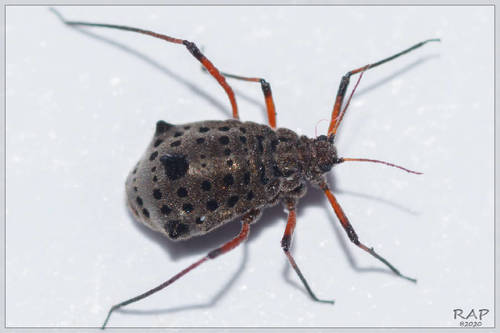
Tuberolachnus salignus (Gmelin, 1790), also called the giant willow aphid, has the following description. Adult T. salignus have pear-shaped bodies that are dark brown to grayish in color. This aphid species has distinct black dots arranged in rows along its body. Two-thirds of the way down the dorsal side of its abdomen, T. salignus has a defining large, single conical tubercle (a bump) that resembles a thorn, which grows between 0.2 and 0.3 mm. Closer to the posterior end and along the sides of the body are two smaller black cone-shaped structures called siphunculi. This species reproduces solely through parthenogenesis, so all adult aphids are female. Adults may be either winged or wingless. The two pairs of wings on winged adults are clear, with dark brown edges along the forewings. Under a microscope, numerous tiny hairs are visible across the body; these hairs give the abdomen a grayish-gold hue. Adults have three pairs of legs that are primarily dark brown, with smaller red or orange sections present. They also have a pair of antennae that measure less than half the aphid’s total body length. Tuberolachnus salignus is a cosmopolitan species. It occurs in any location where willow species grow naturally or are cultivated. While the aphid is thought to have originated in Asia, there is no confirmed exact place of origin; researchers believe it likely originated somewhere in Japan and Korea. This hypothesis is supported by the fact that the only known parasitoid of this species is endemic to Japan. It has now spread to all regions of the globe except Antarctica. In New Zealand, it is found in all areas where willow species grow. It only recently arrived in the country, with the first confirmed sighting recorded in December 2013 in Auckland. This species is almost entirely dependent on willow trees. It lives on willow bark and feeds on willow sap. Giant willow aphids survive year-round, with the highest levels of activity occurring in late summer and early fall. Population sizes are strongly related to weather and temperature, and populations are known to increase rapidly after periods of heavy rain. The generation period of Tuberolachnus salignus is 2 to 3 weeks, a length that is largely dependent on temperature. After hatching, aphid larvae go through four developmental stages before reaching adulthood. The ideal temperature range for T. salignus development is 17.5 to 22.5 degrees Celsius. Nymphs take two weeks to become adults, and adults live for an additional five weeks after reaching maturity. Mature aphids can produce between 35 and 71 offspring. This species is generally most active during warmer months, with populations peaking in late summer and early autumn. Fecundity decreases during colder months, but colonies remain active. Colonies are usually not visible during spring; it is thought that during this time T. salignus retreats behind willow bark or into the ground to avoid unfavorable conditions. As noted, T. salignus reproduces via parthenogenesis, which produces a population made up entirely of females. All offspring are genetic clones of their mother, and the species does not engage in sexual reproduction or mating behaviors.