About Tsuga dumosa (D.Don) Eichler
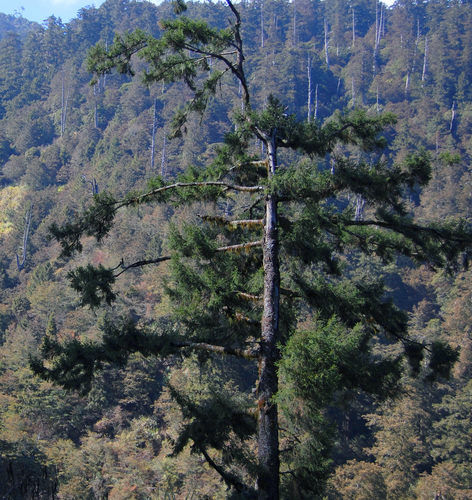
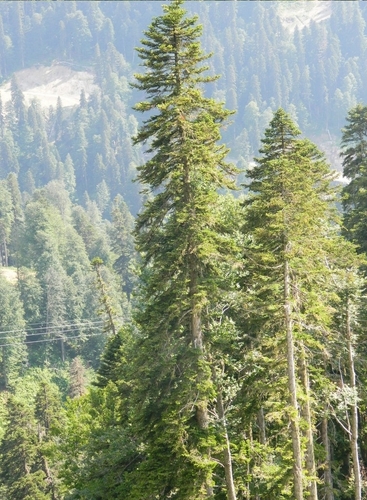
Tsuga dumosa (D.Don) Eichler is a tree that usually grows 20 to 25 m (65 to 80 feet) tall, and can reach an exceptional maximum height of 40 m (130 feet). Its typical diameter at breast height ranges from 40 to 50 cm (16 to 20 inches), and can exceed 100 cm (40 inches).
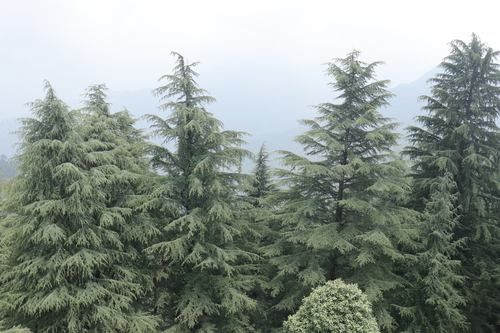
Small Tsuga dumosa trees have an ovoid crown and a pendulous, bush-like growth form. Older trees, especially cultivated specimens, usually grow multiple stems from one or two sinuous boles. Mature trees have a broad, open, irregularly pyramidal crown. The bark is similar to that of old larch: it is pinkish to grey-brown, deeply textured with broad, shallow, flaky fissures. Branches grow either obliquely or horizontally.
First-year twigs are reddish brown or greyish yellow, and are pubescent, meaning covered in short hairs. Two- to three-year-old branches are greyish brown or dark grey, and bear visible leaf scars. The wood of this tree is brownish yellow, with a fine structure and straight grain.
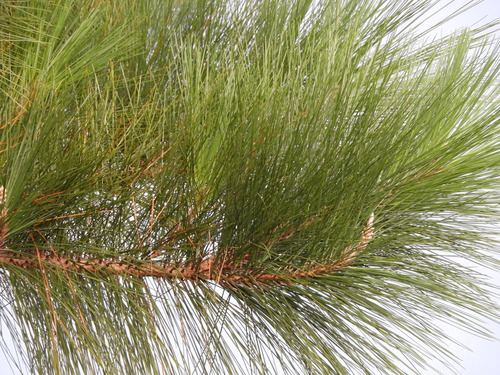
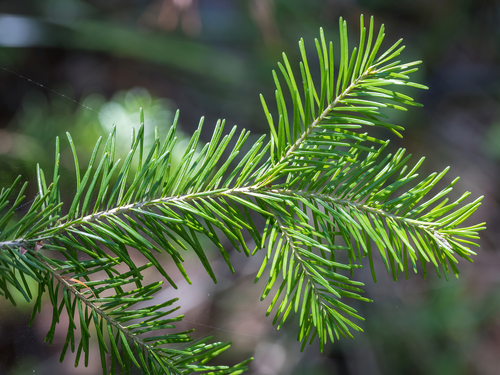
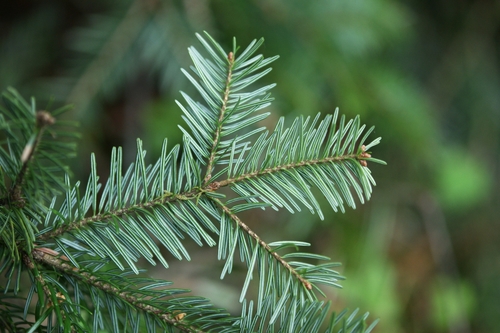
Leaves are spirally arranged, point forward along branches, and are spaced more distantly from one another than leaves of other species in the Tsuga genus. They are linear, measuring 10 to 25 mm (0.5 to 1 inch) long by 2 to 2.5 mm (0.08 to 0.10 inches) wide. Leaf tips are obtuse or rounded, and very occasionally emarginate. The upper surface of leaves is green and shiny, while the underside bears two wide silvery stomatal bands. Leaf margins usually have small dents along the upper half, so entire margins are rare. The midrib is concave on the upper leaf surface.
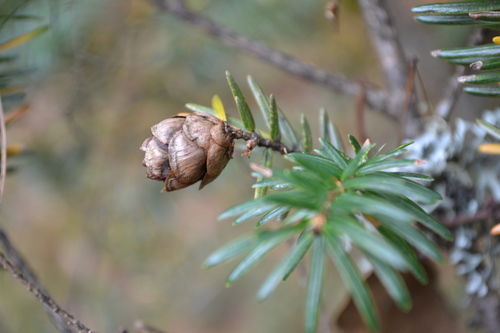
Staminate flowers are globose, arranged singly in leaf axils. Their anthers are green-yellow and lack air sacs. Pistillate flowers are round-ovate, also arranged singly, grow terminally on branches, and are slightly down-curved. They have numerous spirally arranged scales, with two ovules contained inside each scale. Mature seeds are approximately 9 mm (0.4 inches) long, ovate, brown, and have thin wings on their upper sections. This species flowers from April to May, and fruits from October to November.
Tsuga dumosa is primarily associated with the Himalayas. In India, its distribution extends from Uttarakhand in the west to Arunachal Pradesh in the east, and it is present throughout the Himalayan region of Nepal. Its range continues southeast to northern Myanmar and Vietnam, and northeast to southeastern Tibet, northwestern Yunnan, and southwestern Sichuan. In Vietnam, it only grows at altitudes above 1,500 m (5,000 feet) on Hoang Lien Son Mountain. In Vietnam, it is most often found growing in mixed stands with Rhododendron species and Abies pindrow, though it can occasionally form pure stands. It is adapted to cold climates with high rainfall and high humidity.