About Tropinota squalida (Scopoli, 1763)
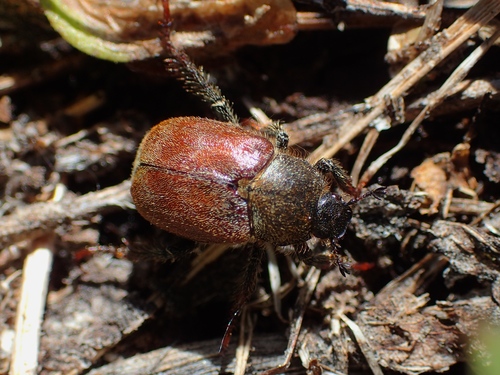
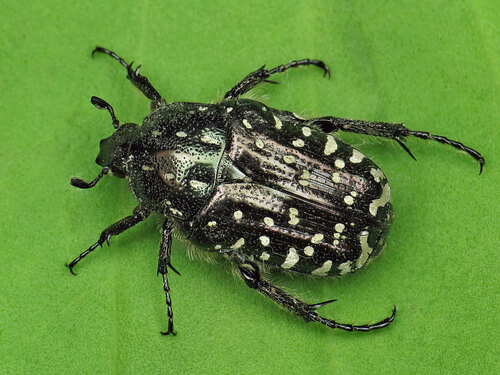
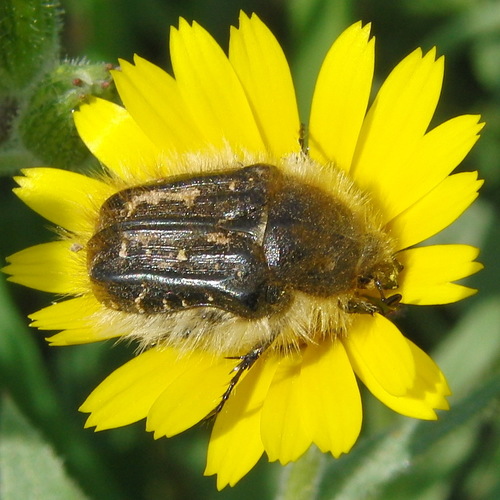
Tropinota squalida (Scopoli, 1763) is a species of beetle in the family Scarabaeidae, subfamily Cetoniinae. These beetles are mainly distributed across France, Italy, Greece, Portugal, former Yugoslavia, Spain, the Near East, and North Africa, and they do not occur in North or South America. Adults of this species range from 10 to 15 millimetres (0.39 to 0.59 inches) in length. Their head, scutellum, and elytra are dark-brown; thick, long tawny hair covers the elytra and abdomen. Elytra display two series of white spots along the sides of the central hull. The scutellum is rounded and hairy, but glabrous (hairless) at its posterior, and the fifth humeral slot is bifurcated. Larvae of Tropinota squalida feed on roots. Active adults can be found from May through July, where they feed on flowers. In many regions, adult Tropinota squalida are classified as an agricultural pest. They feed on the flowers of a wide range of domestic plants, most notably fruit trees including apple, pear, cherry, and quince, as well as strawberries and ornamental flowers such as roses and irises. They consume the pistil, stamens, and petals of these flowers, which eliminates any chance for fruit production to occur. After finishing feeding, adults return to the local soil; if temperatures remain warm enough, they will emerge again after a few days to continue feeding.