About Tropidurus torquatus (Wied-Neuwied, 1820)
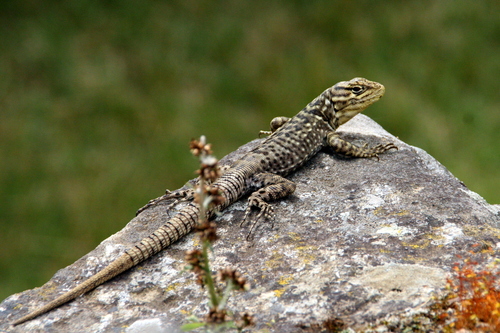
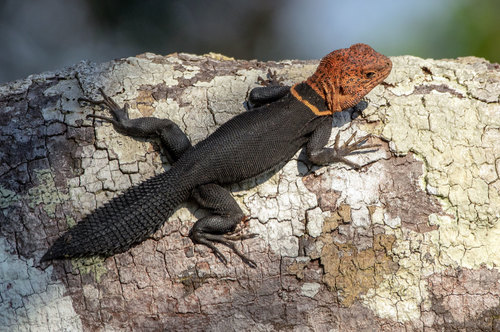
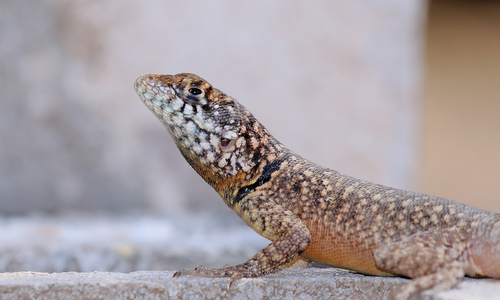
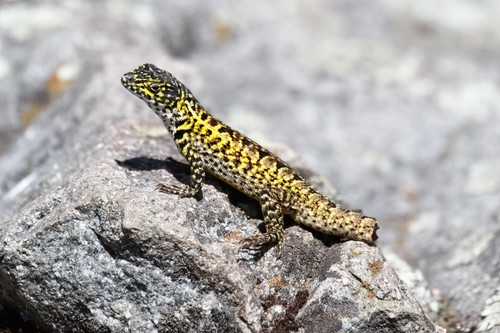
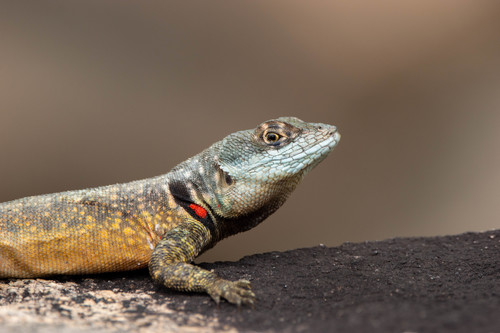
Tropidurus torquatus is a medium-sized lizard with a relatively large head and overlapping scales. Reproductively mature females have a snout-to-vent length (SVL) ranging from 7 to 10 cm (2.8 to 3.9 in). One study of adult males recorded a mean SVL of 8.68 cm (3.42 in), while another study found adult males had a mean SVL between 11 and 12 cm (4.3 to 4.7 in).
This species is native to South America, where it occurs in Argentina, Bolivia, Brazil, Colombia, French Guiana, Guyana, and Suriname. It is one of the most widely distributed species within the genus Tropidurus.
Tropidurus torquatus primarily inhabits open habitat types, especially restinga within the Atlantic Forest biome. It can also occupy disturbed and degraded restinga. It has been recorded on the Abrolhos Archipelago, which shows it is capable of colonizing offshore islands. It also lives in the Cerrado, and may be found in residential areas, where it is skilled at climbing house walls. It is mostly ground-dwelling, and lives in termite nests, as well as on or under rocks and logs. It is associated with a number of other animals, including the giant ameiva, coati, brown capuchin, guira cuckoo, and false coral snake.
Female Tropidurus torquatus can lay several eggs per clutch, but a clutch size of two is common, particularly in coastal areas. Clutch sizes may be larger in other geographic ranges.