About Tropidurus melanopleurus Boulenger, 1902
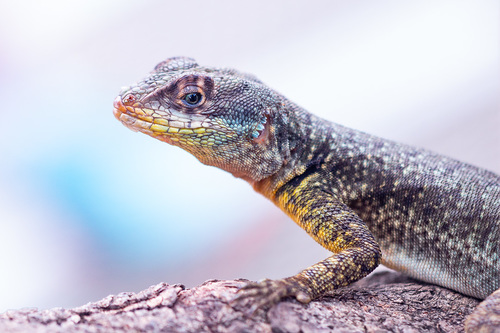
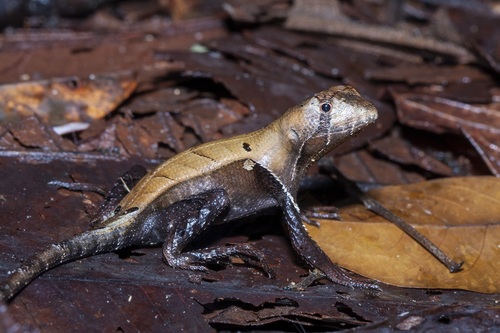
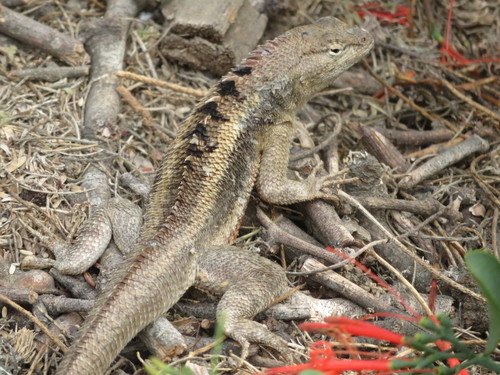
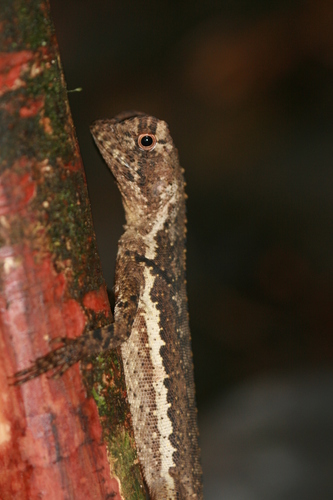
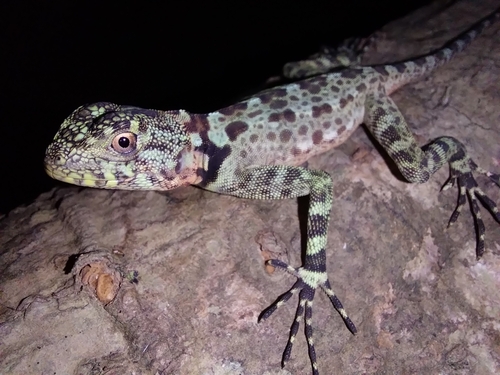
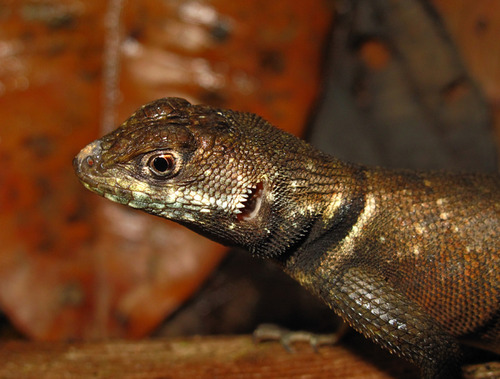
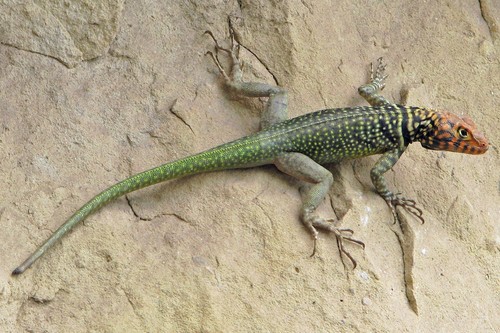
This species is Tropidurus melanopleurus Boulenger, 1902, commonly called the Black Lava Lizard. Female individuals have a black to brown head marked with a prominent cream stripe running across the head's temporal region and back. The female dorsum is black, marked with a series of 4 to 6 red, cream, and green bands or large spots. The average adult female snout-vent length (SVL) is approximately 64.2 +/- 4.2 mm. Male individuals have matching colored vertebral and dorsal crests. Adult males have a bright green dorsum that carries a bright orange color gradient leading toward the head, plus several small cream spots on the dorsal side. The orange coloration covering the neck and head is interwoven with a charcoal-colored reticulated pattern. The average adult male snout-vent length (SVL) is approximately 97.1 +/- 9.7 mm. This lizard is distributed along the eastern slopes of the Andes, ranging from southeastern Peru to northwestern Argentina, and occurs through parts of Bolivia including La Paz. The species inhabits vertical, clifflike areas of tertiary sedimentary rock that feature gravel patches and very sparse vegetation. Within these rocky habitats, males are typically found at higher elevations than females. At a frequently sighted location in Bolivia, Santa Cruz de La Sierra, the regional average summer high temperature is 78.8°F (26°C), and the average winter low temperature is 68.0°F (20°C). Males of this species act as thermoregulators, while females are thermoconformers. This difference is demonstrated by the fact that females are generally active across a broader range of body temperatures.