About Tropidoderus childrenii (Gray, 1833)
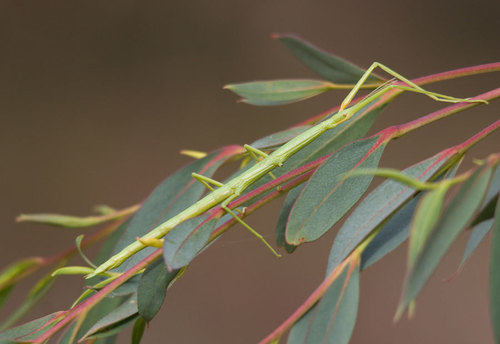
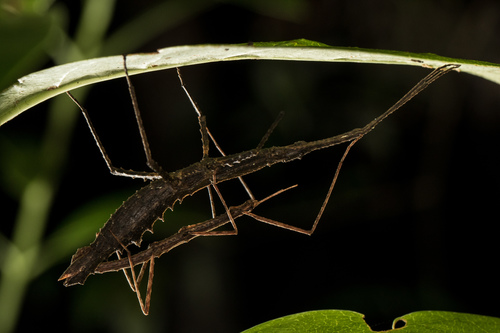
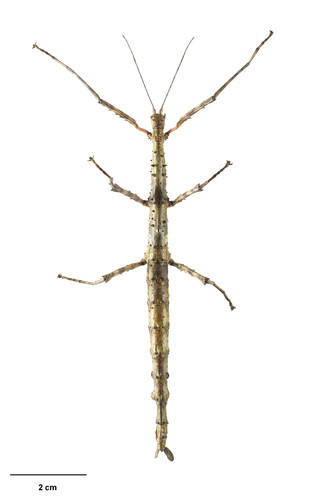
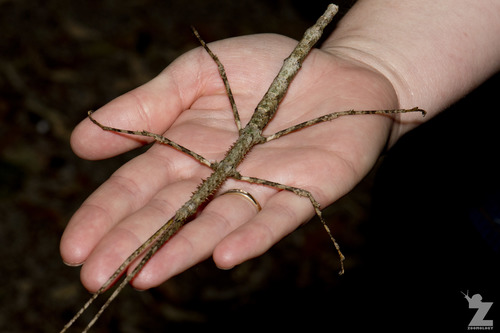
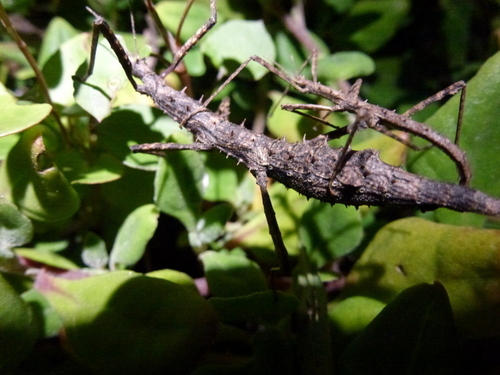
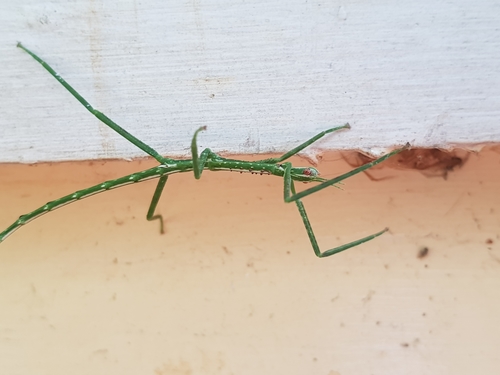
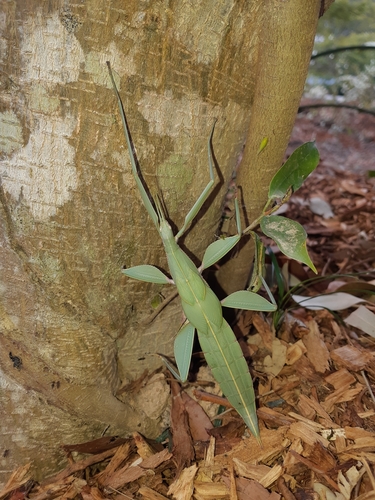
Tropidoderus childrenii, also called Children's stick insect, is a relatively large species of stick insect. Adults generally reach about 110 millimetres (4.3 inches) in length, and are native to Eastern Australia. Females are typically medium green, and closely resemble leaves, which helps them camouflage against foliage. Each of their hindwings has a large dark blue spot at the base of the remigium and anal lobe; this spot is usually hidden when the wings are folded. Nymphs have a long yellow stripe running down the center of their bodies that matches the color of leaf veins. Males differ noticeably in appearance: they are usually more slender and colored reddish-brown, and are smaller and lighter than females. This species lives primarily in areas with abundant eucalyptus trees, as it feeds mainly on the leaves of various gum and eucalyptus species. Adult Children's stick insects mate multiple times. Females lay eggs continuously throughout their adult lives. Males fly between trees to search for females to mate with. Because females are much larger and heavier than males, they rarely fly far or often. After mating, females lay small, oval, gray eggs that drop to the leaf litter. Eggs are laid in winter, and hatch the following autumn.