About Trogon elegans Gould, 1834
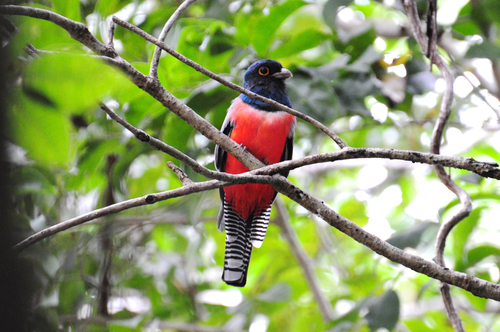
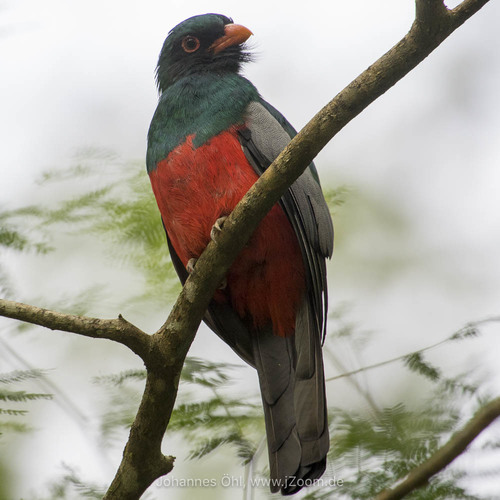
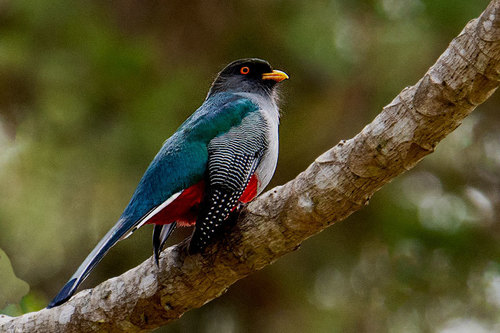
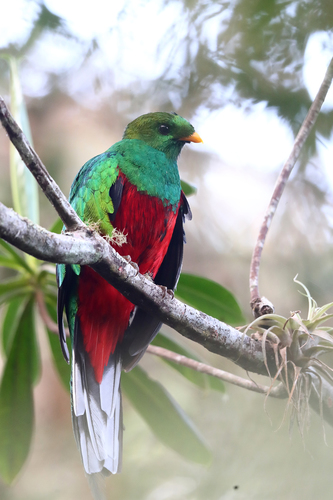
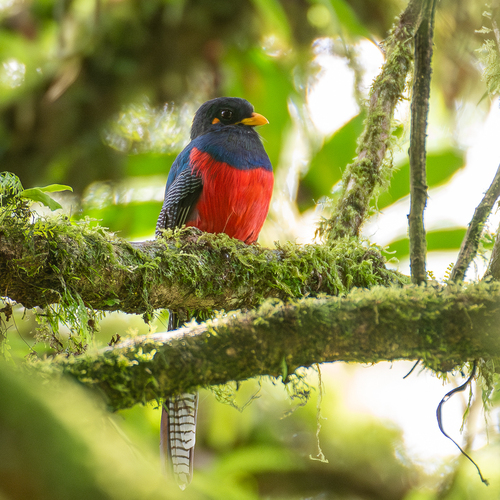
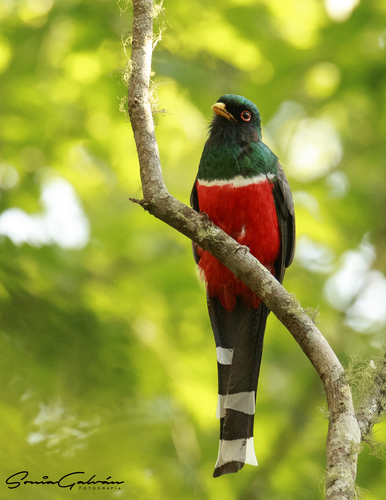
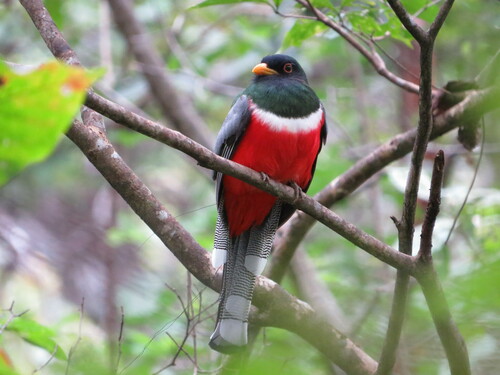
Trogon elegans (common name elegant trogon) is a medium-sized bird, measuring 28–30 centimetres (11–12 in) long and weighing 60–78 grams (2.1–2.8 oz), with an average weight of 68 grams (2.4 oz). Like other trogons, elegant trogons show sexual dimorphism, meaning males and females have different plumage. Males are typically brightly colored: they have a red-orange lower chest and belly, a metallic deep green back, and the copper tint of their backside gave this species its former common name. Their face and throat are dark black, with a white band crossing the chest. Their upperwings are grey, and their long, square-tipped tail feathers are usually brown on the upper side, with a white undertail marked by black horizontal stripes. The color of the upper tail can vary between subspecies. Females and immature males have a similar appearance, sharing the same pattern as mature males but with different, duller coloration that is typically brownish-grey, plus a white ring around the eye. Along with the eared quetzal, this is the northernmost trogon species in the world. The species is endemic to Central America and the southwestern United States, ranging from Guatemala in the south north to the mountains of southeast Arizona. Elegant trogons are short-distance migrants, and only travel as far north as Arizona, where they spend the breeding season. The northernmost populations of the subspecies T. e. ambiguus are partially migratory, and the species is occasionally found as a vagrant in far southeastern and western Texas. It lives in the lower levels of semi-arid open woodlands and forests. Elegant trogons prefer dry, arid woodlands, and can be found in pine forests, deciduous forests, second-growth forests, and around scrubland. They avoid humid regions, and typically live on hillsides near cliff edges. In Arizona, they occur in canyons covered with riparian and edge vegetation, and the presence of plants such as junipers, oaks, sycamores, and Pinus edulis is a good indicator of suitable habitat for the species. For breeding, it nests 2–6 metres (7–20 ft) high in an unlined shallow cavity, usually selecting an old flicker hole, and lays a typical clutch of two to three eggs. The average incubation period is 17 days, with both parents taking turns incubating the eggs. Elegant trogons display biparental care, meaning both the male and female are responsible for caring for their offspring. Both parents deliver food to the young, and usually provide insects rather than fruit. Both parents feed their offspring until one month after the young fledge. After the young fledge and reach one month old, the adults split the brood, with adult males taking the male young and adult females taking the female young.