About Troglodytes solstitialis P.L.Sclater, 1859
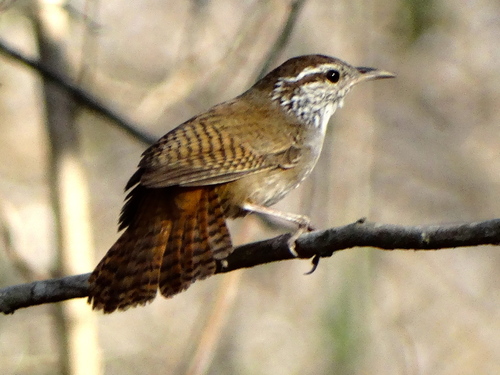
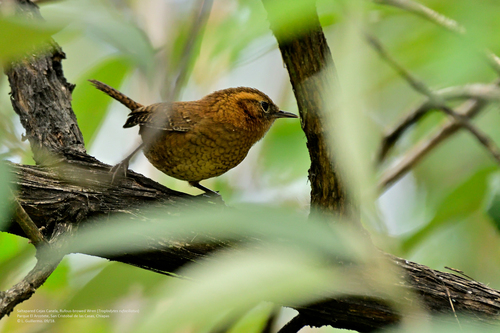
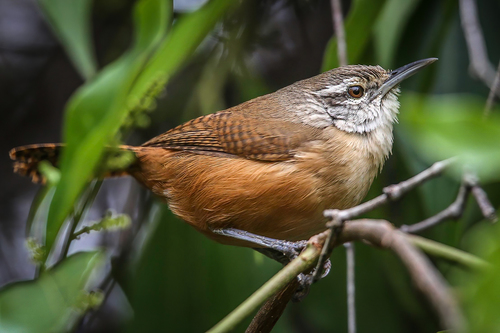
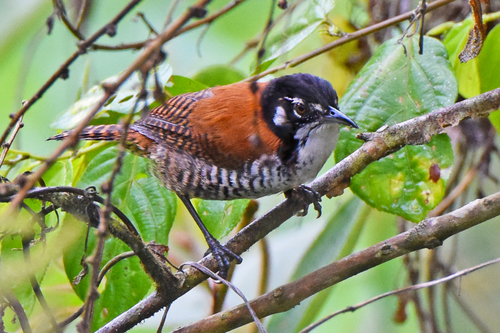
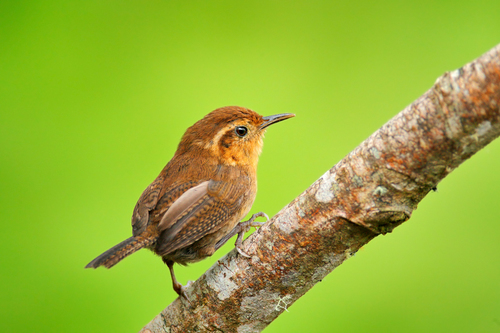
Scientific name: Troglodytes solstitialis P.L.Sclater, 1859, commonly called the mountain wren. This species measures 10.5 to 11.5 cm (4.1 to 4.5 in) long, with an average weight of 11.8 g (0.42 oz). For adults of the nominate subspecies, the forehead and crown are rufous brown. The nape, shoulders, back, and rump are a less reddish brown. The tail is rufous brown with narrow black bars, and the folded wings also appear barred. It has a buffy brown supercilium, a darker brown line behind the eye, and warm buff-colored cheeks. Its throat and chest are also warm buff, while the belly is a paler buff. The flanks are buffy brown with darker bars, and the vent is grayish with darker bars as well. Juveniles have less warm supercilium and upperparts, with dull gray brown underparts marked by darker speckles. Several subspecies differ in appearance from the nominate: T. s. solitarius has darker upperparts and cheeks, a paler throat, and less reddish flanks. T. s. macrourus is larger than the nominate with a longer tail, and has a white center to its breast. T. s. frater is similar to macrourus but has a whitish supercilium. T. s. auricularis is similar to frater but has a shorter tail, and its upperparts are less reddish. The subspecies of mountain wren are distributed across the Andes as follows: T. s. solitarius lives in the mountains of Colombia (except extreme southern Colombia) and western Venezuela. T. s. solstitialis ranges from extreme southern Colombia through Ecuador into northwestern Peru. T. s. macrourus is found along the eastern slope of the Peruvian Andes from the Department of San Martín southward. T. s. frater occurs in extreme southeastern Peru and western Bolivia. T. s. auricularis is found in northwestern Argentina, extending south to Tucumán Province. The mountain wren inhabits humid montane forest, cloud forest, and the edges of these forests up to the tree line. It is also sometimes found in bamboo thickets. Most of its population occurs between 1,700 and 3,500 m (5,600 and 11,500 ft) in elevation, though it can be found as low as 700 m (2,300 ft) in Argentina.