About Troglodytes pacificus S.F.Baird, 1864
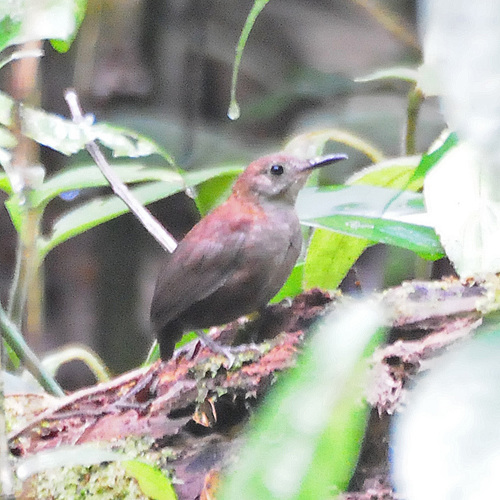
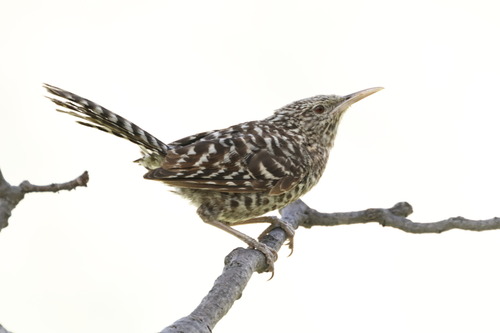
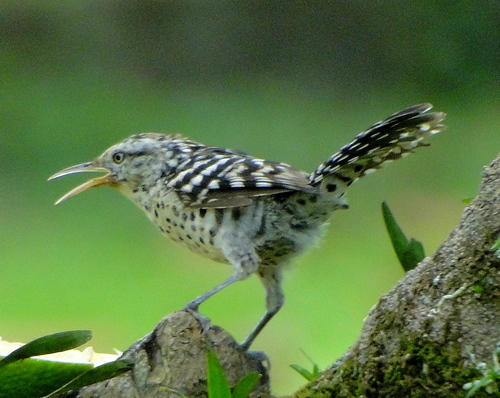
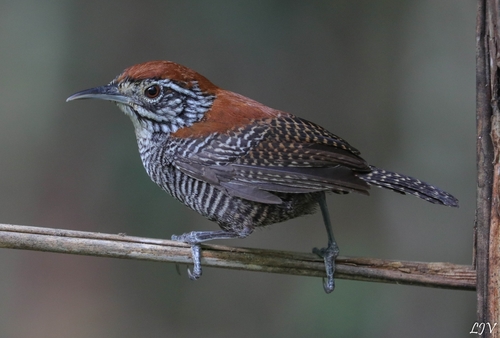
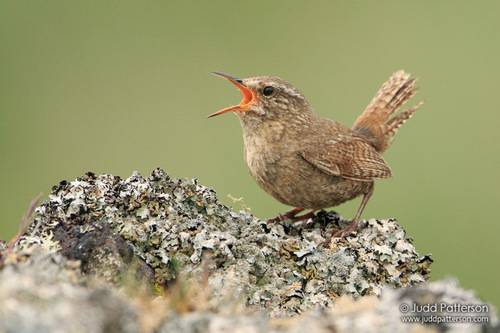
This species, Troglodytes pacificus S.F.Baird, 1864, has rufous brown upper plumage, and richly colored under plumage. Darker brown and dusky barring appears across its body, including its wings and tail. It has a dark brown bill and pale brown legs. Young individuals have less distinct barring than adults. Pacific wrens nest mostly in coniferous forests, especially spruce and fir forests. They are often recognized by their long, exuberant songs. Though they are insectivores, they can stay in moderately cold, even snowy climates by foraging for insects on substrates like bark and fallen logs. Their creeping and climbing movements are constant rather than fast. Their short flights are swift and direct, but not sustained; their tiny round wings whir as they fly between bushes. At night, usually during winter, they often roost in dark sheltered spots, snug holes, and even old nests, matching the meaning of their scientific name. During harsh weather, they may roost in groups, which can be family units or multiple unrelated individuals gathering together to share warmth. Their diet mostly consists of insects and spiders. In winter, they consume large insect pupae and some seeds.