About Trochus radiatus Gmelin, 1791
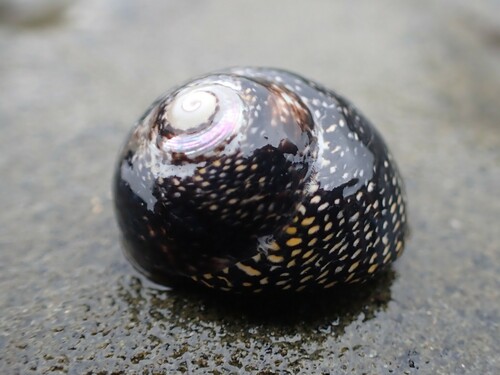
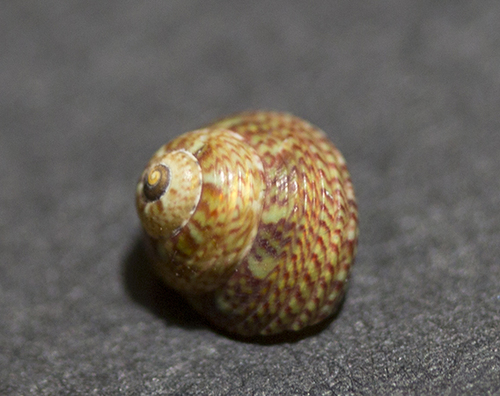
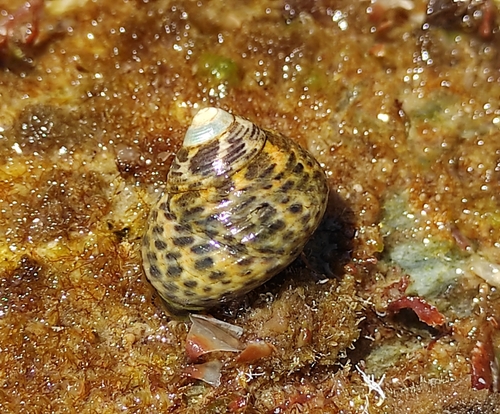
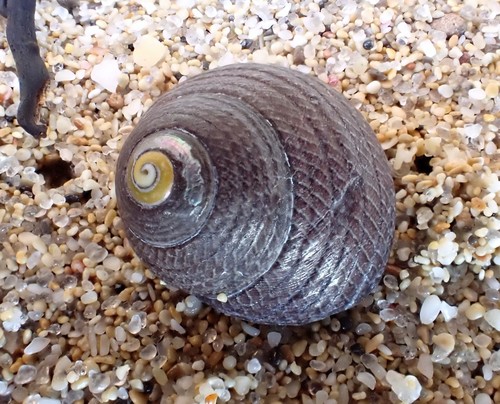
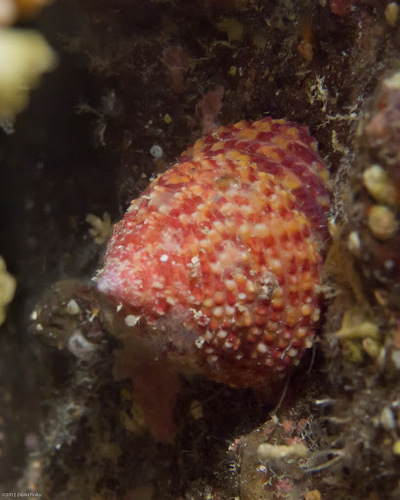
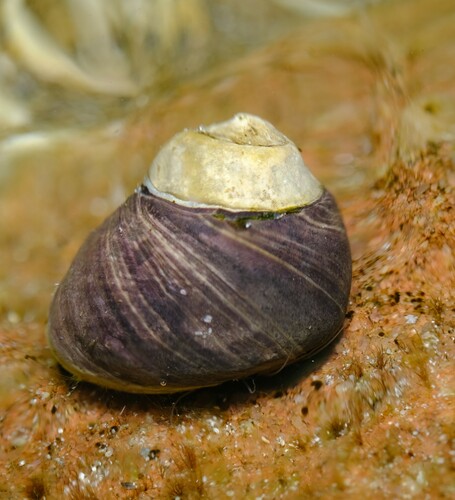
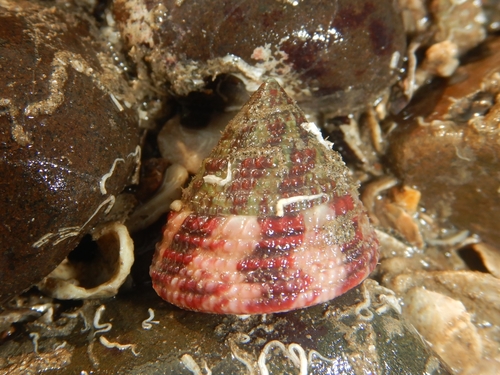
Trochus radiatus Gmelin, 1791 has a thick, fairly solid, trochoidal shell with a moderately elevated spire and a false umbilicus. Shell height ranges from 17 mm to 40 mm. The shell is yellowish-white, tinged with green, marked with broad or narrow continuous axial, radiating crimson flame-shaped stripes. The base of the shell is white or pink, with radiate red markings or fine red speckles. The aperture, columella and umbilical area are pearl white. The spire has nearly straight outlines. The apex is acute, usually eroded and orange-colored. This species typically has around 7 planulate whorls, which are sometimes slightly concave across the middle. The body whorl has a sharply angled periphery. The upper surface of the shell is encircled by irregularly beaded bands, with 5 or 6 unevenly sized bands on each whorl; the uppermost row of beads is the largest, and beads in the upper row are larger than those in lower rows on each whorl. The base of the shell is nearly flat, with concentric lirae. These lirae are granulose and rather coarse, with broad interspaces that are often filled with fine revolving lirulae or striae. The oblique columella is heavily folded near its upper end, with a nearly smooth edge that bears blunt teeth. The large aperture is subrhomboidal, lirate and grooved inside. The basal lip is thickened and crenate. The umbilicus is wide and deep. The umbilical tract is funnel-shaped and fairly broad, with a central rib. The parietal wall has very little callus, shows the base's base color, and has a white spiral rib in its center. Normally, adult and large individuals have shells encrusted with algae. Shells washed up on beaches are usually clean, revealing the underlying pearly layer beneath the outer surface. This species feeds on encrusting algae. It can be distinguished from related forms by its prominent radiate color pattern, sculpture of coarse granulose lirae with interstitial lirulae on both upper and lower shell surfaces, wide umbilical tract, and eroded corneous or orange apex. This species occurs on intertidal rock boulders in the Indian Ocean off the coast of Madagascar and in the Western Pacific.