About Trivia arctica (Pulteney, 1799)
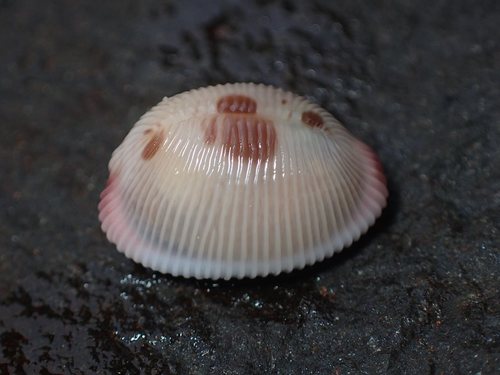
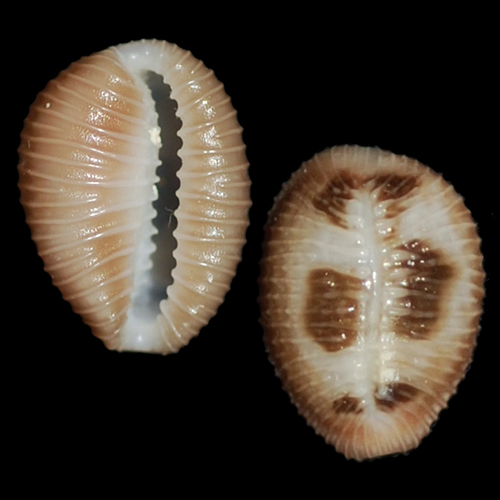
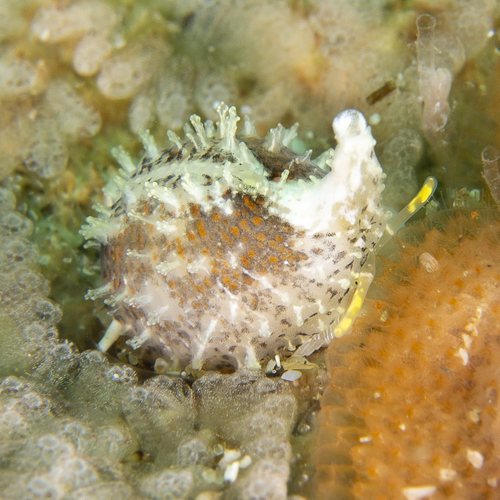
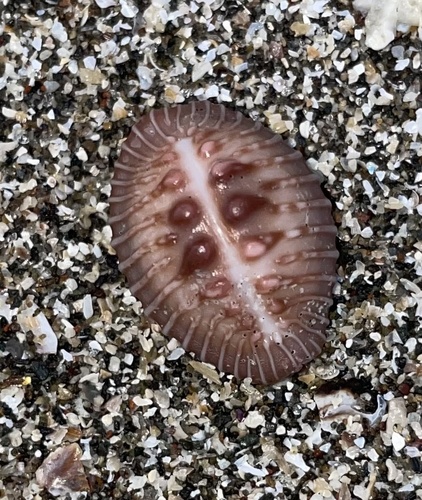
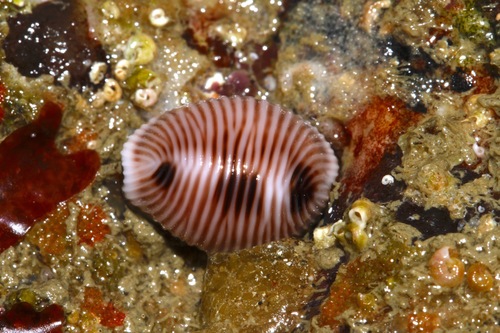
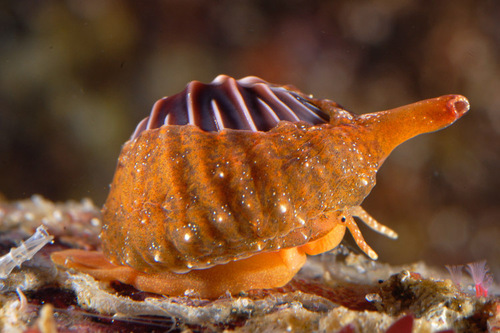
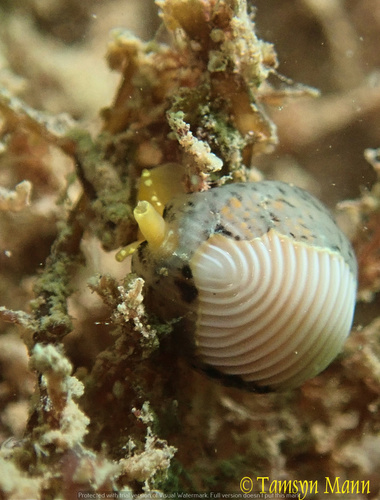
The species is formally named Trivia arctica (Pulteney, 1799). Its shell is glossy and lemon-shaped, marked with 20 to 30 transverse ridges. The upper portion of the shell is a uniform, very pale brown, with no pigment spots on the shell itself; the animal's mantle may sometimes have dots. The shell reaches a maximum length of approximately 10 mm and a maximum width of approximately 8 mm. The mantle is covered in numerous papillae. In deeper waters, the mantle is light in color, but it darkens, often turning red, in intertidal zones. The foot is light yellow or light orange. The admedian teeth of the radula have denticles, and the penis is flat and broad. Larvae have a light-colored stomach and intestine. In the veliger stage, they have a four-lobed velum, a structure used for swimming and collecting particulate food, with very long lobes. This species is distributed from the Mediterranean Sea north to Orkney (off Scotland) and Norway, and it is more common in the northern part of its range. In the British Isles, the shells are commonly called "cowries", except in Caithness, Orkney, and Shetland where they are known as Groatie Buckies. In these regions, the shells are traditionally considered lucky, and they appear in art and jewellery. On the Isles of Scilly, the shell is referred to as Guinea Money. This species typically lives below the low tide line, meaning it is sublittoral, but empty shells of the species are often washed up onto beaches. In its northern range, it occurs at depths down to 100 m, while in its southern range it can be found at depths up to 1000 m. Large numbers of shell ornaments made from Trivia arctica and Trivia monacha have been excavated from Stone Age burials at Téviec in northwestern France, dated to around 5000–7000 BC. These are some of the earliest European examples of false cowrie shells used for necklaces and ornaments, and the ornaments are mostly associated with male skeletons. While the genus Trivia looks similar to true ribbed cowries from the tropics, the two groups are not closely related. Although these shells are sometimes called cowries in the British Isles, they are more widely known as false cowries.