About Triturus carnifex (Laurenti, 1768)
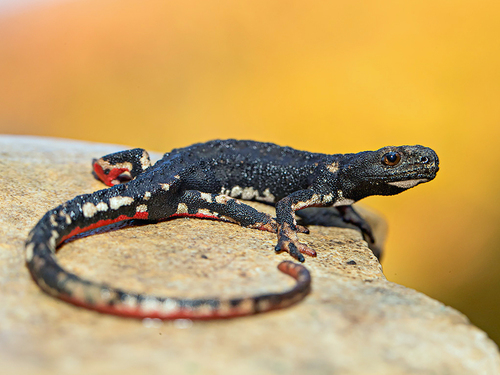
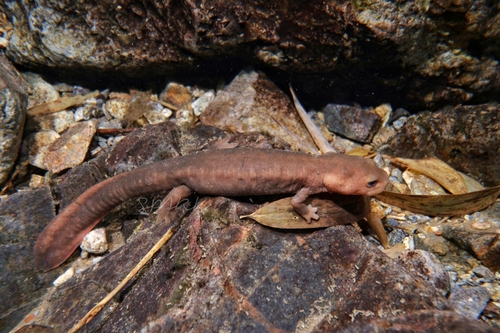
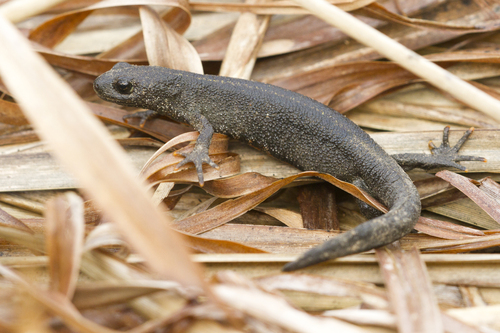
The Italian crested newt, with the scientific name Triturus carnifex, is a newt species belonging to the Salamandridae family. This species is distributed across parts of Italy and the Balkans. It breeds in aquatic environments and may stay in water for up to four months at a time. The timing of when T. carnifex enters water for breeding depends on the location of its breeding ponds. As a nektonic species that swims freely independent of water currents, T. carnifex prefers deep water habitats. It tends to favor ponds over larger bodies of water, which may be explained by the absence of predatory fish in these ponds. They typically select ponds in northern Europe, where temperatures are colder. Adult T. carnifex begin arriving at breeding ponds between February and May, and leave between July and October. At warmer ponds, adult newts arrive within a month and leave during a two-week period in July. Andreone and Giacoma (1989) speculated that newt migration into breeding ponds increases after rainy days, because rainfall removes humidity-related limitations on newt activity. Higher altitudes with colder temperatures directly affect the body size of T. carnifex. Ficetola et al. (2010) found that living in colder temperatures causes increased body size in both male and female T. carnifex. Females at higher altitudes are larger, which occurs because they carry more oocytes and have larger ovaries, giving them a reproductive advantage over smaller females. T. carnifex is poikilothermic, and a larger body size helps reduce heat fluctuations. Ficetola also found that T. carnifex body temperature fluctuations decrease as body size increases. Increased body size is also seen in areas with higher precipitation or nearby primary producers, as these conditions provide increased resources for the animals. Human activity has dramatically altered T. carnifex habitat through the expansion of industrial areas and urban centers. This causes fragmentation of natural landscapes, leading to selective extinction, genetic drift, and inbreeding caused by population isolation. The introduction of fish to isolated wetland habitats also contributes to amphibian population decline, as fish prey on newt larvae. To avoid competition with other co-occurring newt species, T. carnifex generally reproduces in the deeper sections of ponds and is more nocturnal. Thanks to its larger body size, T. carnifex can prey on smaller newt species such as the palmate newt. Reproductive female T. carnifex have been shown to regulate their body temperature more precisely, and prefer higher temperatures, than non-reproductive females and males.