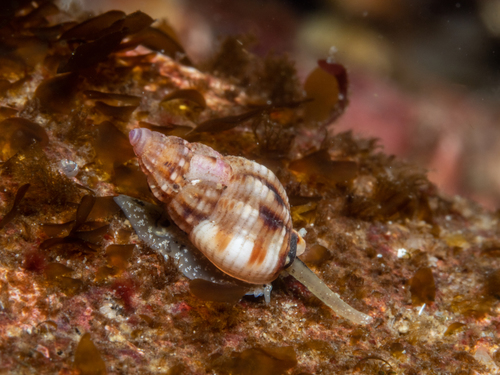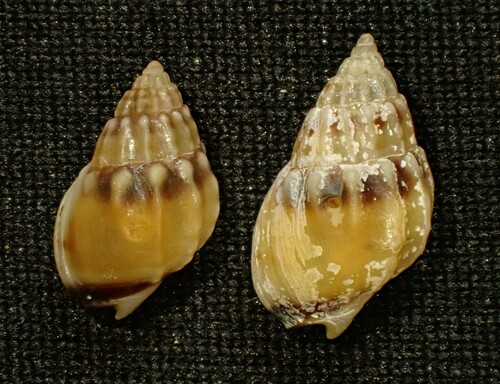
About Tritia burchardi (Dunker, 1849)
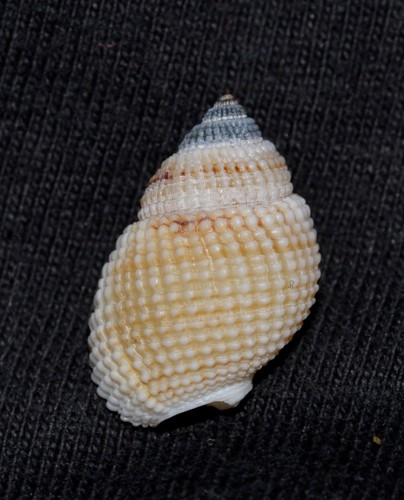
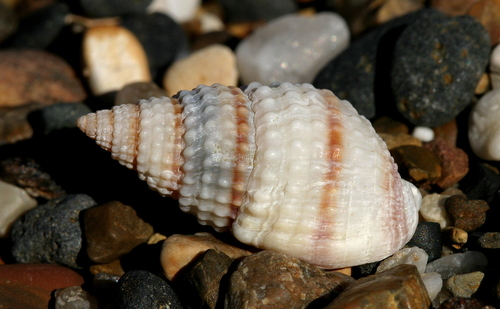
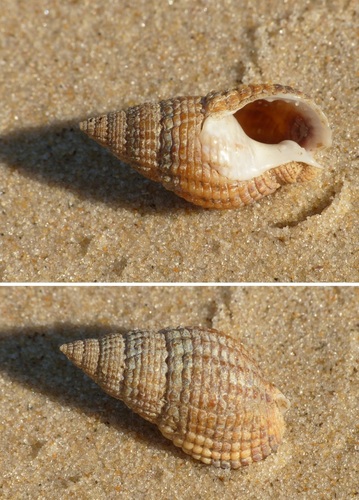
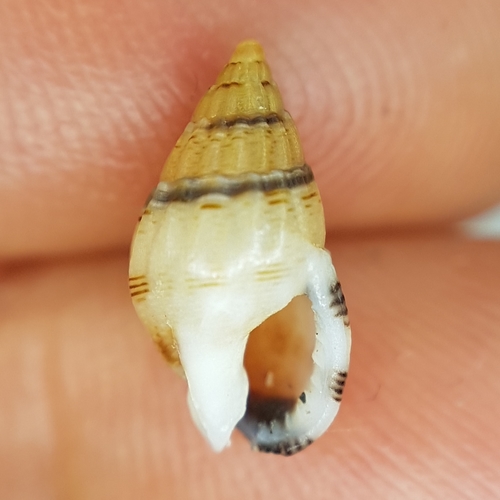
Tritia burchardi (Dunker, 1849), originally described in Latin under the name Nassa labecula, has a shell that measures between 10 mm and 15 mm in length. The shell is ovate-conical and oblique. Its spire is somewhat acuminate and pale brown, and the body whorl is circled by a faint, indistinct brown band. The uppermost whorls are flattened and ribbed; the body whorl is ribbed on its upper portion and flat on its lower portion. The callus of the lip is expanded and thin, marked with a shiny brownish spot. The outer lip is thickened toward the posterior and has teeth on its inner surface. This species is found in waters off Australia, including the states of New South Wales, Queensland, South Australia, Tasmania, Victoria, and Western Australia, as well as off northern New Zealand.