About Trithemis pallidinervis (Kirby, 1889)
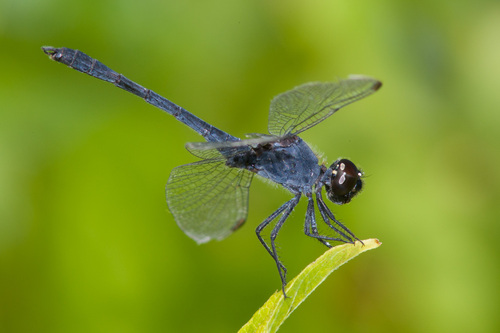
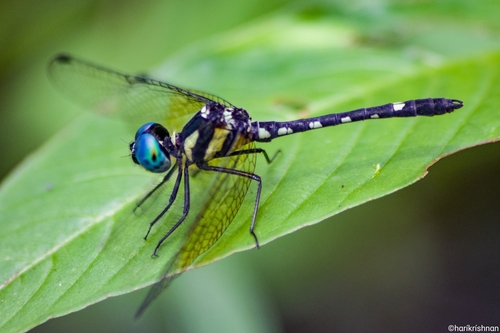
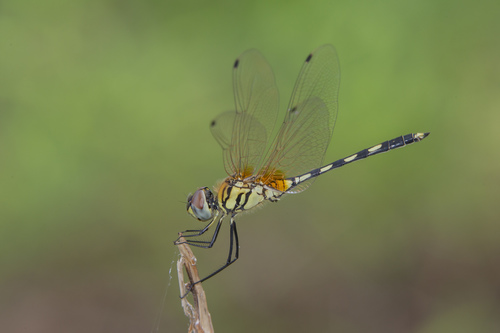
Trithemis pallidinervis, commonly known as the long-legged marsh glider, is a medium-sized yellowish brown dragonfly with distinctively long legs. For males, the front of the face is yellow or pale brown, and the upper portion of the face is iridescent purple. The eyes are reddish brown on top, brown on the sides, and bluish grey below. The top of the thorax is olivaceous brown, marked with a dark brown triangle. Each side of the thorax is bright yellowish brown and marked with three black stripes. The legs are black, long, and spidery; the basal half of the femora on the first pair of legs is bright yellow. The wings are transparent with reddish venation. Forewings have amber-colored basal markings, and the wings show a golden sheen when viewed from a certain angle. The wing spot is black with creamy white ends. The abdomen is bright yellow, marked with black median and lateral stripes. These stripes merge at the end of each abdominal segment to enclose a wedge-shaped yellow spot. Mature males darken in color from yellow to chocolate brown as they age. Females are similar in appearance to males, but have a broader abdomen. The only distinguishing features between males and females are the secondary genital projection on the second abdominal segment, and the purple frons on the male's face. This dragonfly is found near marshes, weedy ponds, and lakes, where it breeds. It typically perches on tall aquatic weeds or the bare ends of shrubs, and its long legs are clearly visible when it perches. It is one of the most easily observed dragonflies, due to its perching habit and up-winged posture while poised at the tip of swaying reeds.