About Tripneustes ventricosus (Lamarck, 1816)
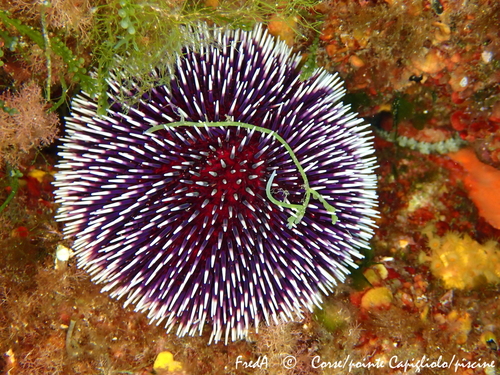
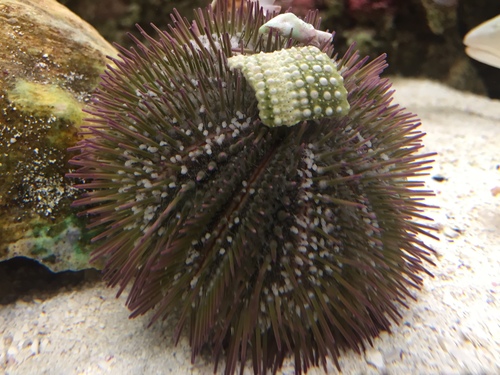
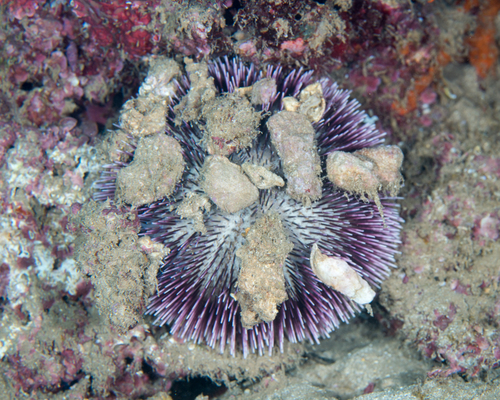
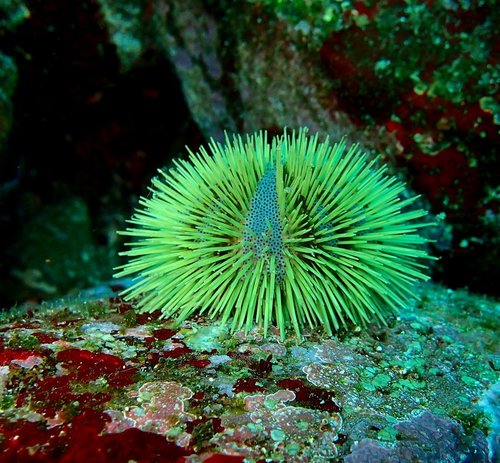
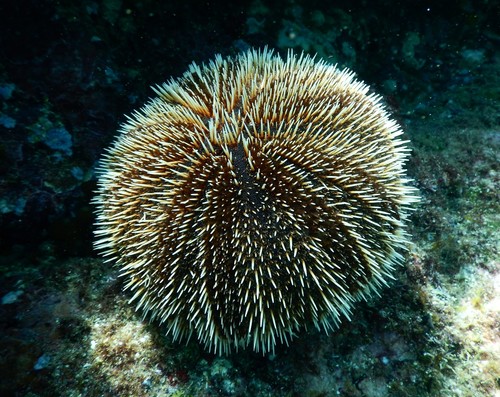
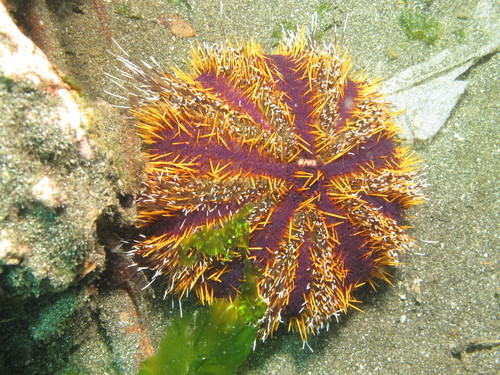
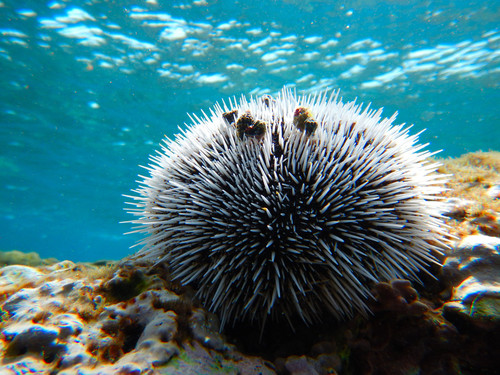
Tripneustes ventricosus, commonly known as the West Indian sea egg, has a dark-colored test, most often black, dark purple, or reddish brown. It bears white spines that measure 1 to 2 centimetres (0.39 to 0.79 inches) long, and the test itself can reach 10 to 15 centimetres (3.9 to 5.9 inches) in diameter. This species often covers itself with pieces of seagrass, shell fragments, and other debris, a behavior similar to its close relative Tripneustes gratilla. These attached decorations are held in place by tube feet positioned between the spines, and are thought to protect the urchin from intense sunlight that reaches shallow water. The West Indian sea egg occurs in shallow areas of the western Atlantic Ocean, Caribbean Sea, and Gulf of Mexico. Its range extends from Bermuda, the Carolinas, and Florida south to Belize, Venezuela, and Brazil, and also includes the west coast of Africa and Ascension Island. It is rarely found in water deeper than 10 metres (33 ft), and inhabits seagrass meadows, rubble areas, and shallow rocky reefs. Young individuals of this sea urchin hide in crevices and under rocks during the day, while larger individuals remain out in the open. The gonads of the West Indian sea egg are traditionally eaten in the West Indies, and there was historically an important commercial fishery for this species in Barbados. The urchins are collected by skin diving, and in the past, divers could collect a thousand urchins in just a few hours. To conserve remaining populations, a closed season was implemented during the species' breeding season from May to August, when harvesting is not permitted. Even with this protection, sea urchin numbers declined in the late twentieth century; the species is now uncommon, and the fishery is no longer viable. Overfishing is considered the primary cause of this population collapse, though pollution and disease may also have contributed. West Indian sea eggs have become rare in the most easily accessed fishing locations, but remain common in more remote areas. Attempts are currently underway to rear urchin larvae in laboratory settings and restock areas where populations have been depleted.