About Tripneustes gratilla (Linnaeus, 1758)
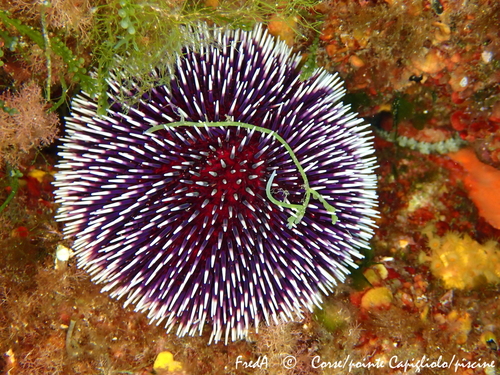
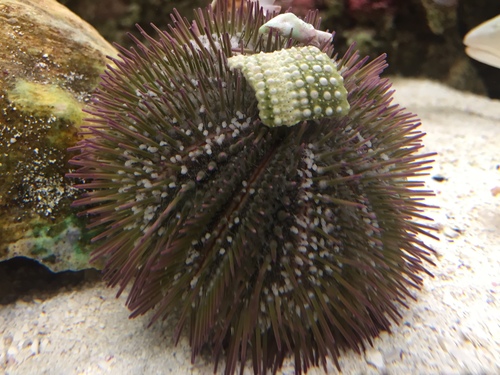
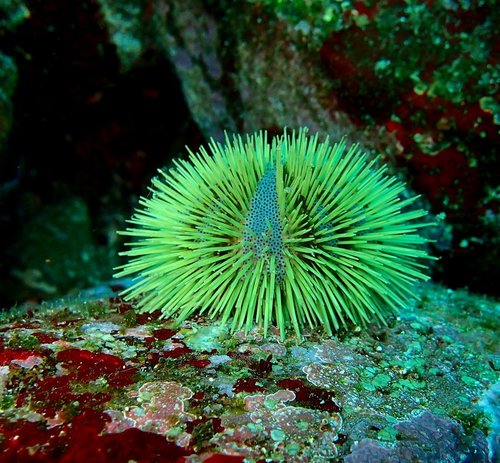
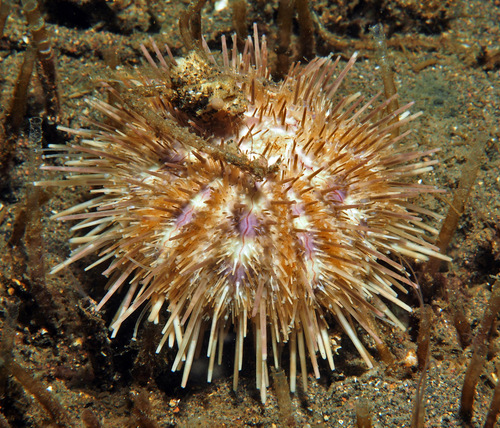
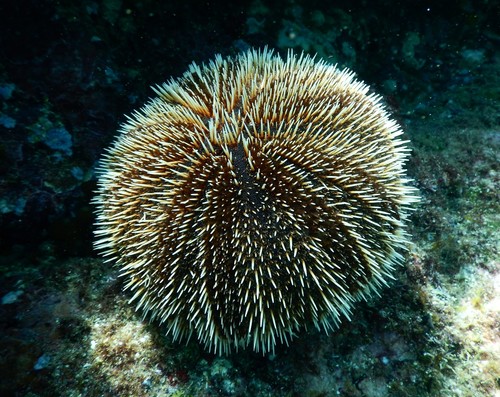
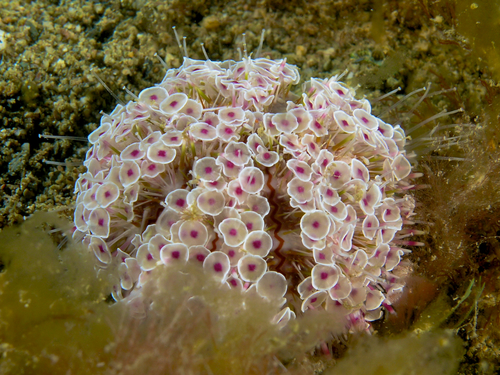
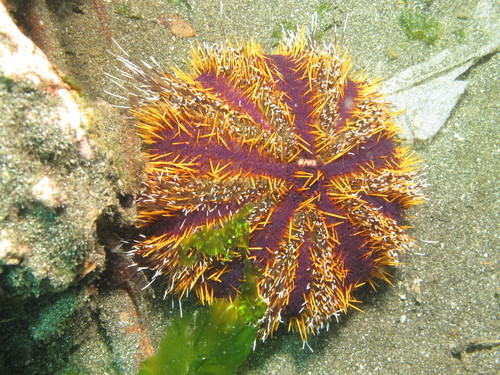
Collector urchins, scientifically named Tripneustes gratilla (Linnaeus, 1758), are typically dark bluish-purple with white spines. Their pedicles are also white, with a dark or black base. Individuals found at Green Island have orange-tipped spines: some specimens have fully orange spines, others only have orange-tipped spines, and some have completely white spines. This characteristic coloration disappears when the urchin dies or is removed from the ocean, and it is difficult to preserve. Adult collector urchins grow to between 10 and 15 centimetres, or 4 to 6 inches, in size. Debris tends to "collect" on these urchins, which gives them their common name. Unlike many other sea urchin species, collector urchins graze continually both day and night. They graze close to the substrate, and their diet includes algae, periphyton, and seagrass. Most collector urchins feed on seagrass fronds, and their ecological impact changes depending on the season and their population abundance. They feed voraciously between November and January: one study found they consumed up to or more than half of local seagrass production during this period. However, the same study concluded that on an annual basis, collector urchins consume approximately 24% of total seagrass production. The main seagrass species they graze on are Thalassodendron ciliatum and Syringodim isoetifolium, but they will also consume other types of algae. Known predators of collector urchins include puffer fish, octopuses, and humans. Collector urchins are found in the waters of the Indo-Pacific, Hawaii, the Red Sea, and the Bahamas. Their range extends from Mozambique to the Red Sea, westward to Hawaii and Clarion Island, eastward to the Tuamotus, and as far south as Port Jackson. They also occur at Shark Bay on the west coast of Australia, and have been recorded in the waters of Governor's Harbor, Eleuthera Island, Bahamas. Mature collector urchins prefer open sea bottoms with some cover, while young urchins prefer rocky areas to hide. Collector urchins live at depths ranging from 2 to 30 metres, or 7 to 100 feet.