About Triplofusus giganteus (Kiener, 1840)
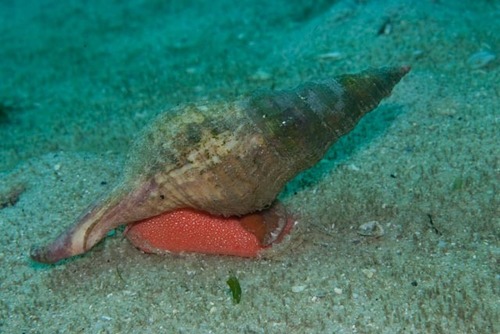
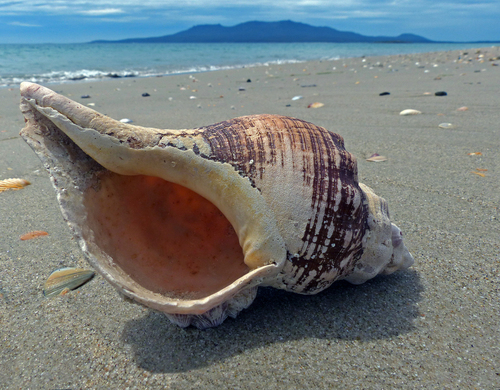
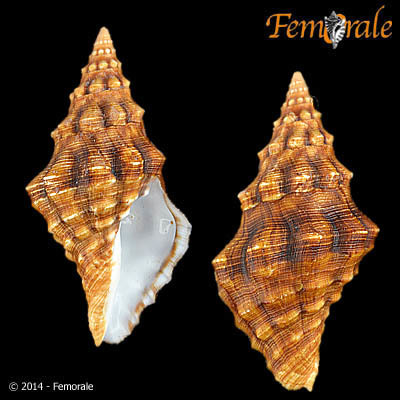
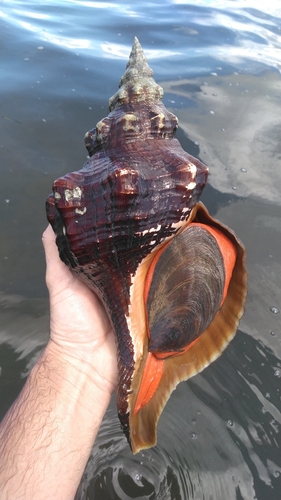
Triplofusus giganteus, commonly called the Florida horse conch or giant horse conch, is an extremely large species of predatory subtropical and tropical sea snail. It is a marine gastropod mollusc in the family Fasciolariidae, which includes spindle snails, tulip snails, and their close relatives. On average, this species weighs over 11 pounds (5.0 kg). Despite being commonly called a horse conch, it is not a true conch, because it does not belong to the family Strombidae. Its shell can reach a maximum length of 60 centimetres (24 in), making this species the largest gastropod found in United States waters, and one of the largest gastropod species in the world. This sea snail is distributed across waters ranging from North Carolina to the Yucatán Peninsula in the Gulf of Mexico. Historical records indicate that its historical range extended farther north along the Atlantic coast than its current observed range. Researchers believe that factors including ocean warming, coastal development, and overharvesting have caused this species' distribution to contract southward over the past century. Ongoing monitoring is needed to determine if this distribution shift can be reversed through targeted conservation efforts. This species lives on sand, weed, and mud flats, from the low intertidal zone to the shallow subtidal zone. It is most commonly found around 6 m (20 ft) deep, and can occur at depths up to 100 m (330 ft). Female Triplofusus giganteus reach reproductive maturity at around six to seven years of age, when their shell measures roughly 200–250 mm (7.9–9.8 in) in length. A single spawning event can produce up to 400 egg capsules, with each capsule holding approximately 70 embryos. Spawning events are infrequent, and females typically only live for a few years after reaching maturity. In Classic Maya art, this horse conch was depicted as paint and ink containers for elite scribes, and as a musical instrument in the form of a trumpet. Native peoples in southern Florida, including the Calusa and Tequesta, made tools such as hammers and plummets from the shell or its columella. They also made drinking cups from the shell's body whorl. Archaeological discoveries on the coast of Belize show that this species was used in Mesoamerican trade and ceremonial contexts by Classic Maya elites.