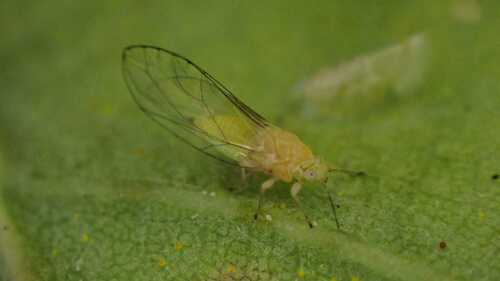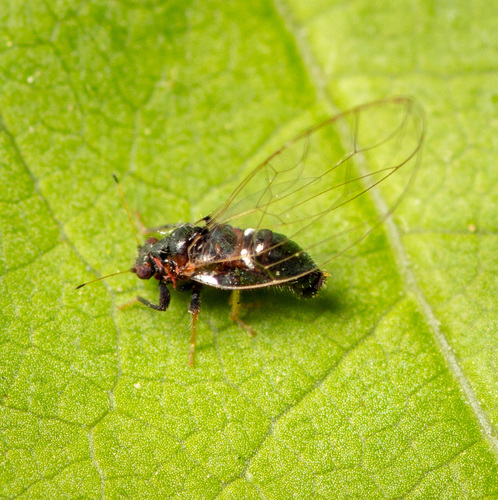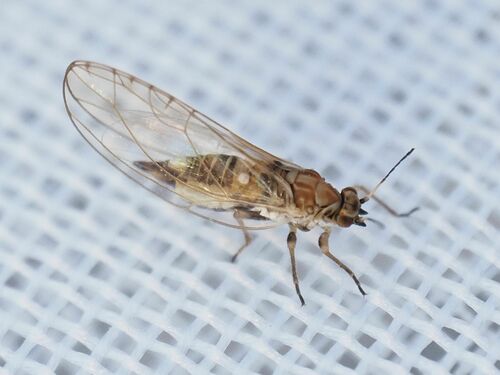
About Trioza urticae (Linnaeus, 1758)
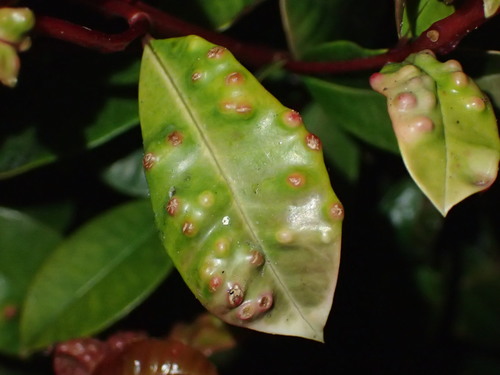
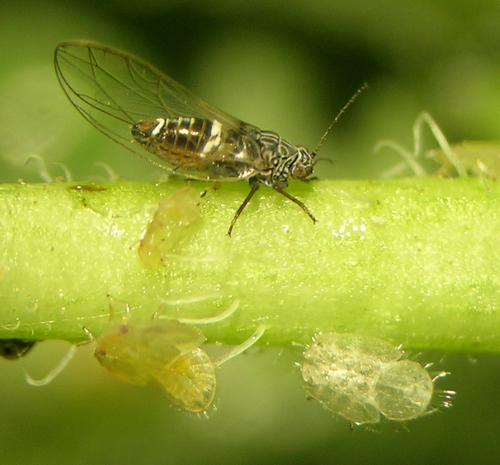
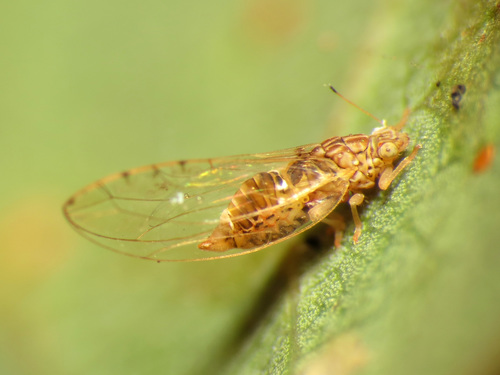
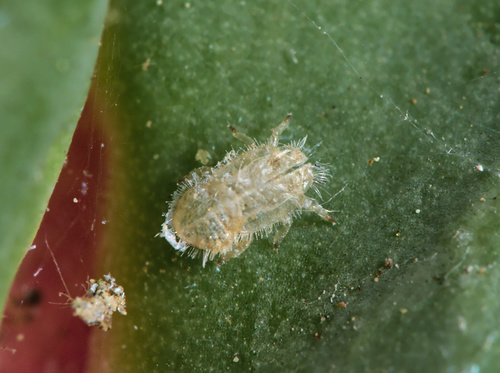
This description focuses on the galls formed by Trioza urticae. Galls are most visible during August and September. At this time of year, young leaves growing at the top of a shoot, above the summer growth, become hairy, crinkled, and develop depressions that hold a flat psyllid nymph. Heavily infested leaves are stunted and appear much darker than leaves that are not infested. Trioza urticae has two or three generations each year, and psyllid populations reach their peak in autumn, which is when galls are easiest to spot. The autumn generation of Trioza urticae overwinters in turf or on evergreens. Known host plants for this species are common nettle (Urtica dioica), small nettle (Urtica urens), and Urtica membranacea. Trioza urticae is distributed across all of Europe.