About Trioza adventicia Tuthill, 1952
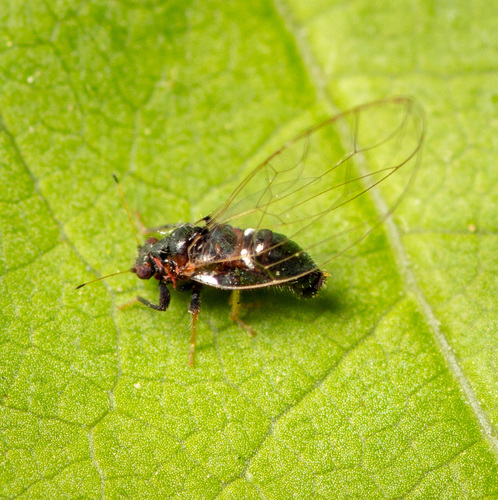
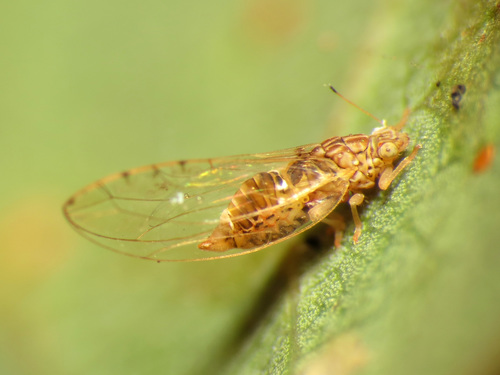
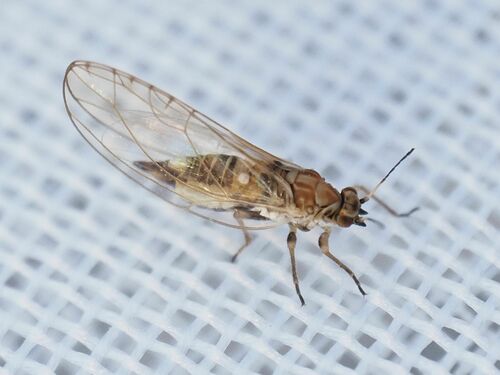
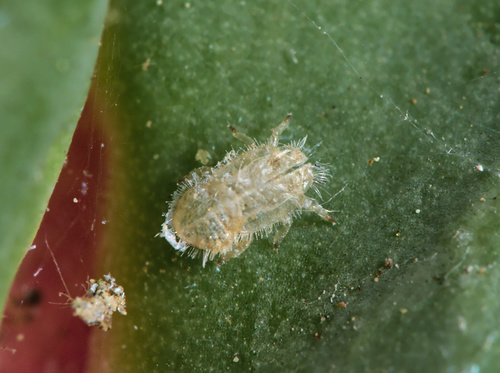
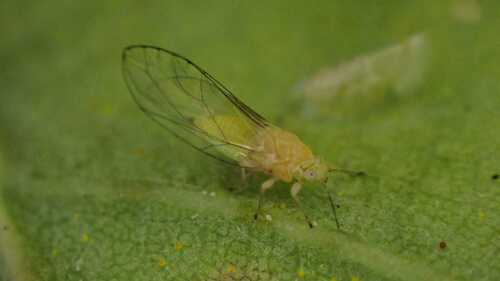
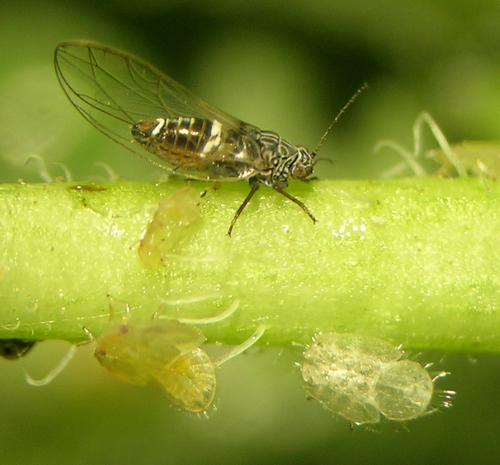
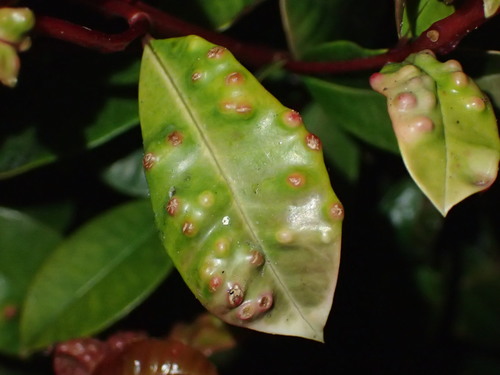
Trioza adventicia, which is commonly called the syzygium leaf psyllid, lillypilly psyllid, or eugenia psyllid, is a sap-sucking hemipteran bug that belongs to the family Triozidae. This species forms galls on the leaves of Syzygium paniculatum. It is native to eastern Australia, and has been introduced to California, southern Australia, and New Zealand. Nymphs of this species create pit galls inside leaves and stunt the host plant's growth. For decades, Trioza adventicia was misidentified as Trioza eugeniae Froggatt 1901 in multiple contexts: the ornamental plant trade, the field of biological pest control in the United States, and even the species' native range in eastern Australia. This misidentification has left a large amount of academic literature, and an even larger quantity of horticultural resources, referring to this species under the name Trioza eugeniae. In 2019, a study used multiple lines of morphological evidence and DNA barcoding to confirm that T. adventicia and T. eugeniae are two separate distinct species. The study also confirmed that the widespread introduced species that affects Syzygium paniculatum, which had long been called T. eugeniae, is actually T. adventicia. The true T. eugeniae is only known to live in a small region of southeastern Australia.