About Triodia sylvina (Linnaeus, 1761)
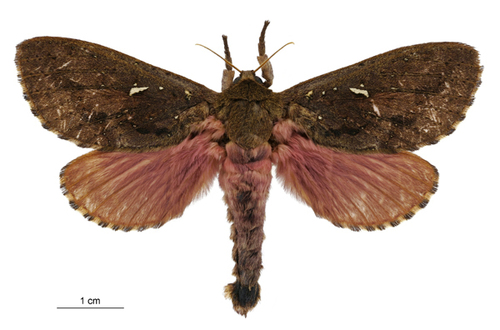
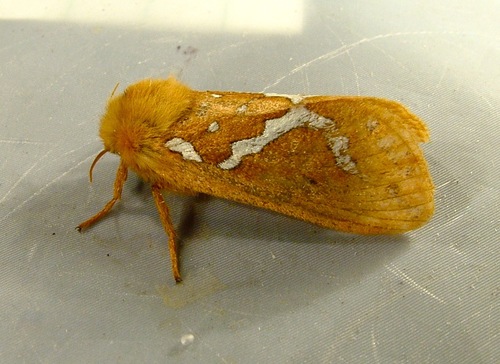
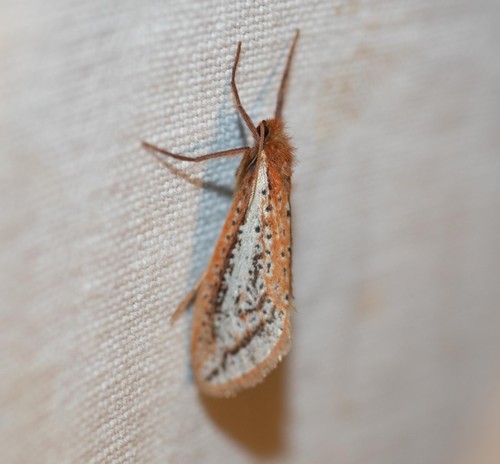
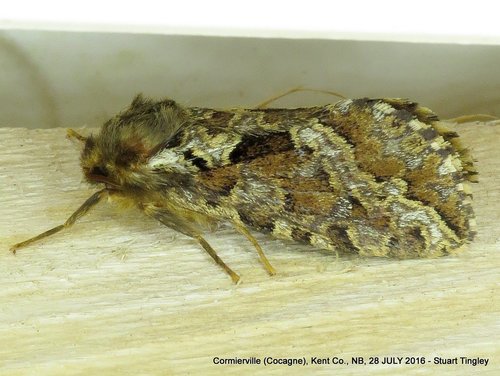
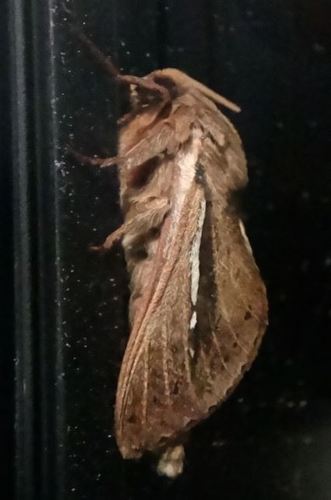
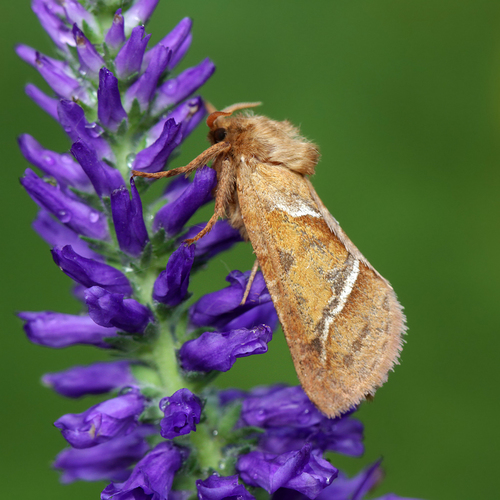
Triodia sylvina (Linnaeus, 1761) has a wingspan of 32–48 mm. Males have rich orange forewings marked with two white bars that form a V shape, and dark brown hindwings. Females are similar in appearance to males, but are generally larger and less brightly colored. This moth flies at night from June to September, and is attracted to light. Individuals lack a proboscis, so they do not feed at flowers. Females broadcast globular, shiny black eggs while hovering above the species' food plants. After hatching, larvae make their way to their food plant and bore into its roots. Fully developed larvae are 25 to 30 mm long. They have an orange-brown head, a shiny white body, and brownish-orange dorsal plates on their thoracic segments, with black spiracles. Larval feeding lasts for two years, from September to July, on the roots of a variety of plants including bracken (Pteridium species), dandelion (Taraxacum species), docks (Rumex species), hop (Humulus lupulus), and viper's bugloss (Echium vulgare). Larvae pupate inside silken cocoons located near the soil surface. Pupae are elongated, and have hooked bristles on their abdominal segments. Pupae leave the cocoon before the adult imago emerges. This species is distributed across northern, central, and south-eastern Europe, extending as far as the Middle East.