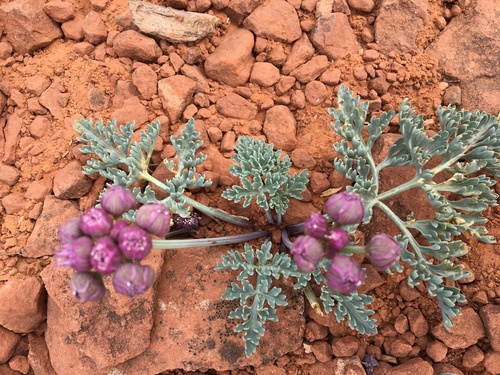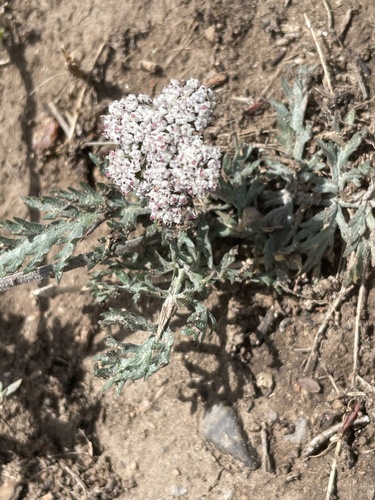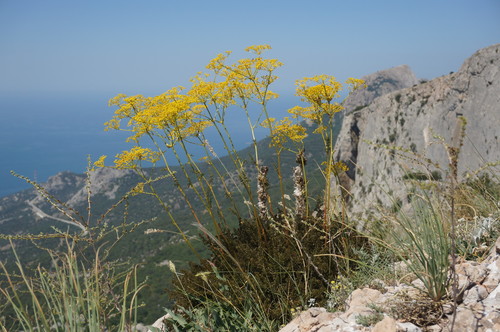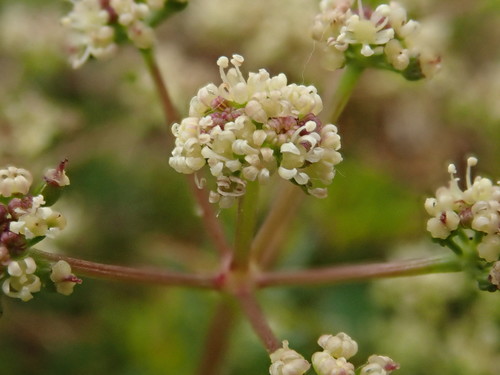
Trinia glauca (L.) Dumort. is a plant in the Apiaceae family, order Apiales, kingdom Plantae. Not known to be toxic.

Photo of Trinia glauca (L.) Dumort. (Trinia glauca (L.) Dumort.)
🌿 Plantae

Trinia glauca (L.) Dumort.

Trinia glauca (L.) Dumort.

Trinia glauca (honewort) is a low branched umbellifer native to parts of Europe and southwest Asia, restricted to dry limestone habitats in Britain.

Family
Genus
Trinia
Order
Apiales
Class
Magnoliopsida
⚠️ Toxicity Note

Insufficient toxicity evidence; avoid direct contact and ingestion.

About Trinia glauca (L.) Dumort.

Trinia glauca, commonly known as honewort, is a low-growing, hairless glabrous plant. Its stems can grow up to 20 centimeters tall, and the base of each stem is surrounded by abundant fibrous remnants of old petioles. This species is much-branched, with its branches spreading at a wide angle. The leaves are glaucous, and are 2 to 3 times pinnately divided; the upper leaves on the stem are less divided than lower leaves. Its inflorescence is an umbel that bears white flowers and has no sepals. The fruit it produces is ovoid and laterally compressed. In Britain, honewort grows only on dry stony limestone sites, most often in short, open, grazed turf on south-facing slopes. This species is distributed across central and southern Europe, reaching as far north as southern England, and also occurs in southwest Asia.
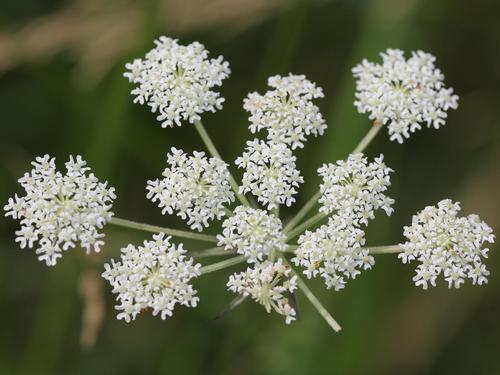
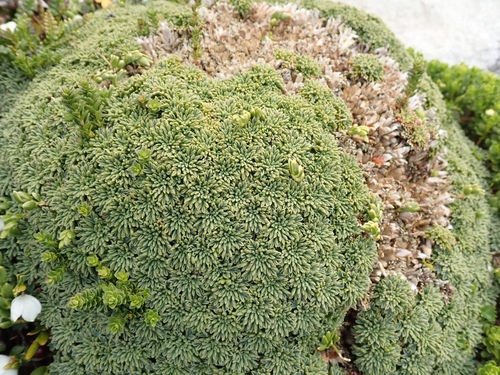
Photo: (c) Paul Bowyer, some rights reserved (CC BY-NC), uploaded by Paul Bowyer · cc-by-nc

Taxonomy

Plantae Tracheophyta Magnoliopsida Apiales Apiaceae Trinia

More from Apiaceae

Sources: GBIF, iNaturalist, Wikipedia, NCBI Taxonomy · Disclaimer

Identify Trinia glauca (L.) Dumort. instantly — even offline

iNature uses on-device AI to identify plants, animals, fungi and more. No internet needed.

Download iNature — Free

Start Exploring Nature Today

Download iNature for free. 10 identifications on us. No account needed. No credit card required.

Download Free on App Store