About Trinectes maculatus (Bloch & Schneider, 1801)
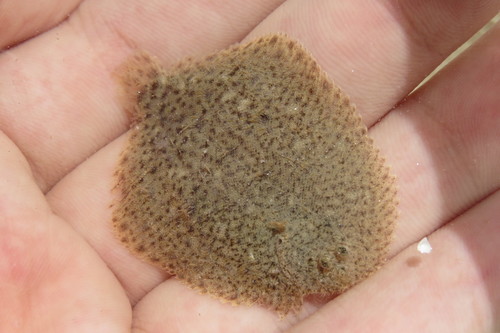
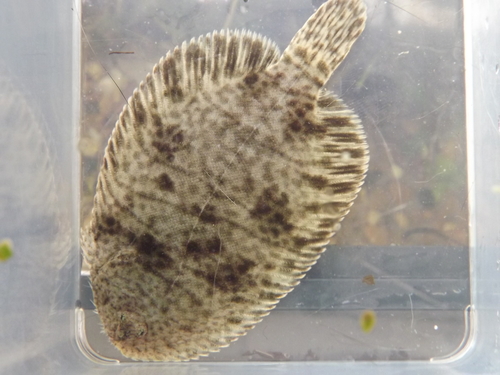
The hogchoker, scientifically known as Trinectes maculatus (Bloch & Schneider, 1801), is a small flatfish species that lives along the Atlantic and Gulf coasts of North and South America, with a range extending from Massachusetts to Venezuela. This species prefers brackish water. Two subspecies exist: the nominate subspecies is abundant in many bays and estuaries north of the Carolinas, while the southern subspecies T. m. fasciatus replaces the nominate subspecies in areas south of the Carolinas. The hogchoker belongs to the American sole family Achiridae. Its body is typically brown to dark brown, with a lighter coloration on its blind side, the side of the body that lacks an eye. The main body color is usually interrupted by a series of spots and thin stripes, which may be either lighter or darker than the fish’s base body color. The edges of its fins and tail are fringed, which helps the fish hide from its prey. Hogchokers feed mainly on small aquatic insects and invertebrates. The species got its common name from a practice among East Coast fishermen: they would feed these fish, which they considered "trash fish," to their hogs. After being eaten, the hogchoker would bow its body to form a suction cup and stick to the hog’s soft palate, similar to how peanut butter sticks in a dog’s mouth. Trinectes maculatus can be distinguished from other related species by its interbrachial septum, which lacks a foramen. It also often has no rays in its pectoral fin, and rarely has just one pectoral fin ray.