About Trimeresurus purpureomaculatus (Gray, 1832)
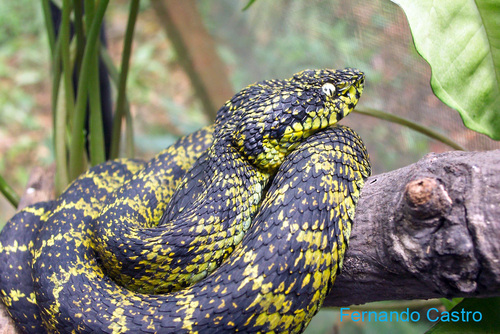
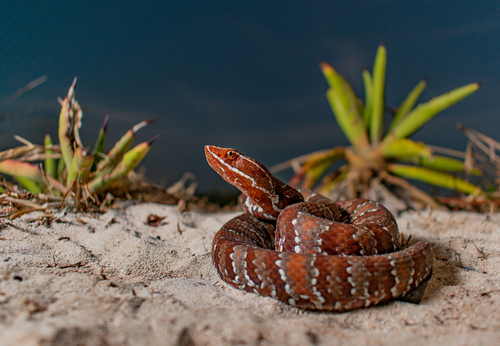
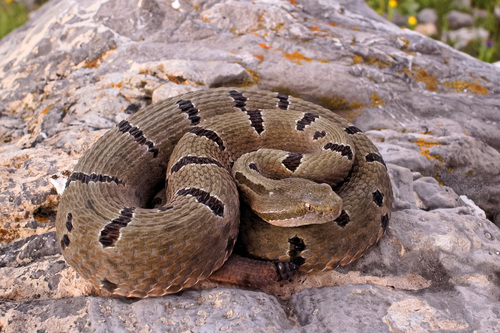
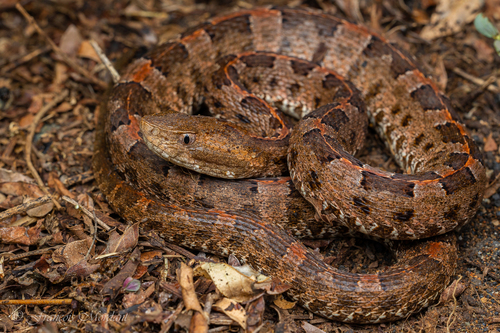
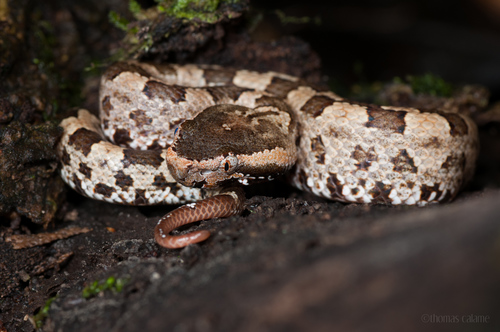
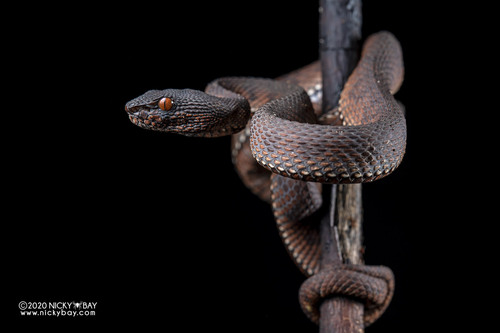
Scientific name: Trimeresurus purpureomaculatus (Gray, 1832). Males of this species reach a total length of 66.5 centimetres (26.2 in), while females reach 90 centimetres (35 in). Maximum tail length is 12.5 centimetres (4.9 in) for males and 14 centimetres (5.5 in) for females. At midbody, scales are arranged in 25 to 27 longitudinal rows. There are 11 to 13 upper labial scales; the first upper labial is partially or completely fused with the nasal scale. The supraocular scales are very narrow, and sometimes split into smaller scales, with 12 to 15 scales between the two supraoculars. Head scales are small, roughly equal in size, and either tuberculate or granular. Temporal scales are keeled. Body coloration is highly variable: dorsal color ranges from olive and grayish to dark purplish brown; ventral color is whitish, greenish, or brown, and may be uniform or marked with brown spots. A light line on the first scale row bordering the ventrals may be either present or absent. The head is olive, heavily suffused with brown. Males have 160 to 179 ventral scales, while females have 168 to 183 ventral scales. Subcaudal scales are paired: males have 74 to 76 subcaudals, while females have 56 to 63. The hemipenes lack spines. This species occurs in Bangladesh, India, Burma, Thailand, West Malaysia, Singapore, and Indonesia (on the islands of Sumatra and Java). Its type locality is recorded as "Singapore".