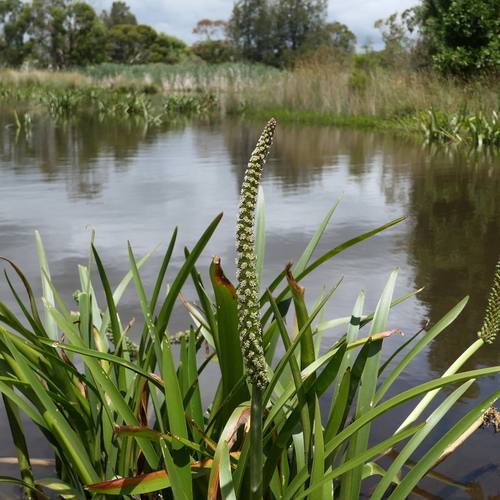
About Triglochin maritima L.
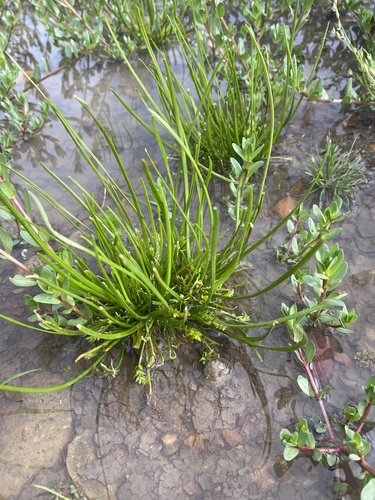
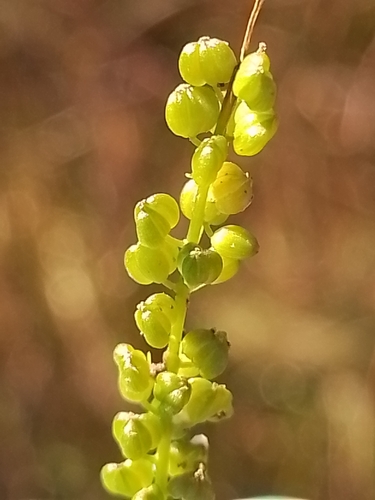
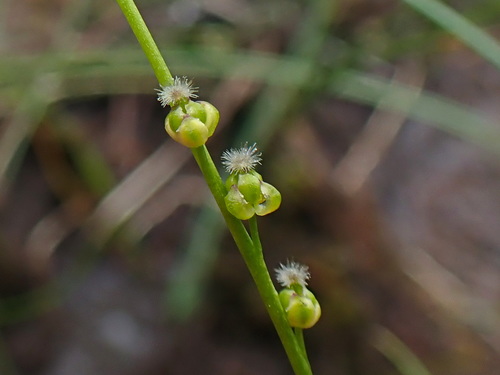
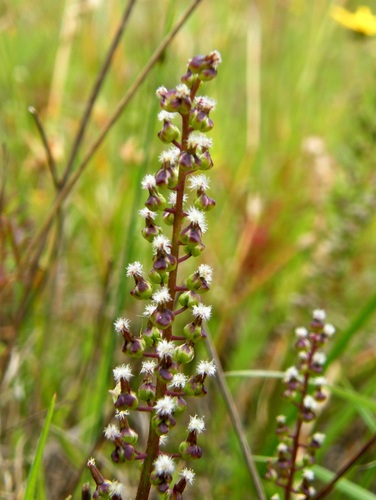
Triglochin maritima L. is commonly known by the names seaside arrowgrass, common arrowgrass, sea arrowgrass and shore arrowgrass. It can grow as either an annual or a perennial, and Triglochin concinna is a synonym for this species. This species is similar to Triglochin palustris, also called marsh arrowgrass, but has several distinct differences: it produces stolons and grows as a stouter plant. Its leaves are fleshy and do not have furrows on their upper surface. It is not very aromatic. It has a denser raceme that resembles that of sea plantain. Its flowers are fleshier. Its fruits are oval, measuring 4 mm long and 2 mm wide. This plant ranges in height from 200–750 mm (8–30 inches). It flowers between May and August. Its greenish flowers grow on a long spike, each has 3 petals edged in purple, and measures 3 mm (1⁄8 inch) across. Triglochin maritima is thought to be toxic, as it is capable of producing cyanide. Cyanide production typically occurs when the plant becomes distressed during drought conditions or from over-harvesting, most often by grazing animals. There is a common belief that this species has caused cattle losses, with its green leaves being more toxic than dried plant material. Despite this, sheep and deer graze on this plant, especially in rural seaside areas. It is possible that the common belief in this plant’s toxicity is apocryphal, and only supported by anecdotal evidence.