About Tridentiger bifasciatus Steindachner, 1881
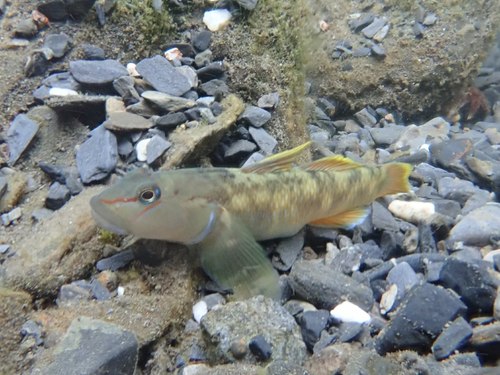
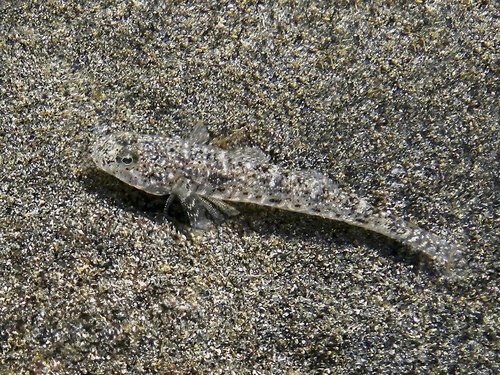
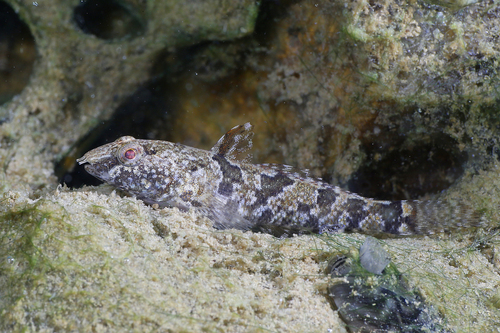
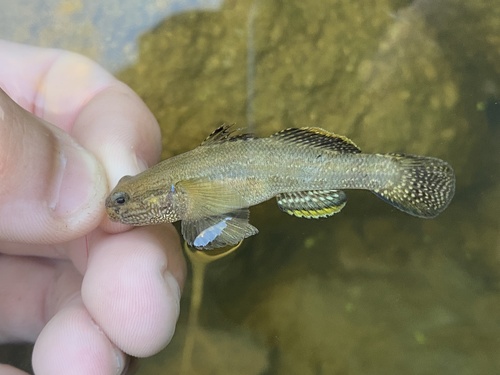
Commonly called the Shimofuri goby, Tridentiger bifasciatus lives in fresh and brackish waters, and reaches its highest abundance in low-salinity environments. The species displays the typical morphological traits of the family Gobiidae, and grows to a maximum length of 12 centimetres (4.7 in). Key defining features include two pelvic fins that unite to form a conical sucking disk, a spiny anterior dorsal fin paired with a soft posterior dorsal fin, and eyes positioned near the top of the head. These fins usually have 6-7 spines and 11-14 rays, and carry orange tints along their edges. Tridentiger bifasciatus has a flat, wide head and is highly variable in coloration; it is most often light or dark brown, with midlateral spots and very small white spots across the head. Its native range covers fresh and brackish water habitats across Asia, including Japan, Korea, China, Taiwan, and the former Soviet Union. It remains distributed in its native Asian estuaries across China, South Korea, Japan, and Russia. The Shimofuri goby is widely established in the San Francisco estuary. By 1990, the species had spread south to Pyramid Lake in Los Angeles County. By 2016, it had been recorded in seven southern California reservoirs. Observations of the species have been made at nine total locations in North America: Los Angeles, Lower Sacramento, San Diego, San Francisco Bay, San Joaquin Delta, San Pablo Bay, Santa Clara, Santa Margarita, and Suisun Bay. The Shimofuri goby is thought to have been first introduced to non-native ranges via cargo ship ballast water in 1985. Ballast water is water held within a cargo ship to maintain vessel stability and improve maneuverability when the ship is not carrying a heavy load. When cargo is loaded onto the ship, ballast water is pumped out to adjust for the added weight. This process creates a pathway that allows aquatic species to travel between regions they could not reach on their own.