About Tridax procumbens L.
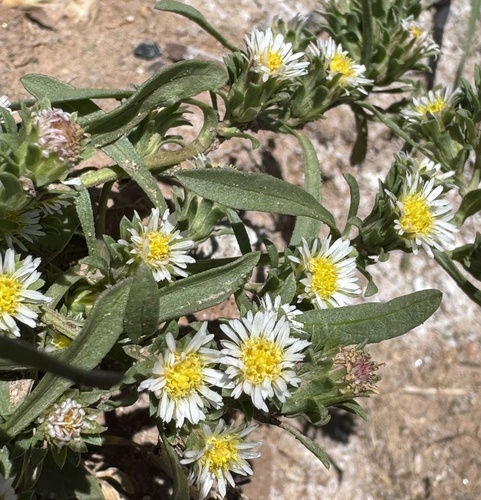
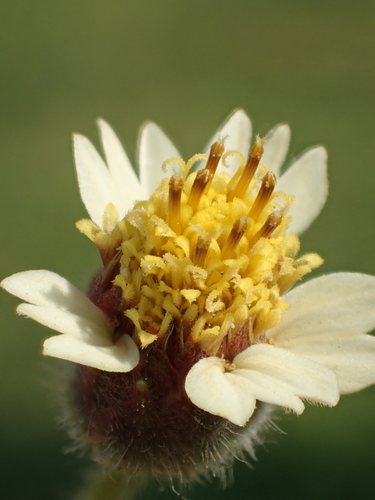
Tridax procumbens L. produces daisy-like flowers that have yellow centers, with white or yellow petals (ray florets) that have three teeth. Its toothed leaves are generally arrowhead-shaped. The calyx is either formed of scales or reduced to a pappus. The plant’s fruit is a hard achene covered in stiff hairs, with a feathery, plume-like white pappus at one end. The species is invasive partly because a single plant can produce up to 1500 achenes. The pappus on each achene catches wind, allowing the seeds to be carried long distances. This plant grows in fields, meadows, croplands, disturbed areas, lawns, and roadsides within tropical or semi-tropical climates. It is classified as a Noxious Weed in the United States and regulated under the Federal Noxious Weed Act. In traditional Indian medicine, Tridax procumbens is used for wound healing, and as an anticoagulant, antifungal agent, and insect repellent. Local healers in parts of India also use it to treat boils, blisters, and cuts. Animal studies have confirmed that Tridax procumbens has anti-inflammatory and analgesic effects.