About Tridacna noae (Röding, 1798)
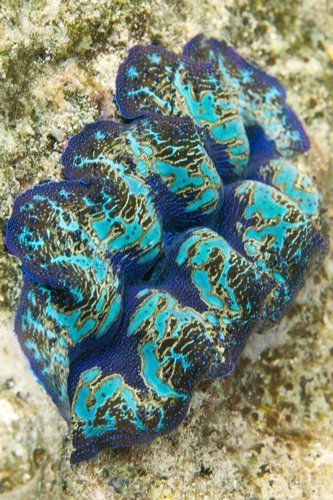
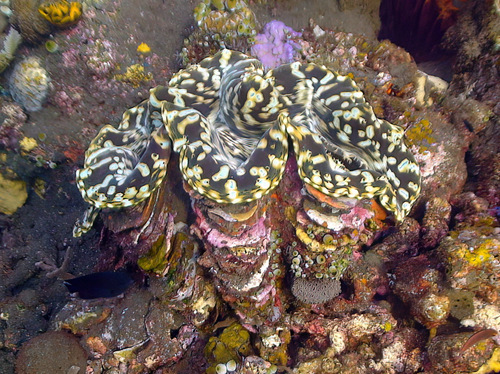
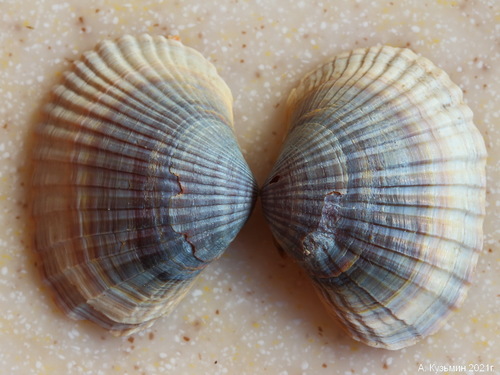
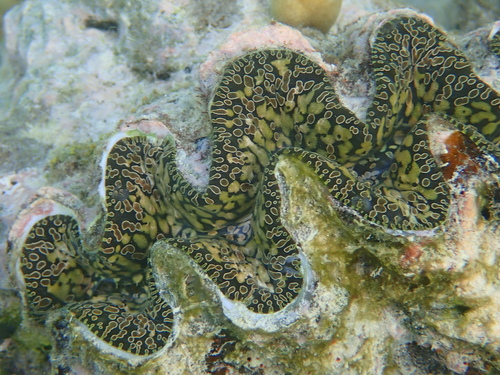
Tridacna noae has a physical form that is typical for most bivalves, particularly for species in the giant clam subfamily Tridacninae. The shell length of T. noae usually ranges between 6 and 20 cm, and its shells generally have 5 to 7 radial ribs. The mantle of this species can come in a variety of colors, including brown, yellow, blue, and green. Black hyaline organs (which act as eyes) are arranged along the mantle border, alongside a thin white margin and ocellate spots. T. noae has a broad distribution that is centered on the Indo-West Pacific, and its range overlaps with that of Tridacna maxima. It inhabits shallow waters up to 20 meters deep, and is most often found on coral reef crests and reef edges, where it attaches itself using byssal threads. T. noae populations were first identified in Taiwan and Japan, but the species has been observed as far west as Christmas Island. Analysis using mitochondrial DNA markers divides the known distribution of T. noae into three distinct groups: one ranging from the eastern Indo-Malay archipelago to Western Australia, one spanning Melanesia to Micronesia, and one located in Central Polynesia.