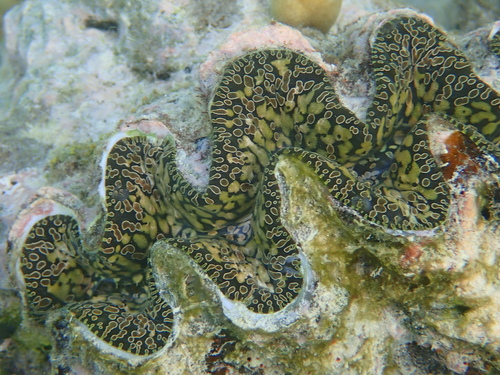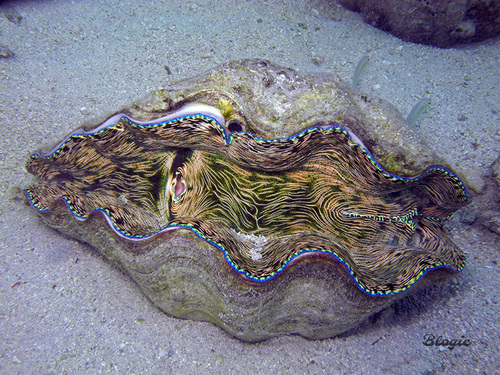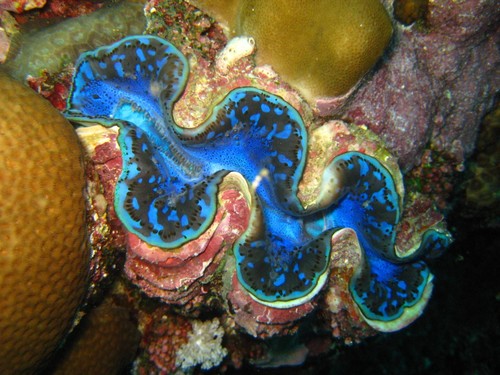
Tridacna maxima (Röding, 1798) is a animal in the Cardiidae family, order Cardiida, kingdom Animalia. Not known to be toxic.

Photo of Tridacna maxima (Röding, 1798) (Tridacna maxima (Röding, 1798))
🦋 Animalia

Tridacna maxima (Röding, 1798)

Tridacna maxima (Röding, 1798)

Tridacna maxima, the small giant clam, is a smaller giant bivalve with a wide Indo-Pacific distribution.

Family
Genus
Tridacna
Order
Cardiida
Class
Bivalvia

About Tridacna maxima (Röding, 1798)

This species, Tridacna maxima, is a bivalve. Like all bivalves, it has two valves surrounding its mantle. It siphons water through its body, using its gills to extract oxygen from the water, and feeds on algae. Individuals of this species reach less than one-third the size of the true giant clam, Tridacna gigas. Among all giant clam species, the small giant clam Tridacna maxima has the widest geographic range. It is found in oceans surrounding East Africa, India, China, Australia, Southeast Asia, the Red Sea, and the islands of the Pacific. It lives in well-lit areas, on reef surfaces, on sand, or partly embedded in coral. This habitat preference comes from its symbiotic relationship with photosynthetic algae, which require sunlight to produce energy.
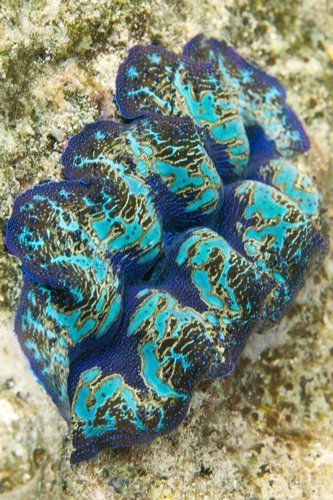
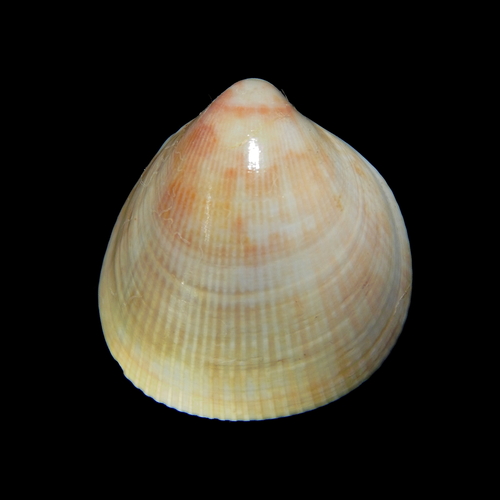
Photo: (c) Micha Baum, some rights reserved (CC BY-SA), uploaded by Micha Baum · cc-by-sa

Taxonomy

Animalia Mollusca Bivalvia Cardiida Cardiidae Tridacna

More from Cardiidae

Sources: GBIF, iNaturalist, Wikipedia, NCBI Taxonomy · Disclaimer

Identify Tridacna maxima (Röding, 1798) instantly — even offline

iNature uses on-device AI to identify plants, animals, fungi and more. No internet needed.

Download iNature — Free

Start Exploring Nature Today

Download iNature for free. 10 identifications on us. No account needed. No credit card required.

Download Free on App Store