About Tricolia pullus (Linnaeus, 1758)
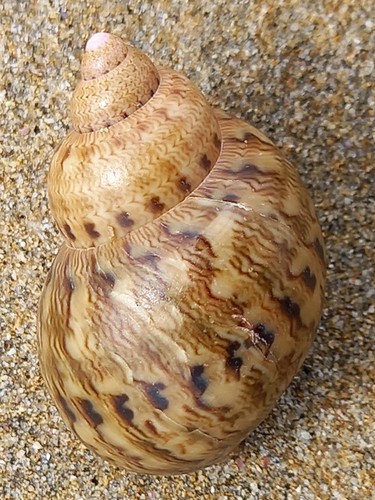
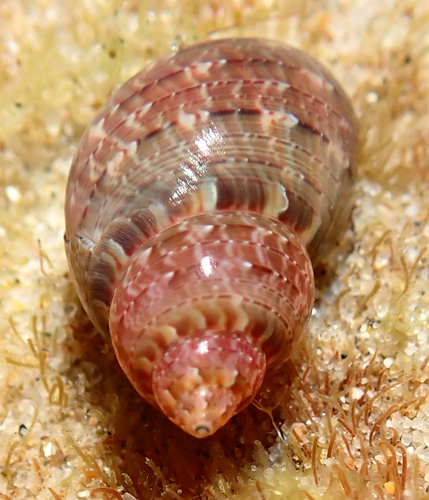
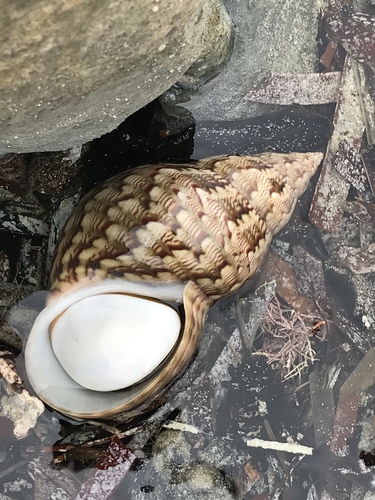
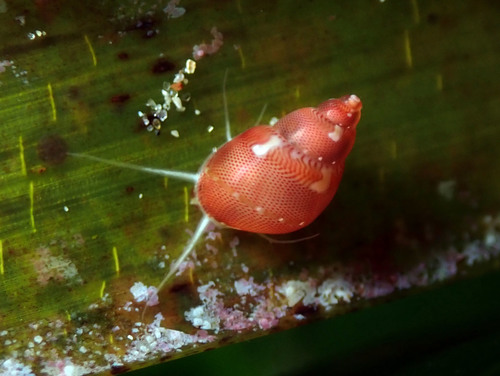
Tricolia pullus (Linnaeus, 1758) has a plump, oval shell that ranges in size from 3 mm to 11 mm. The shell is made up of five or six rounded, gently convex, smooth whorls, with the body whorl being the largest. It has a short, abrupt spire and no distinct umbilicus. The aperture is roundish oval, and it bears a conspicuous, thick operculum with a white calcareous surface. The shiny shell has a highly variable colour pattern, ranging from cream to white base colour with pink or purple-brown spots arranged spirally in zigzag or flamed patterns. Adult Tricolia pullus are gonochoristic, meaning the species consists of separate distinct male and female individuals. Ova are released into the sea, where fertilization occurs externally. This species is distributed in European waters, the Mediterranean Sea, the Sea of Azov, the Atlantic Ocean along the Canaries, and the Indian Ocean along Madagascar. It occurs in the sublittoral zone and deeper waters down to 35 m, and is often abundant on red seaweeds including Laurencia, Lomentaria, and Mastocarpus, where it collects diatoms and detritus.