About Trichopodus leerii (Bleeker, 1852)
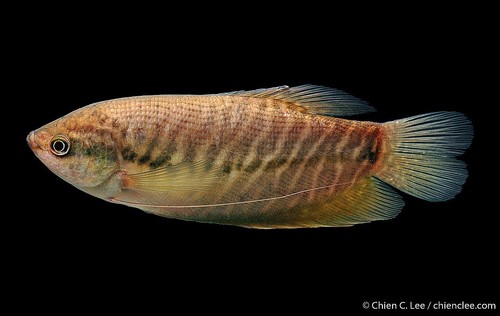
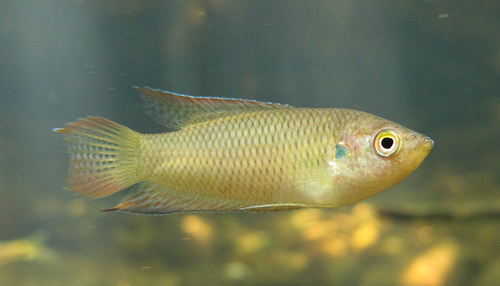
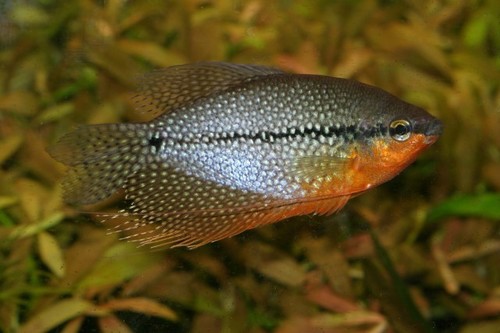
Trichopodus leerii, commonly called the pearl gourami, reaches a total length of around 12 centimetres (4.7 inches). Its body is brownish-silver, covered in a pearl-like pattern, with a distinct black line that runs from the head and gradually thins toward the caudal fin. This unique appearance has earned the species other common names, including lace gourami and mosaic gourami. Like many other gourami species, male pearl gourami are generally larger and more colorful than females. Males have bright orange coloring on the throat region, which becomes even brighter during breeding and is used to court females. Males also have a light orange tinge on most of their fins, with the caudal (tail) fin being the only exception. Additionally, males have longer fins overall, with a more pointed dorsal fin and extended anal fin rays. Trichopodus leerii was first described by Dutch medical doctor and ichthyologist Pieter Bleeker in 1852, under the original name Trichopus leerii. The type specimen was collected at Palembang in Sumatra by Lieutenant-Colonel J. M. van Leer, a medical colleague of Bleeker's, for whom the species is named. The pearl gourami is native to Thailand, Malaysia, and Indonesia, where it occurs on the islands of Sumatra and Borneo. It lives in lowland swamps with acidic water.