About Trichoniscus pusillus Brandt, 1833
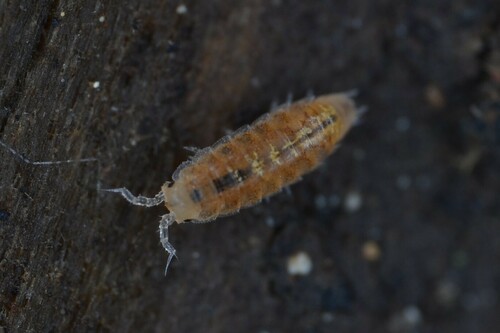
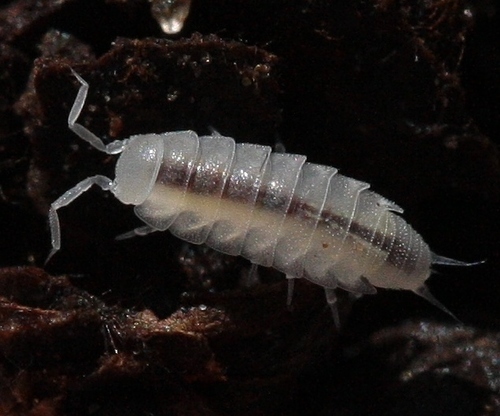
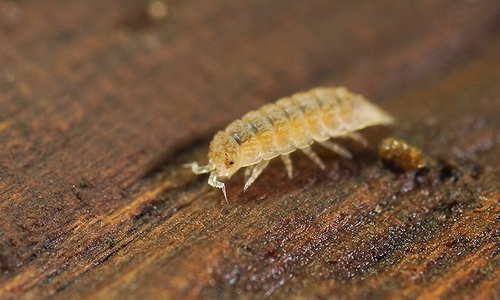
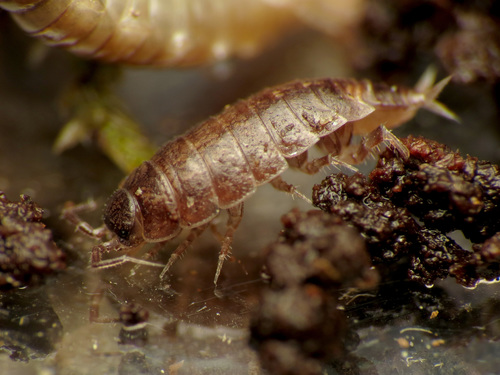
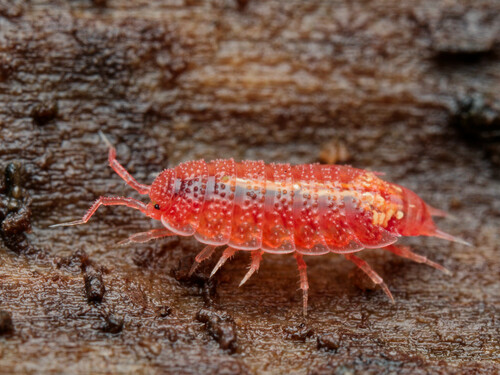
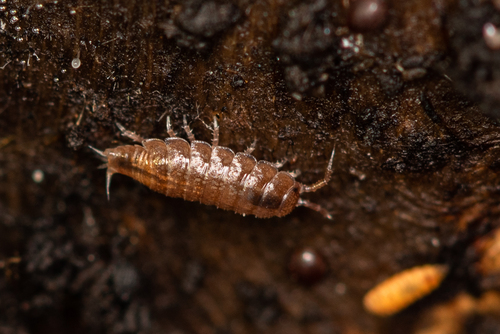
Trichoniscus pusillus Brandt, 1833 can be distinguished from other British woodlice primarily by its small maximum size of 5 millimetres (0.2 in). It has an elongate body that is quite rounded in cross section, and typically appears purplish. In North America, it can be separated from the related species Hyloniscus riparius by its eye structure: each of its eyes contains three ocelli, while Hyloniscus riparius has only a single ocellus per eye. Two distinct reproductive strategies exist within this species. Like most metazoans, many populations are bisexual and reproduce sexually. In other populations, females reproduce parthenogenetically, producing clones of themselves. The sexually reproducing form is diploid, while the parthenogenetic form is triploid. Because parthenogenesis always produces female offspring, all males of the species are diploid and can only be produced via sexual reproduction. The frequency of males in populations follows a latitudinal cline, decreasing from south to north, and also decreases in increasingly open habitats. No males have been observed in most of Scotland and Scandinavia, while more than 15% of individuals are male in populations on the Iberian and Apennine Peninsulas. The species' reproductive season runs from March to September, and one to three separate breeding waves may occur each season. Females remain gravid for 4–5 weeks before releasing 4–18 mancae from their brood pouch. Like other woodlice, T. pusillus feeds on various types of decaying plant matter, but only alder litter can support a stable, reproducing population of this species. Known predators of T. pusillus include the common shrew Sorex araneus, lycosid and dysderid spiders, centipedes such as Lithobius variegatus, and possibly carabid beetles. Trichoniscus pusillus is susceptible to infection by isopod iridescence virus, an Iridovirus in the family Iridoviridae. Infection first appears as a blue sheen on the species' unpigmented underside, and soon spreads to give the entire exoskeleton a bluish iridescence.