About Trichodes alvearius (Fabricius, 1792)
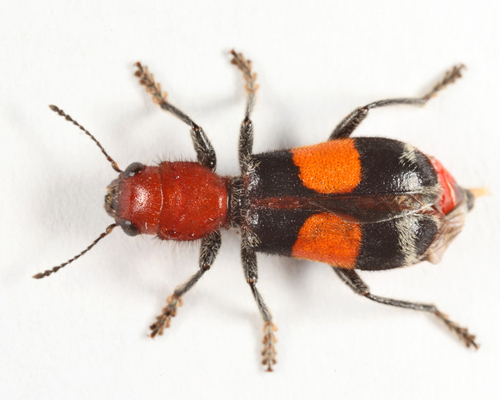
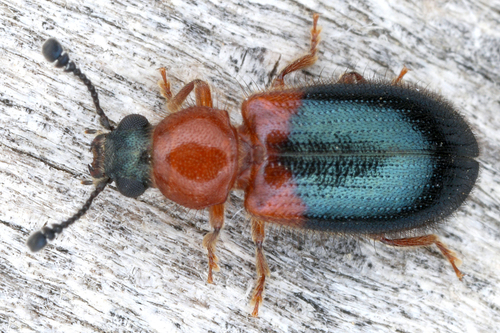
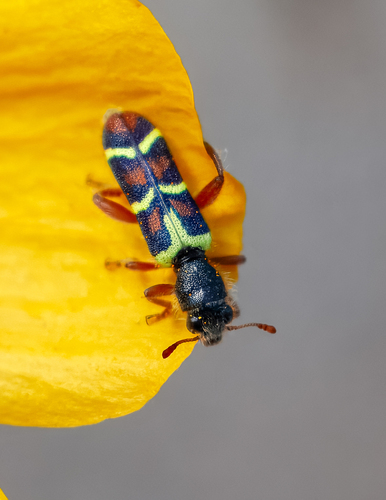
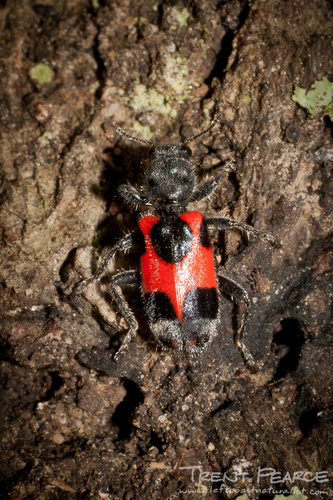
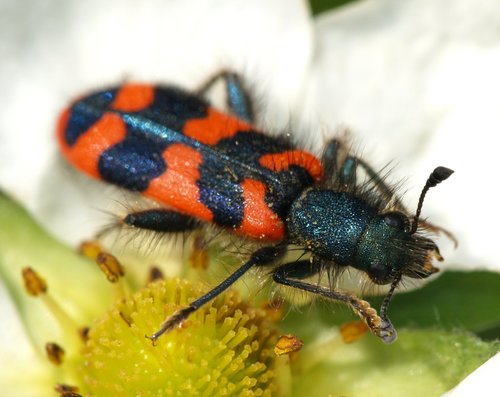
Trichodes alvearius is a very hairy beetle that has a black head and black scutellum. Its elongated elytra are bright red with black bands. This species can be easily told apart from Trichodes apiarius by two key features: a black stripe running down the middle of its back along the inner edge of the elytra, and a red elytral apex that is not covered by the terminal black stain. This beetle does not fly readily, and instead relies on its warning coloration to defend itself against predators.
These beetles are widely distributed across southern Europe, including Albania, the Czech Republic, Italy, Greece, France, Germany, Hungary, Poland, Spain, Switzerland, and the western half of the Balkans. They are also found in North Africa. The species went extinct in England during the nineteenth century.
In their larval stage, T. alvearius are parasites of multiple species of bees and wasps. Adult females lay their eggs close to the nests or hives of hymenopterans, which is the source of this species' specific epithet "alvearius", giving it the common name bee-hive beetle. After hatching, the larvae eat different life stages of their hymenopteran hosts. Adults can be found from May through August, most often on flowers of Apiaceae, Asteraceae, and Crataegus species, where they feed primarily on pollen. They also supplement this diet by actively hunting small insects, most commonly species from the genera Oedemera, Psilothrix, Stenopterus and Clytus.