About Trichocolea tomentella (Ehrh.) Dumort.
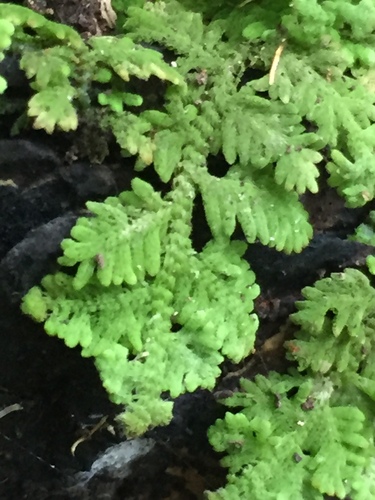
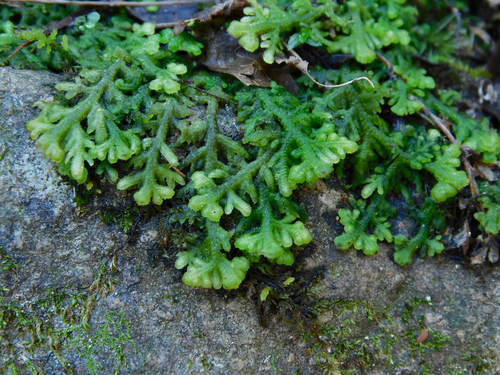
Trichocolea tomentella (Ehrh.) Dumort. is a distinctive liverwort that forms loose, pale green to yellowish-white mats. Individual plants reach 2–4 cm (0.79–1.57 in) in length and have a characteristic feathery or fuzzy appearance, caused by their highly divided leaves. This species grows in a branching pattern: the main stem produces regular side branches that each branch two to three times, creating a fern-like look. The main stem is relatively robust, about half a millimetre wide, and covered in tiny leaf-like structures called paraphyllia. Its leaves are divided into 6–8 delicate finger-like segments, which give the plant its signature fuzzy texture. These segments are made up of elongated cells that hold 4–8 oil bodies, small organelles characteristic of liverworts. Unlike many other liverworts, T. tomentella rarely produces root-like structures called rhizoids. This species is dioicous, meaning male and female reproductive structures grow on separate individual plants. Male reproductive structures (androecia) grow along the main stem, while female structures (gynoecia) develop into a club-shaped structure covered in small leaves. After fertilisation, this structure develops into a long stalk that bears a narrow, dark brown to black spore capsule. However, sexual reproduction is rare across many parts of the species' range, and T. tomentella primarily spreads through vegetative growth. When spores are produced, they are reddish-brown and very small, only 10–14 μm (0.010–0.014 mm) in diameter. The species' distinct appearance, especially its pale colour and highly divided leaves, makes it relatively easy to identify even for novice botanists.
Trichocolea tomentella has a wide distribution across temperate regions of the Northern Hemisphere, particularly in oceanic and suboceanic areas. Its range extends from northern Portugal and Spain north to southern Norway, Sweden and Finland, and from Ireland and Great Britain east to western Russia. The species is also found in Asia, North Africa and eastern North America. It typically grows in moist, well-shaded locations, and has a particular preference for deciduous forest habitats. It is frequently found near springs, streams and gullies, where a constant water supply and moderately diffuse light are present. In western Norway, it occurs in two distinct habitat types: Alnus glutinosa forests with a Carex remota understory, and poorer mineral soils in narrow river gorges dominated by either Betula pubescens or ferns. In other regions, it can grow in coniferous swamp forests. Trichocolea tomentella can form extensive pure patches covering up to 75 m2 (810 sq ft), though it often grows mixed with other bryophytes. Common associate species include Brachythecium rivulare, Thuidium tamariscinum, Calliergonella cuspidata, and various species of Rhytidiadelphus.
The species reproduces predominantly asexually via clonal regeneration and branching. Sexual reproduction (sporophyte production) is rare in much of Europe, but more common in eastern North America. Its dispersal ability appears limited, particularly in areas where it only reproduces asexually, though it may occasionally spread when water, mammals, or birds carry detached shoot fragments. The species faces threats from habitat destruction, especially through logging and drainage of its preferred moist forest habitats. These activities create drier, more exposed conditions that are unsuitable for the species' survival. Trichocolea tomentella shows high clonal persistence in undisturbed habitats, with individual plants reproducing primarily through vegetative means via branching and fragmentation rather than sexually through spores. Studies have found the species maintains relatively high genetic diversity within populations despite limited sexual reproduction, likely due to long-term accumulation of genetic variants through somatic mutations and occasional recruitment. The species grows in dense colonies that can effectively exclude other bryophytes: as T. tomentella shoot density increases, the presence of other bryophyte species decreases significantly. Gene flow between populations appears to be limited even at small spatial scales of 1 km, which suggests the species has restricted dispersal abilities. This combination of traits — clonal persistence, competitive ability in suitable microsites, but limited dispersal — makes the species vulnerable to habitat fragmentation, while also allowing it to maintain stable populations in undisturbed conditions. Penicillium concentricum is an endophytic fungus that associates with Trichocolea tomentella and produces several biologically active secondary metabolites.