About Trichocolea mollissima (Hook.f. & Taylor) Gottsche
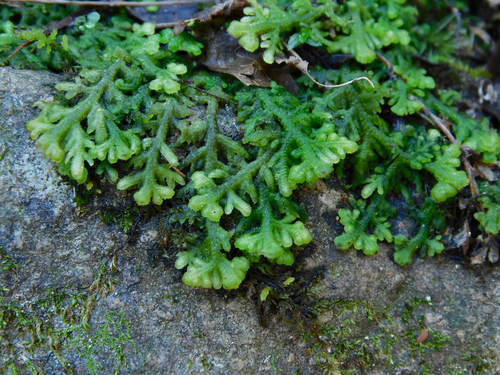
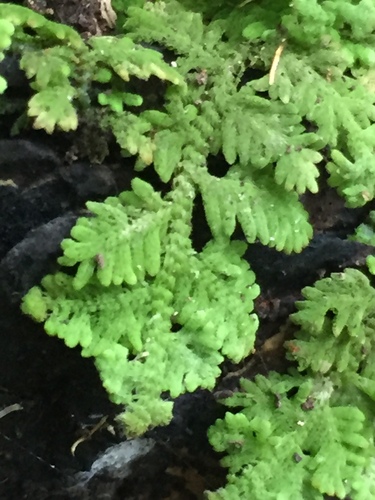
Trichocolea mollissima, commonly called the woolly worm, is a large liverwort in the Trichocoleaceae family. It is common across wet sclerophyll forests and rainforests in Australia and New Zealand. In Australia, it occurs in Tasmania, Victoria, New South Wales, and Queensland; it grows extensively across the North Island of New Zealand. Its most distinctive feature is its highly divided, densely packed, extremely small leaves, which give the plant a woolly appearance that gives it its common name. It typically grows in mats or tufts on the ground and on lower tree trunks, and prefers decaying wood and deep shade. To casual observation, its leaf arrangement and growth habit look like those of a large moss. Its stems are usually 3 to 6 cm long, with leaves reaching up to 0.6 mm wide. Leaves are divided up to three times, and leaves and stems are arranged in a bipinnate form, rarely tripinnate. It is usually pale yellow-green in colour, and fades to white or blue-green when it dries out in drier conditions. Trichocolea mollissima is very similar in appearance to T. rigida, another Trichocoleaceae species found in southern Australia. Microscopic inspection of cell shape is usually needed to tell the two species apart. T. rigida has thin-walled cells that are only minimally tapered, while T. mollissima has thick-walled cells that are highly tapered. An additional difference is that T. rigida is comparatively rare, and prefers drier sclerophyll habitats. Despite these differences, the two species are known to hybridise, and specimens with characteristics of both species have been recorded. The wide distribution and common occurrence of Trichocolea mollissima throughout the forests of its range indicate the species has a secure future.