About Trichiurus lepturus Linnaeus, 1758
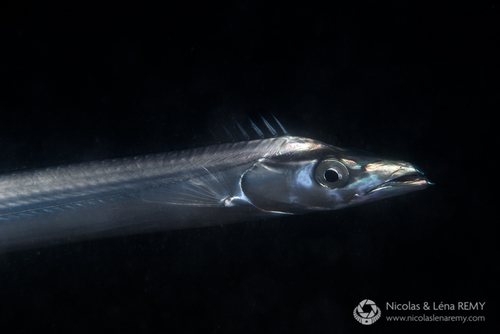
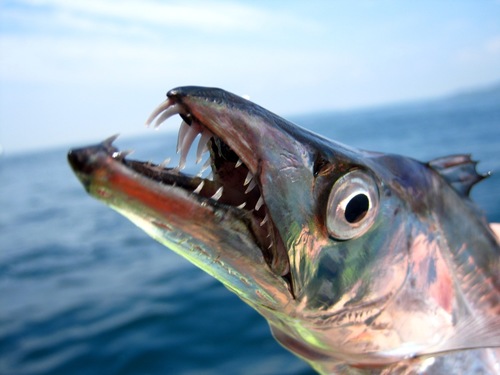
Trichiurus lepturus, commonly called the largehead hairtail or beltfish, belongs to the cutlassfish family Trichiuridae. This common, abundant species occurs in tropical and temperate oceans globally. Its full taxonomy has not yet been resolved, and populations in the Atlantic, East Pacific, and Northwest Pacific are also known as Atlantic cutlassfish, Pacific cutlassfish, and Japanese cutlassfish, respectively. This elongated predatory fish supports major commercial fisheries. The largehead hairtail is found worldwide in tropical and temperate oceans. In the East Atlantic, its range extends from southern United Kingdom to South Africa, including the Mediterranean Sea. In the West Atlantic, it ranges from Virginia (and occasionally Cape Cod) to northern Argentina, including the Caribbean Sea and Gulf of Mexico. In the East Pacific, it ranges from southern California to Peru. It is widespread throughout the Indo-Pacific, from the Red Sea to South Africa, Japan, the entire coast of Australia except Tasmania and Victoria, and Fiji, but is absent from the central Pacific Ocean, including Hawaii. Some populations of this species are migratory. A study of largehead hairtails in southern Japan's Bungo Channel found their optimum water temperature is 20–24 °C (68–75 °F). Based on fishing catches in South Korea's Jeju Strait, the species mainly lives in water warmer than 14 °C (57 °F), and catches are very low in colder water. Off southern Brazil, it mainly occurs in waters warmer than 16 °C (61 °F). It is not found in waters below 10 °C (50 °F). The largehead hairtail prefers relatively shallow coastal regions with muddy bottoms, but it sometimes enters estuaries, and has been recorded at depths from 0 to 589 m (0–1,932 ft). In European waters, most records are from 100 to 350 m (330–1,150 ft). Off southern Brazil, hairtails are most abundant between 40 and 120 m (130–390 ft). In the East Pacific, they have been recorded between 55 and 385 m (180–1,260 ft). In southern Japan's Bungo Channel, they are primarily recorded from 60 to 280 m (200–920 ft), and are most common between 70 and 160 m (230–520 ft). They are mainly benthopelagic, but may appear at the surface during the night. In terms of behavior and life cycle, juveniles perform diel vertical migration: they rise to feed on krill and small fish during the night, then return to the seabed during the day. Large adults reverse this movement pattern, and feed mainly on fish. Other prey items include squid and shrimp. Highly carnivorous adult largehead hairtails regularly cannibalize younger individuals. This species is often found in large, dense schools. Spawning timing depends on water temperature, as larvae prefer water warmer than 21 °C (70 °F) and are completely absent in water colder than 16 °C (61 °F). Because of this, spawning occurs year-round in tropical regions, and generally takes place in spring and summer in colder regions. Over one spawning season, each female lays many thousands of pelagic eggs, which hatch after three to six days. In the Sea of Japan, most individuals reach sexual maturity at two years old, though some mature as early as one year. The oldest recorded age for this species is 15 years.