About Trichiura crataegi (Linnaeus, 1758)
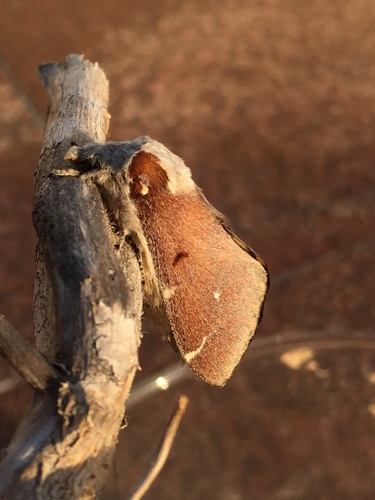
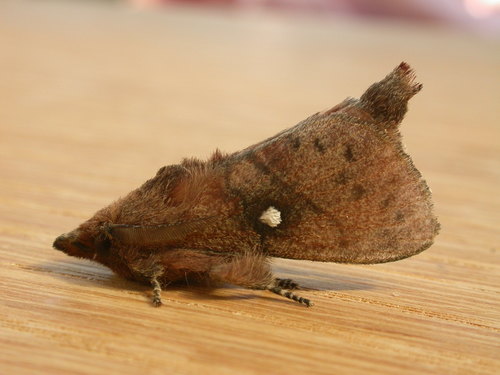
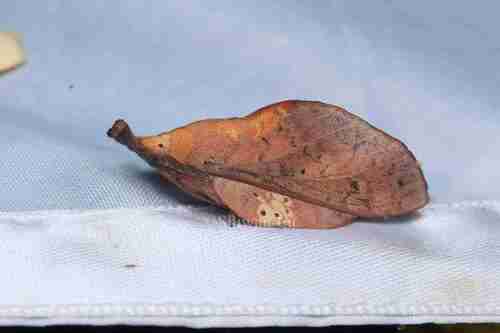
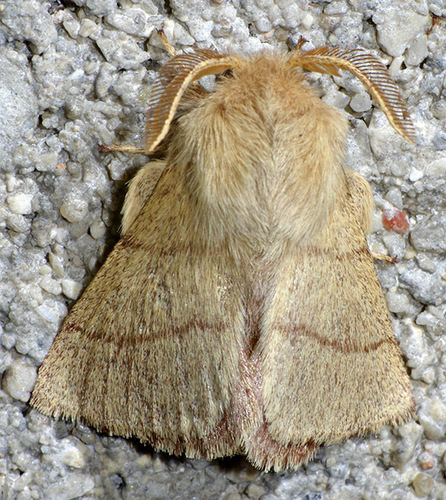
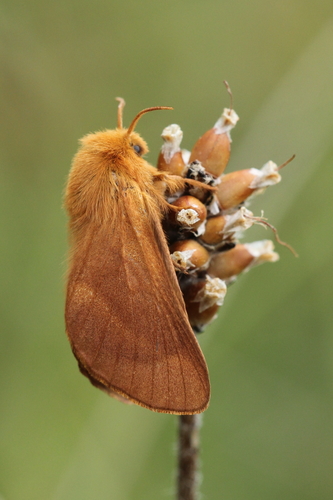
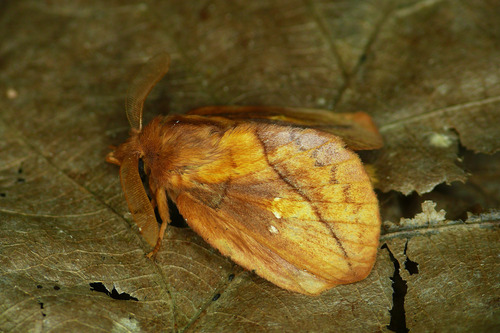
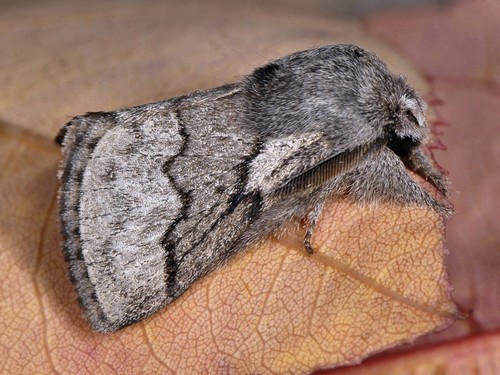
Trichiura crataegi, commonly known as the pale eggar or pale oak eggar, is a moth species belonging to the family Lasiocampidae. It was first formally described by Carl Linnaeus in 1758, in the 10th edition of his work Systema Naturae. This species can be found across almost all of Europe, with the exception of Iceland; its range extends eastward through Anatolia and across the Palearctic realm to Amur. The wingspan of adult Trichiura crataegi measures 25–30 mm. The forewings are grey or dark grey with a sprinkling of whitish scales. The forewing lines are white, with blackish edges on their inner side; the first line is curved, while the second line is twice sinuate. The subterminal line is marked by an irregular whitish suffusion. The hindwings are light grey, becoming darker towards the posterior end, with a cloudy pale or whitish median line that is edged with dark grey on the anterior side. The larvae are black, grey, or whitish with black markings, and have reddish-brown hairs. Pale larval specimens have an irregular dark dorsal band, along with a subdorsal series of brown-red spots that are sometimes separated by whitish ochreous spots. Adult moths are active and in flight from August to September. The larvae feed on a wide range of woody plants and trees, including Betula verrucosa, Betula pubescens, Betula nana, Alnus incana, multiple Salix species (including Salix lapponum, Salix hastata, Salix repens, Salix starkeana, Salix caprea, and Salix phylicifolia), Populus tremula, Sorbus aucuparia, Crataegus species, Prunus padus, Vaccinium myrtillus, and Vaccinium uliginosum.