About Triaxomera parasitella (Hübner, 1796)
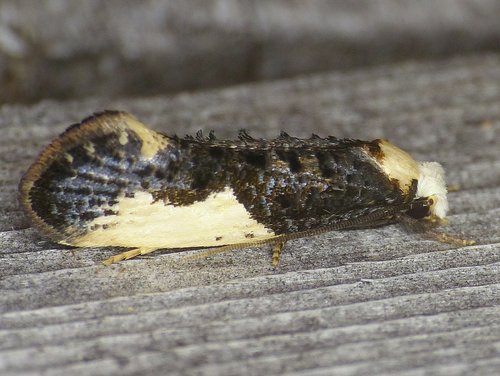
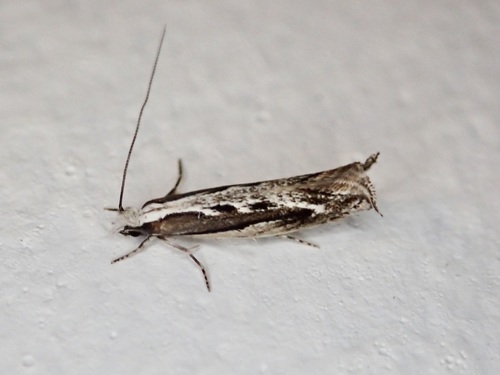
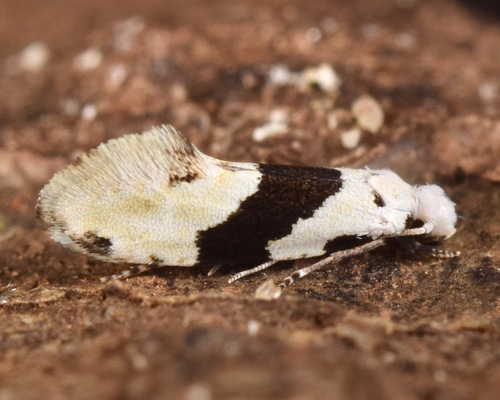
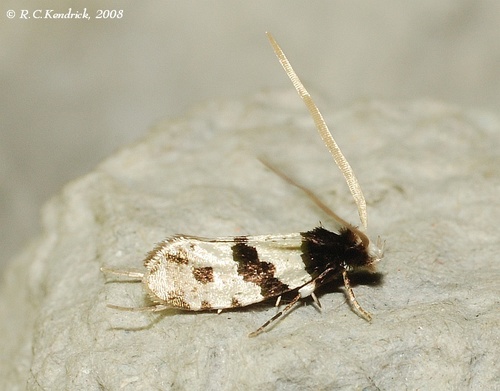
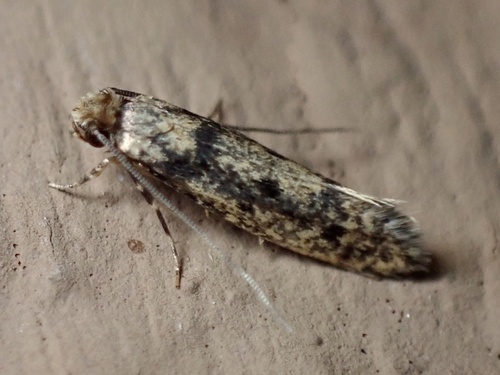
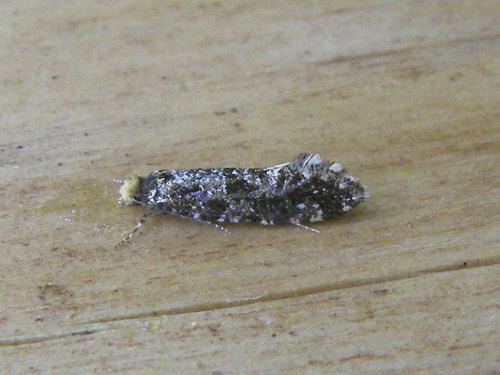
Triaxomera parasitella, first described by Hübner in 1796, is a species of tineoid moth. It is classified in the fungus moth family Tineidae, and in the subfamily Nemapogoninae within that family. This species is widespread and common across most of western Eurasia, but it appears to be absent from certain outlying regions, including Portugal, the eastern Baltic, Ireland, and Iceland. It has not been officially recorded from Slovenia to date, but as it occurs in neighboring countries, it may be present there without being detected. This moth was newly recorded from British Columbia in recent times. Triaxomera parasitella is generally found in warm temperate regions; for example, in Great Britain, it is only a rare and scarce species in areas north of the English Midlands. Adult moths of this species have a wingspan that ranges from 16 to 21 millimeters. Adults are typically nocturnal, and can be attracted to artificial light at night. They are active as flying adults from late spring to early summer, roughly between May and July, though flight may begin slightly earlier depending on the location. Their forewings are mainly blackish, marked with irregular white mottling and speckling. This patterning forms a rough black zig-zag stripe that runs lengthwise along each forewing. The edge of the forewing has a hairy fringe marked with alternating bands of black and white. The hindwings are a uniform pale dull grey, with a longer hairy fringe that matches the color of the hindwing itself. The head bears a tuft of orange-brown hairs. The caterpillars of Triaxomera parasitella feed on bracket fungi, especially species in the genus Trametes and shiitake (Lentinula edodes), and also feed on dead wood that these fungi grow on.