About Triatoma sanguisuga (LeConte, 1856)
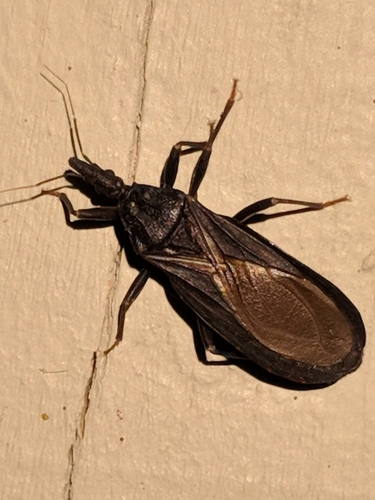
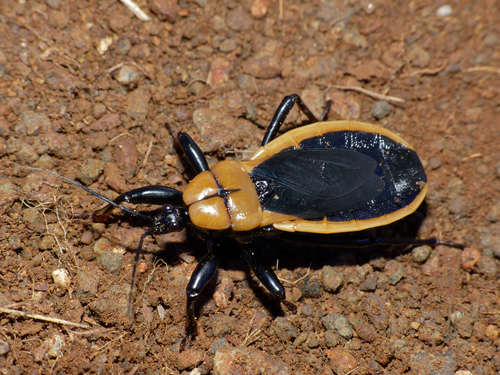
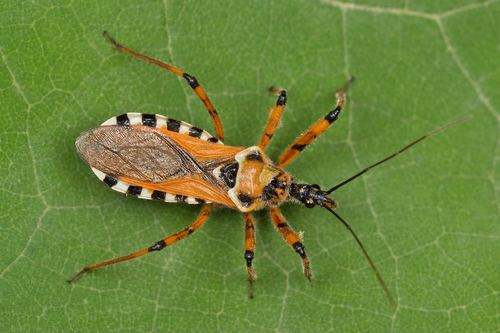
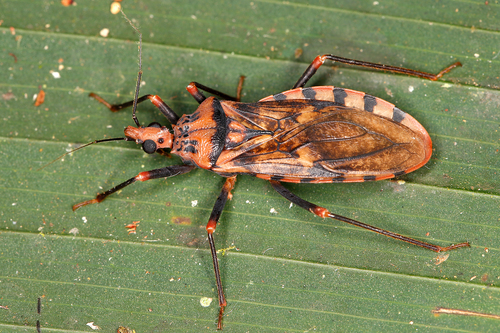
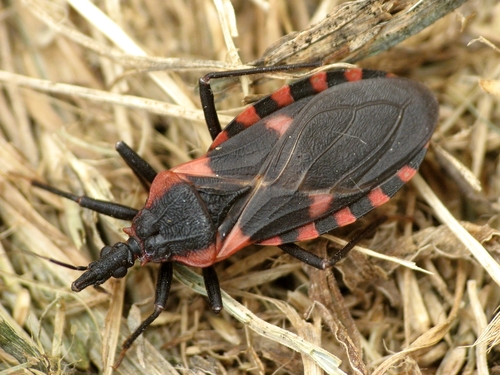
Triatoma sanguisuga, also known as Triatoma sanguisuga (LeConte, 1856), generally measures 16 to 21 mm in length. Its body is black or dark brown, with six reddish-orange spots running along each side of its wide abdomen. This species is winged, has kinked antennae with six segments, and possesses a slender, tapered proboscis that it uses for feeding.
This species is distributed across North America and Latin America, and is particularly common in the Southeastern United States. Within the eastern United States, its range extends south of Pennsylvania; in the Midwest, it reaches as far north as Ohio and Missouri, and in the Southwest it extends to Arizona.
In its life cycle, a female Triatoma sanguisuga typically lays eggs four to six days after consuming a blood meal. A single female can lay hundreds of eggs over the course of its lifetime. After an egg hatches, the immature bug takes a blood meal and molts eight times before it reaches sexual maturity. Triatoma sanguisuga feeds on blood from mammals including raccoons, rats, dogs, cats, and humans; tree frogs can also be a significant source of food for this species.