About Triatoma protracta (Uhler, 1894)
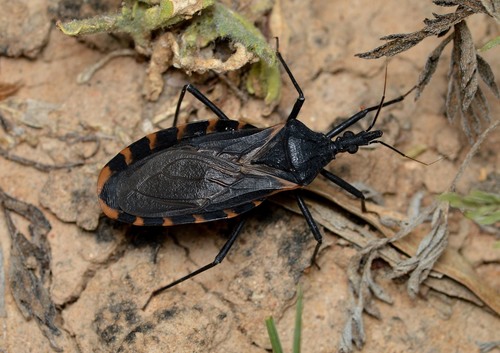
Triatoma protracta is a species of true bug belonging to the family Reduviidae. Its common name is the western bloodsucking conenose, and it is distributed across the western United States and Mexico. This species, along with other "kissing bugs", acts as a vector for Trypanosoma cruzi, the protozoan parasite that causes Chagas disease.
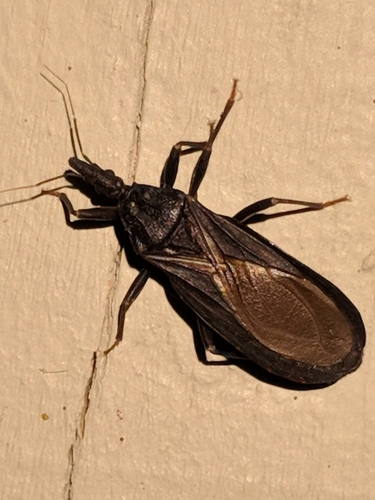
Adults of this species measure between 0.5 and 0.75 inches in length. Their body color ranges from dark brown to black, with a lighter-colored margin running along the edge of the abdomen. The wings lie flat across the insect's back. Its sucking mouthpart, called a "beak", has three segments and curls underneath the head. Nymphs of Triatoma protracta share a similar appearance to adults, but are smaller and do not have developed wings.
This insect, along with other species in its genus, lives in the nests of animals such as pack rats of the genus Neotoma. It becomes a pest when it invades human houses. It bites humans, causing skin irritation and sometimes severe allergic reactions. Three subspecies of Triatoma protracta are currently recognized: T. protracta woodi, T. protracta protracta, and T. protracta navajoensis.