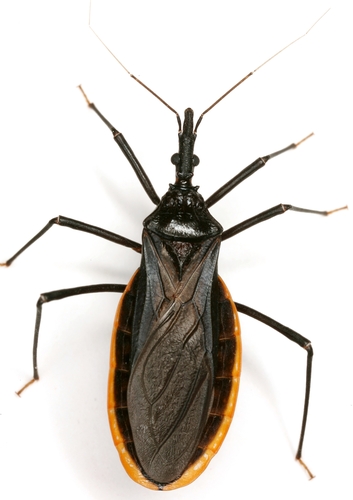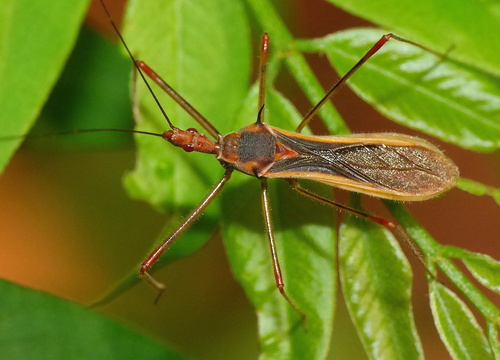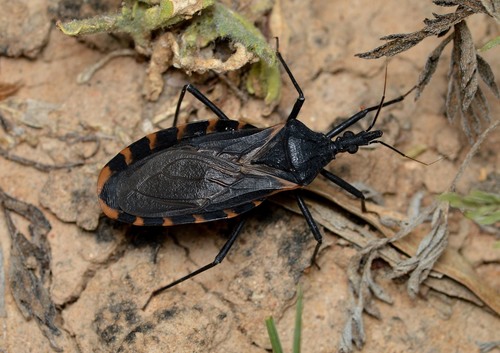
About Triatoma gerstaeckeri (Stål, 1859)
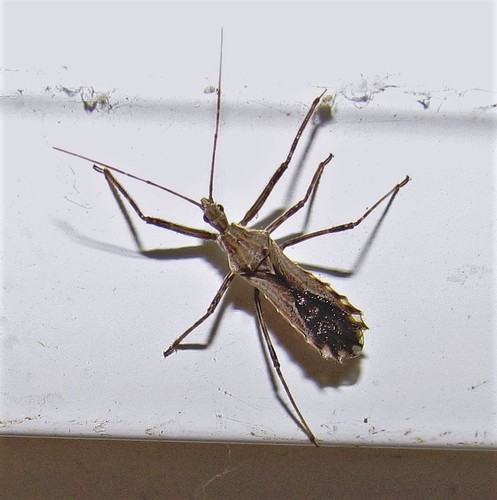
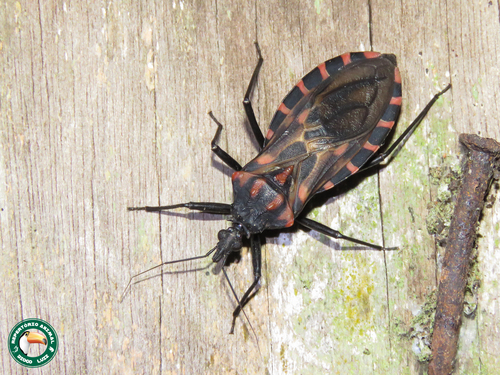
Triatoma gerstaeckeri (Stål, 1859) has the following physical characteristics. Fully developed adults reach 20 to 30 mm in overall length. The body is mostly black, apart from yellow horizontal markings on the outer edge of the pronotum. Hairs are only present on the tip of its mouthparts; no hairs grow on the rest of the mouthparts. It has long, narrow legs and a flattened head. The first segment of its antennae is shorter than the clypeus on the head. Tubercles are present along the sides of the body, and the posterior end is rounded and heavily wrinkled. Black forewings cover the abdomen, and the base of these forewings is yellowish-orange. This species occurs mainly in dry climates with abundant scrubby vegetation across northern Mexico, southern/central Texas, and New Mexico in the United States. Other species in the Triatoma genus are found throughout the rest of the United States. A high proportion of collected T. gerstaeckeri specimens are found near human residences: 63% of identified Texas specimens, and 94% of identified Mexican specimens, were collected near houses. Out of 156 Texas T. gerstaeckeri specimens tested, 55% carried the parasite Trypanosoma cruzi. T. gerstaeckeri undergoes gradual, paurometabolous metamorphosis, with three distinct life cycle stages: egg, nymph, and adult. The life cycle starts when an adult female lays eggs. Newly laid eggs are white, and turn light pink shortly after being laid. Individual eggs weigh between 0.832 mg and 1.125 mg. Females lay more eggs under changing temperature conditions, but a higher percentage of eggs hatch when kept at a constant temperature. Females lay eggs continuously throughout their entire lifespan. After hatching, the species progresses through a series of five nymphal instar sub-stages via molting. Lower temperatures increase the development time of all life stages. At a constant 27 degrees Celsius, the average development time from egg through the fifth nymphal instar is 213.9 days. When exposed to a fluctuating temperature range of 18 to 30 degrees Celsius, this same set of stages takes an average of 361.9 days to complete. The highest proportion of nymphs successfully molt when they feed on mammal blood, most commonly squirrel blood. The largest percentage weight gain from blood feeding occurs during the first nymphal instar. Once individuals reach adulthood, they mate and reproduce to begin a new life cycle. The full total lifespan of T. gerstaeckeri ranges from nine to fourteen months.