About Trialeurodes vaporariorum (Westwood, 1856)
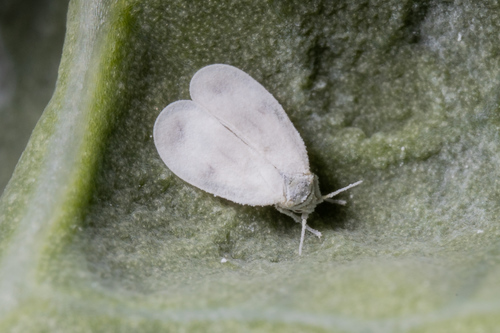
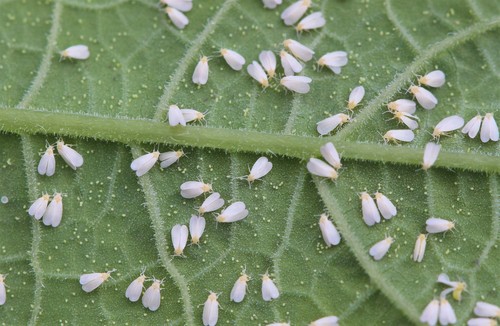
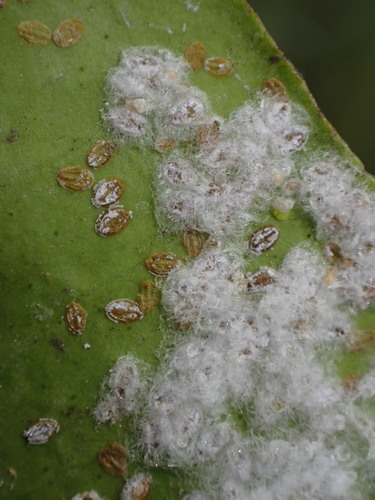
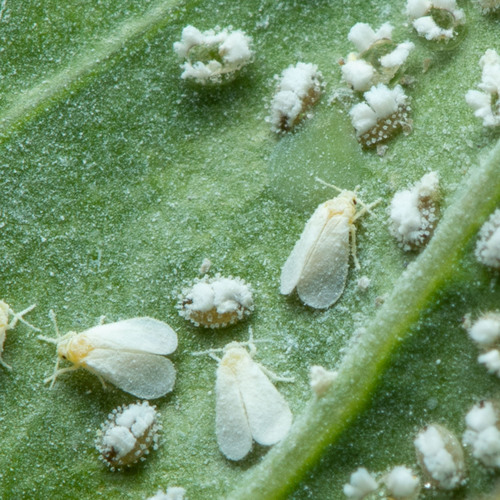
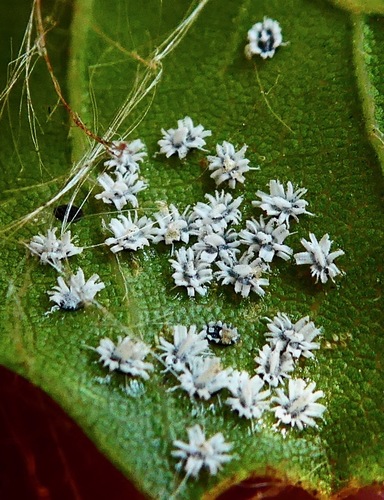
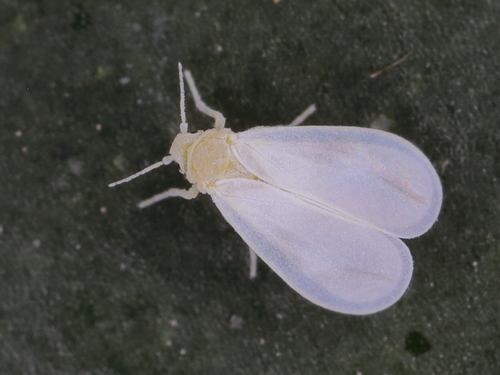
Trialeurodes vaporariorum, commonly called the glasshouse whitefly or greenhouse whitefly, is an insect that lives in temperate regions across the world. Like many other whiteflies, it is a major primary insect pest for a large number of fruit, vegetable, and ornamental crops. It is often found in glasshouses (greenhouses), polytunnels, and other protected environments for horticulture. Adult greenhouse whiteflies measure 1 to 2 millimeters in length, have yellowish bodies, and bear four wax-coated wings that are held nearly parallel to the surface of leaves. For its life cycle, females are able to mate less than 24 hours after they emerge. They most commonly lay their eggs on the undersides of leaves. The eggs are pale yellow when first laid, and turn grey just before they hatch. Newly hatched nymphs, often called crawlers, are the only mobile immature life stage of this species. In the first and second nymph instars, individuals look like pale yellow, translucent, flat scales that are hard to tell apart with the naked eye. In the fourth and final immature life stage, which is called the "pupa", compound eyes and other body tissues become visible as the nymph thickens and lifts away from the leaf surface.