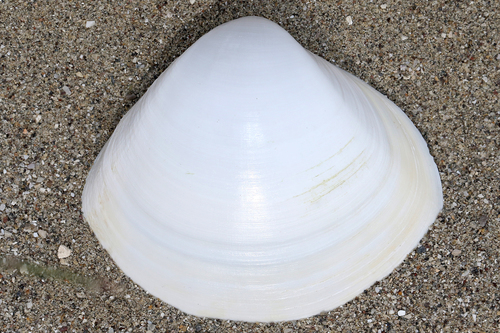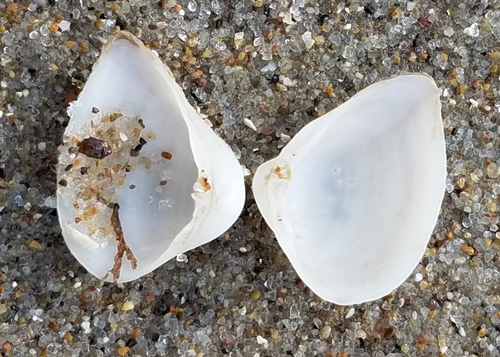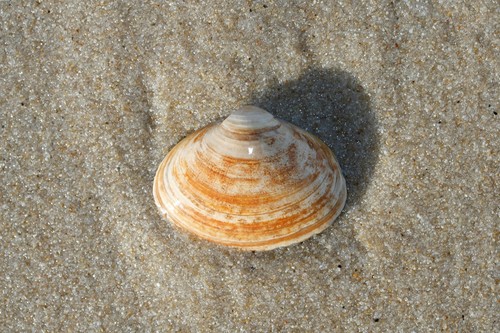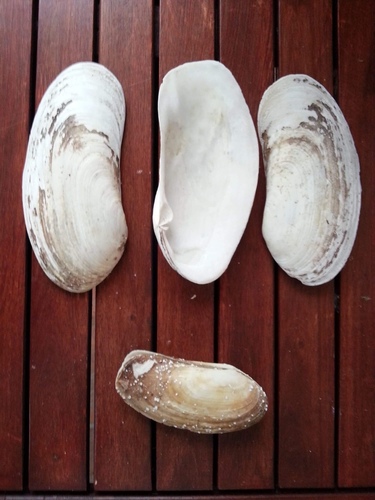
About Tresus nuttallii (Conrad, 1837)
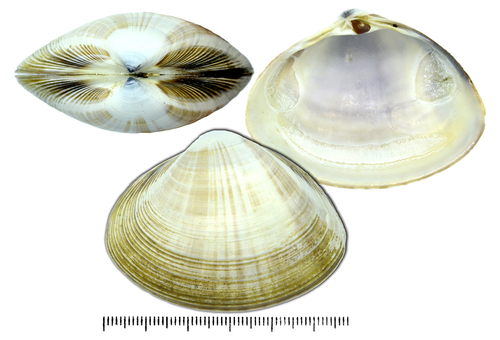
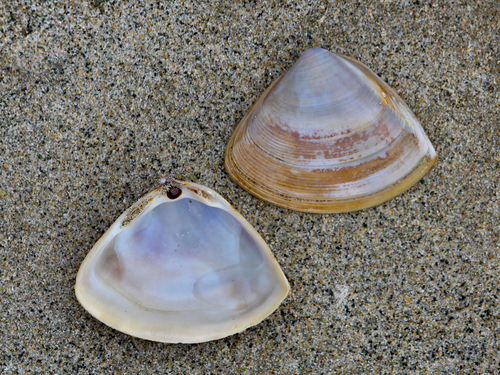
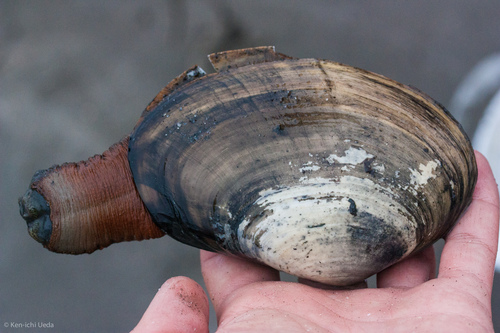
Tresus nuttallii, commonly known as the Pacific horse clam, can be distinguished from the related species Tresus capax by its longer, narrower shell and larger siphonal plates. Siphonal plates are the horny structures located at the tip of the clam's siphon, which often develop small patches of algae or barnacle growth.
Tresus nuttallii lives in habitats ranging from lower intertidal zones out to waters 13 to 15 meters (50 to 60 feet) deep. It prefers to burrow into sand, mud, or gravel substrates, usually burying itself 30 to 41 centimeters (12 to 16 inches) deep, which makes it much easier to dig than geoducks. The substrates preferred by this horse clam are also preferred by butter clams and littleneck clams, so horse clams are often caught accidentally during commercial clam harvesting.
Horse clams frequently host small commensal pea crabs of the species Pinnixa faba. These crabs usually enter the horse clam's large siphon as a mating pair and live inside the clam's mantle cavity. The crabs are easily visible and do not make the clam unsafe or unsuitable to eat. The meat of Tresus nuttallii is high quality and makes excellent clam chowder. Sport clam diggers in Washington tend to ignore this species, but it is not ignored by sport diggers in Oregon.
Like geoducks, horse clams are broadcast spawners. Tresus nuttallii spawns in summer, while Tresus capax spawns in winter. Before European contact, local Native Americans valued this clam for its large size, high abundance, and relatively easy capture. Today, the species is less sought after than geoducks, which have developed higher market popularity. Correct identification between the two Tresus species is important, as recommended recipes differ between them.
To support sustainable clam populations, the Washington State Department of Fish and Wildlife enforces size and bag limits for harvesting these clams. The Washington State Department of Health sometimes closes clam beaches to protect public health and safety, and the Department's Marine Biotoxin website posts current information about beach safety. King County maintains a well-illustrated guide to clam identification.
Some clam diggers consider horse clams less flavorful than other popular clam species, so it is common to find horse clams left on the beach during clamming season. The shells of this species are more fragile than they look. If you dig up a horse clam you do not plan to keep, it is critical not to damage its shell when you first remove it from the substrate. Clams abandoned on the beach surface will die quickly; adult horse clams cannot rebury themselves on their own, and need the pressure of surrounding sand to stay intact and move. Responsible clam diggers carefully rebury any unwanted horse clams at the same depth they were originally found.