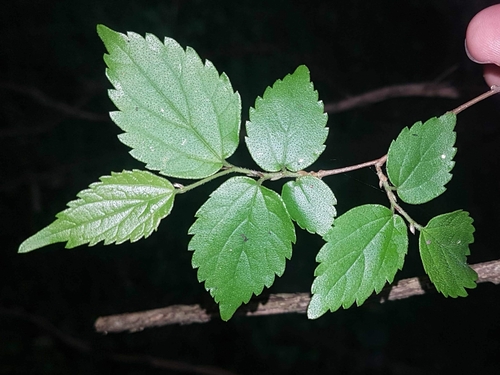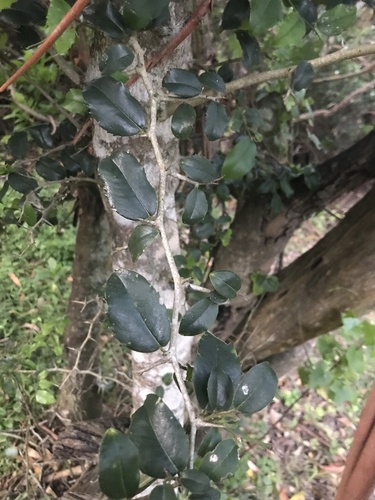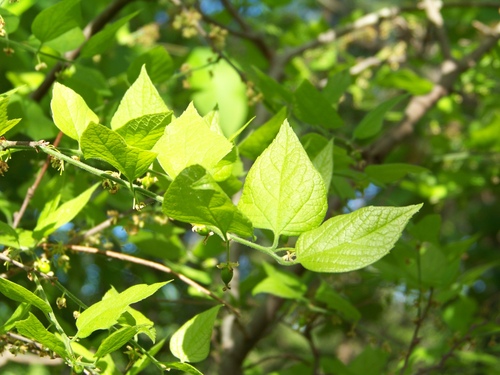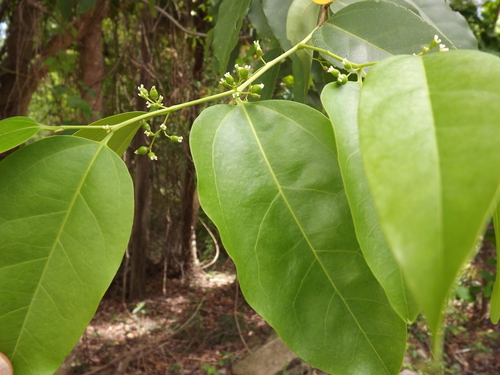
About Trema orientale (L.) Blume
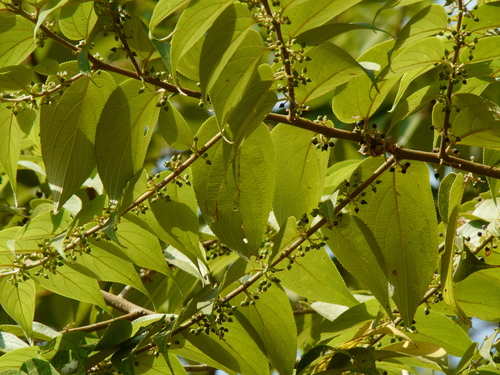
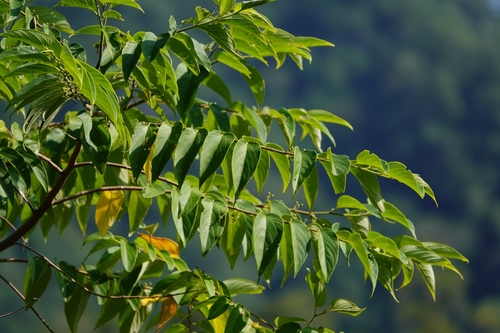
Trema orientale (L.) Blume, sometimes incorrectly referred to as Trema orientalis, is a species of flowering tree in the hemp family, Cannabaceae. It has many common names, including charcoal-tree, Indian charcoal-tree, pigeon wood, and Oriental trema. In Hawaii, where it has become naturalized, it is also called gunpowder tree or nalita. It has an almost widespread distribution across tropical and warm temperate regions of the Old World. Its native range extends from South Africa, through the Middle East, the Indian subcontinent, and southern China, to Southeast Asia and Australia. More specifically, it is native to tropical and southern Africa including Madagascar, Asia including the Arabian Peninsula, China, eastern Asia, and tropical Asia, and Australia. This species has notable ecological roles. At least 14 butterfly species use it as a larval food plant. Several bird species eat its fruit or feed on the abundant insects that live in these trees. Pigeons and doves are frequently found in these trees, where they eat fruits or build their nests — this is how the common name 'Pigeon Wood' originated. In the Philippines, the leaves, pods, and seeds of Trema orientale are used as fodder for cattle, buffaloes, and goats. Game animals also browse its leaves, and the leaves can be used as spinach. Trema orientale is a fast-growing species that occurs in previously disturbed areas and on forest margins. It is a pioneer species that can grow on poor soil, and can be used to regenerate forested areas by providing shade and protection for saplings of forest hardwoods. It is nitrogen-fixing, so it can improve soil fertility for other plant species. The wood of this tree is relatively soft, and burns easily and quickly when dry. It is suitable for paper and pulp production, making paper with good tensile strength and folding endurance. Its bark can be used to make string or rope, and is also used to waterproof fishing lines. In India and Tanzania, the wood is used to make charcoal, and works well as a fire starter. Trema orientale has a variety of herbal medicine uses across many different cultures. Its leaves and bark are used to treat coughs, sore throats, asthma, bronchitis, gonorrhea, yellow fever, and toothache, and are also used as an antidote to general poisoning. A bark infusion is reportedly drunk to control dysentery, and a leaf decoction is used to deworm dogs. Recent pharmacological research has found that an aqueous extract from the bark reduces blood sugar levels in an experimental animal model of diabetes mellitus, and may be useful for treating this condition. Extracts from leaves of related species, Trema guineense and Trema micrantha, have shown anti-inflammatory, anti-arthritic, and analgesic activity in rodent studies, which suggests that Trema orientale could produce similar results.